Fast Answer: Why Emotional Wounds Last Longer
Emotional wounds last longer because the brain is wired to prioritize and deeply encode threats to social connection, identity, and safety. Unlike a physical injury that heals, an emotional wound is kept active in your memory circuits as a protective measure to help you avoid similar harm in the future.
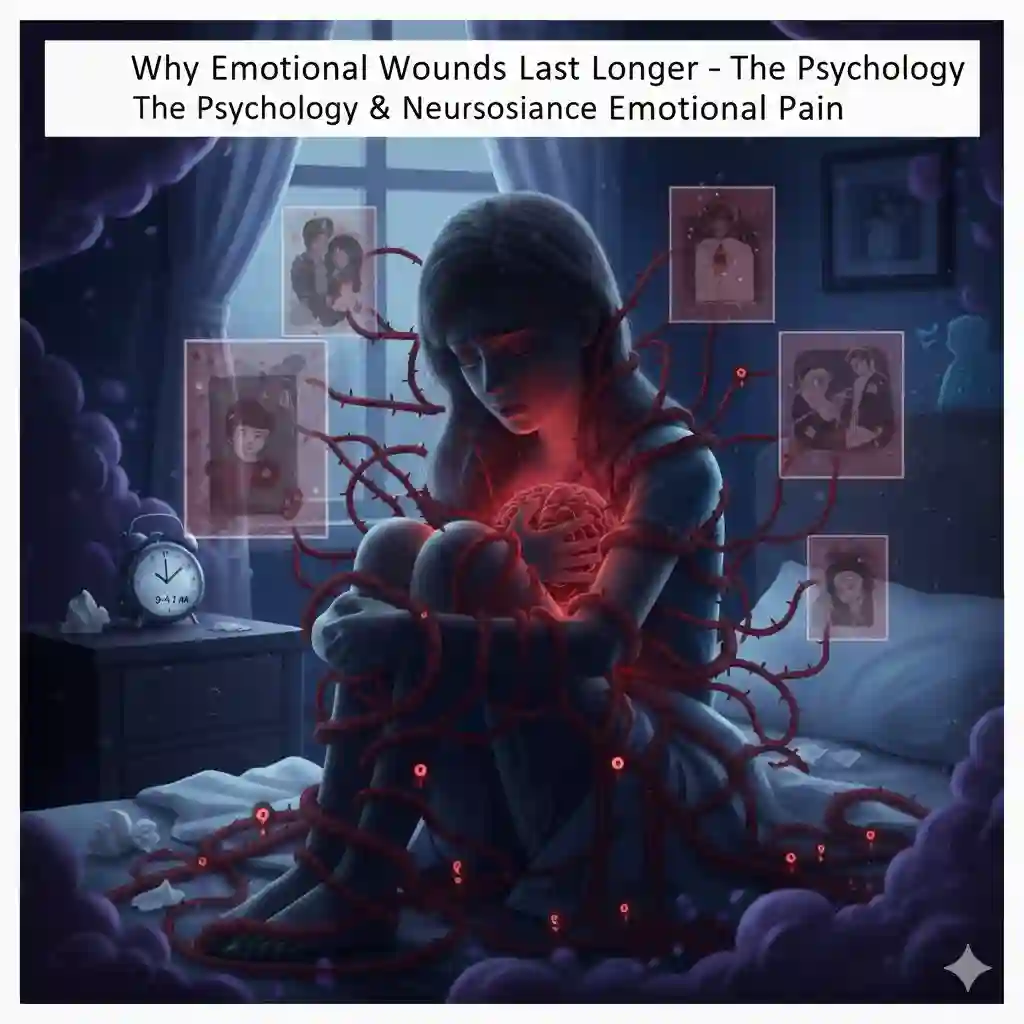
The brain’s survival mechanism registers emotional pain—like betrayal, rejection, or loss—as a significant threat. It doesn’t just record the event; it keeps the associated feelings and physiological responses alive through memory. This is why a painful memory from years ago can still make your chest tighten today. This persistence is a feature of your brain’s protective design, not a sign of weakness or an inability to “move on.”
Introduction: The Enduring Nature of Emotional Pain
A broken bone mends. A cut scabs over and fades into a scar. But the pain from a deep emotional wound—a sharp betrayal, a profound loss, or a moment of humiliation—can feel as fresh decades later as the day it happened. Why is it that we can recall the sting of a cruel word from childhood with more clarity than the physical pain of an injury from last year?
This enduring nature of emotional pain is not a flaw in our design; it is a critical feature. Humans evolved to prioritize social threats because our survival has always depended on our ability to navigate complex social landscapes. The brain treats threats to attachment, trust, and belonging with the utmost seriousness.
These wounds often bypass our rational minds, lodging themselves deep within our emotional and nervous systems. This is why advice to simply “get over it” or “let it go” so often fails. You cannot reason your way out of a biological alarm system. To understand why emotional wounds last longer, we must look at the neuroscience of how our brains are built to remember what hurts us most.
Neuroscience of Lasting Emotional Wounds
The longevity of emotional wounds is rooted in the brain’s architecture for memory and threat detection. When you experience an emotionally painful event, several key brain regions work together to ensure the lesson is never forgotten.
- The Amygdala: This is the brain’s threat detector. It tags emotional experiences with a high-alert signal, telling the rest of the brain, “This is important! Pay attention!”
- The Hippocampus: This region is responsible for forming long-term memories. When the amygdala is activated, the hippocampus works overtime to consolidate the memory of the event, linking the “what” with the “how it felt.”
- The Prefrontal Cortex: This area helps regulate emotional responses and store memories related to social rules and outcomes.
When you experience a social or emotional threat, your brain releases stress hormones like cortisol. These hormones act like a chemical “highlighter,” strengthening the neural connections associated with the painful memory. This is why the memory of betrayal is so vivid and easily recalled—your brain has ensured it is a well-trodden neural path. The experience is not just a memory; it is a persistent body-mind signal.
Psychology Behind Lingering Emotional Pain
The neural basis of emotional wounds is only half the story. The psychological component is what keeps the pain active. Unlike a physical injury, an emotional wound often becomes entangled with your identity and self-concept.
- Unresolved Experiences: When a painful event is not processed, it doesn’t just fade away. It can become a core part of your self-narrative (“I am someone who gets abandoned,” “I am not trustworthy”).
- Rumination: The mind’s tendency to replay distressing events is a key reason why emotional pain persists. Your brain is attempting to “solve” the pain by understanding it, but this cognitive loop often just reinforces the hurt.
- Sensitivity and Resilience: Early life experiences and attachment styles shape your resilience. If you learned early on that the world was unsafe or relationships were unstable, your brain may be more prone to holding onto painful memories as a protective strategy.
The Body and Nervous System Connection
Emotional wounds are not just stored in the mind; they are held in the body. Your nervous system remembers the threat long after your conscious mind has moved on. This is why a subtle reminder of a past hurt—a specific tone of voice, a particular place—can trigger an immediate, physical reaction.
This is your body’s “implicit memory” at work. Your nervous system is constantly scanning for threats, and it uses past wounds as a reference point. When a familiar pattern is detected, it can trigger a fight, flight, freeze, or shutdown response.
This is why you might experience chronic muscle tension, fatigue, or other physical symptoms tied to old emotional pain. Your nervous system is still on guard, prepared for a threat that happened long ago. Understanding these powerful emotional triggers and nervous system responses is crucial for healing.
Common Experiences of Lingering Emotional Wounds
Lingering emotional pain manifests in various ways. These are not signs of a personal failing, but natural, protective responses from a system trying to prevent future harm.
- Persistent Sadness or Longing: A deep ache for what was lost or what could have been.
- Anger, Resentment, or Bitterness: A sign that a boundary was violated and a sense of justice has not been restored.
- Anxiety or Hypervigilance: A state of constant alertness, scanning for threats to prevent being hurt in the same way again.
- Self-Doubt and Shame: A painful belief that the wound was somehow your fault, leading you to question your worth.
- Emotional Numbness or Avoidance: A protective shutdown to avoid feeling the overwhelming pain.
Each of these reactions is a logical, albeit painful, attempt to manage an unresolved threat.
How Emotional Wounds Affect Self-Esteem and Relationships
Unhealed emotional wounds act like a distorted filter through which you see yourself and the world. They can have a profound impact on your sense of self and your ability to connect with others.
Lingering pain can erode confidence and make it difficult to trust others. If a past betrayal taught your brain that intimacy is dangerous, you may unconsciously sabotage new relationships to protect yourself. The inner critic often uses old wounds as “evidence” to support its negative narrative, making you believe you are fundamentally flawed. This is a key reason how shame creates emotional paralysis, preventing you from taking healthy risks.
Your identity can become intertwined with your pain, making it difficult to imagine a future where the wound isn’t a central part of your story.
Why Emotional Pain Feels Harder Than Physical Pain
Many people report that the lasting emotional hurt is far more difficult to endure than physical pain. The neuroscience supports this subjective experience.
- Emotional Memory is Deeper: The brain’s survival priority is social belonging. It therefore dedicates more resources to encoding and replaying social and identity threats.
- Rumination Strengthens Pain: You cannot “replay” a broken leg, but you can replay a moment of humiliation a thousand times. Each mental repetition strengthens the neural pathways of the pain.
- Unexpected Resurfacing: Emotional pain can be triggered by subtle cues, resurfacing unexpectedly and with full intensity. This unpredictability makes it feel harder to manage.
This distinction is key to understanding why emotional pain hurts more than physical pain—it is designed by evolution to be unforgettable.
Healing Emotional Wounds
Healing from deep emotional wounds is not a passive process of waiting for time to pass. It is an active process of restoring safety to the nervous system and creating new meaning.
- Regulation and Safety Before Reasoning: You cannot talk your way out of a trauma response. The first step is always to calm the body through grounding, breathwork, or other somatic practices.
- Emotional Repair and Self-Compassion: Healing requires you to turn toward the pain with kindness, not judgment. Acknowledge the hurt and validate your feelings. This self-compassion is fundamental to building the secret behind emotional resilience.
- Constructive Meaning-Making: Once regulated, you can begin to reframe the narrative. Instead of “I am broken,” you might shift to “I survived a difficult experience, and it taught me about my own strength.”
- Supportive Relationships: Connecting with safe, empathetic people provides the co-regulation and validation needed to counteract the old pain. This can show your nervous system that connection can be safe.
What Lingering Emotional Wounds Are Asking You to Understand
Your lingering pain is a messenger from your past. Instead of trying to silence it, listen to what it is trying to tell you.
- Which past experiences remain unresolved? What wounds have I tried to ignore or suppress?
- How do they shape my reactions today? Do I overreact to certain situations because they touch on an old wound?
- What part of my identity felt threatened? My sense of safety? My worthiness? My competence?
- How can I restore safety internally and regain clarity? What do I need to feel safe and whole in myself, independent of the past?
Often, these wounds lead to the science of emotional burnout when they are not addressed.
Core Insight
Emotional wounds last longer not because you are weak or broken, but because your brain prioritizes social and identity threats to keep you safe. The persistence of the pain is a testament to what you valued and what you lost. Pain is a signal, not a flaw. Understanding this allows you to stop fighting your own history and start nurturing the resilience needed to build a new future.
Frequently Asked Questions (FAQs)
Why do emotional wounds feel permanent?
They feel permanent because the brain deeply encodes memories tied to survival threats, including social exclusion and identity violation. The recurring thoughts and feelings are the brain’s way of trying to prevent future harm.
Can emotional pain replay decades later?
Yes. A sensory cue—a smell, a song, a tone of voice—can trigger the neural network associated with an old wound, causing the emotional and physical sensations to resurface with surprising intensity.
How does the brain encode emotional hurt?
The amygdala flags the event as important, and stress hormones like cortisol strengthen the memory formation in the hippocampus. This creates a vivid, long-lasting “threat memory.”
Why does unresolved emotional pain affect relationships?
Unresolved pain can lead to trust issues, fear of intimacy, and hypervigilance. You might project past hurts onto new partners, making it difficult to form secure attachments.
Can understanding trauma reduce its lingering impact?
Yes. Understanding what happened to you and why your brain and body are responding in a certain way reduces shame and self-blame. This cognitive clarity is a crucial part of healing and reclaiming your story.
How do attachment styles influence emotional memory?
Anxious attachment styles may lead to more rumination and a stronger fear of abandonment, making wounds last longer. Avoidant styles may lead to suppression, causing the pain to manifest in other ways, like physical symptoms.
Why do some people heal faster than others?
Healing speed depends on factors like the severity of the wound, prior trauma history, attachment style, social support systems, and access to resources like therapy.
Can self-compassion accelerate recovery from emotional wounds?
Absolutely. Self-compassion helps to soothe the threatened nervous system and counteracts the inner critic’s voice of shame, creating the internal safety needed for healing.
Is it possible to completely forget an emotional wound?
The goal is not to forget, but to integrate. Healing means the memory no longer triggers an overwhelming threat response. The story remains, but its power to cause pain diminishes.
Why does talking about old wounds sometimes make it worse?
If you are simply reliving the event without a sense of safety or a framework for processing it (co-rumination), you can re-traumatize yourself. Therapeutic processing, in contrast, helps you make sense of the memory from a safe distance.
What is the difference between a memory and an emotional flashback?
A memory is something you know happened in the past. An emotional flashback is when the feelings of a past trauma take over the present, making you feel as if you are reliving the event now. This is a common experience with lingering emotional pain.
How do I know if I’m stuck in the past?
If you find that your reactions to present-day events are consistently disproportionate, or if you are haunted by intrusive memories and feelings from the past, it may be a sign that an old wound needs attention. A classic example is the pain from a past breakup, where why heartbreak feels unbearable at the time can create a lasting wound.
Does avoidance make emotional pain go away?
No, it often makes it stronger. Avoidance sends a signal to your brain that the feeling is dangerous, which reinforces the threat response. The suppressed energy can then emerge as anxiety, irritability, or physical symptoms. The reason why rejection feels physical is often tied to this suppressed emotional energy.
What’s the first step to healing a very old wound?
The first step is creating safety in your nervous system. Before digging into the past, focus on grounding practices that help you feel safe and present in your body right now. This is the foundation for all deeper work. You must first learn to regulate your emotional reactions before you can process their source.