Fast Answer: Why You Feel Emotionally Numb
Feeling emotionally numb is a protective psychological response where the brain intentionally dampens emotional signals to cope with overwhelm. This state can be triggered by intense stress, trauma, burnout, or prolonged emotional pressure. It is not a sign that something is “wrong with you.” Instead, it is a sophisticated survival strategy that your nervous system engages to shield you from experiences that feel too difficult to process at the moment. This emotional blunting helps you function when your emotional capacity is exceeded.
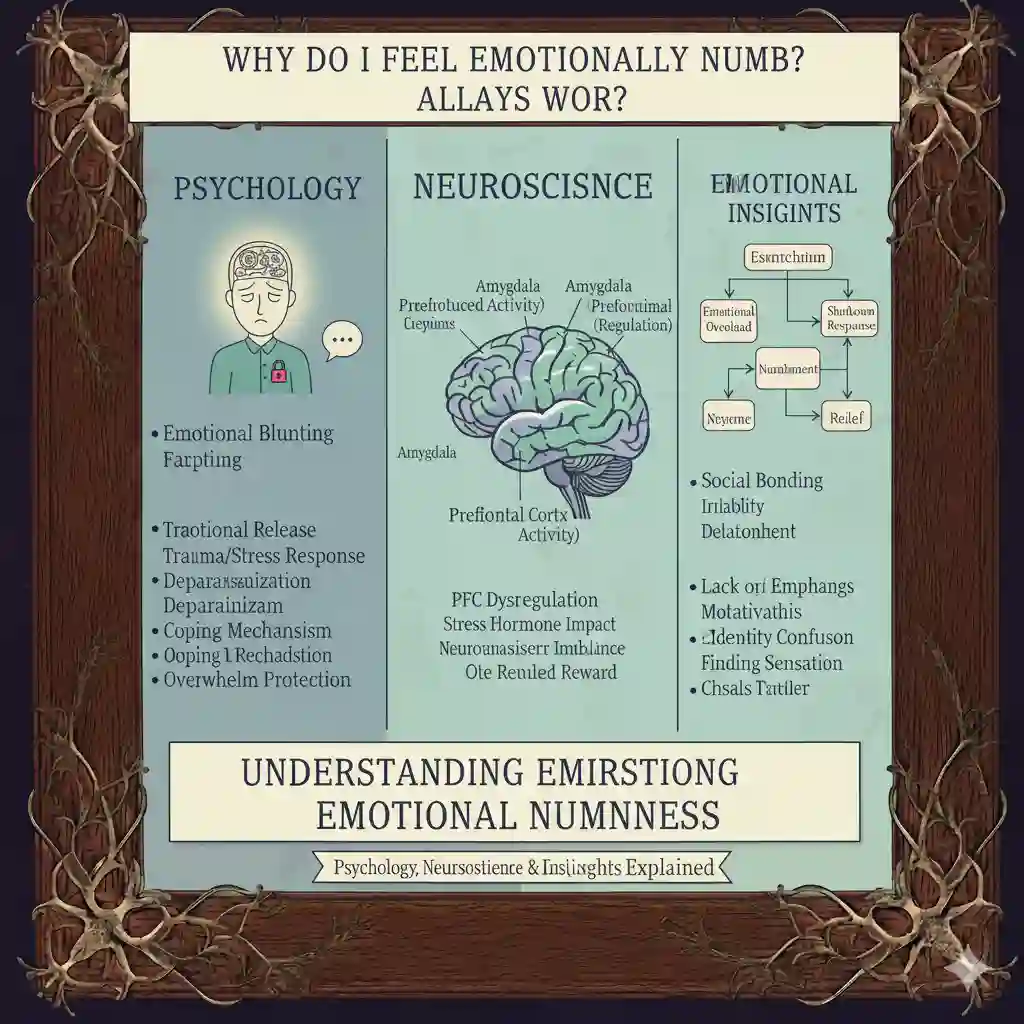
Introduction: What Emotional Numbness Really Is
Have you ever felt like you are moving through life on autopilot, watching events unfold without truly feeling them? This experience, often described as feeling emotionally numb, is a state where your emotional responsiveness is muted or absent. It creates a sense of detachment from both positive and negative feelings, as if you are separated from your own inner world by a thick wall of glass.
This sensation of “going through life without feeling fully present” is a common thread across many different mental health experiences. It can feel confusing and isolating, leaving you to wonder why you can’t feel joy at a celebration or sadness at a loss. Understanding emotional numbness is the first step toward reconnecting with your emotional self. It’s not a personal failing but a complex and often adaptive response to overwhelming circumstances.
The Brain’s Protective Response: Why Numbness Happens
Your brain is wired for survival. When it perceives an overload—whether from a sudden traumatic event or the slow burn of chronic stress—it has mechanisms to protect you. Emotional numbness is one of these protective measures. Think of it as your brain’s way of turning down the volume on your emotions when they become too loud or painful to handle.
This process, known as emotional blunting, involves a complex interplay between different parts of your brain. The limbic system, which includes structures like the amygdala (your emotional processing center), is responsible for generating emotional responses. The prefrontal cortex, your brain’s “executive center,” is involved in regulating these emotions. When you are overwhelmed, the prefrontal cortex can inhibit the limbic system, effectively reducing the intensity of your emotional signals.
It is crucial to understand that feeling emotionally numb is not the same as having no emotions at all. The emotions are still there, but your access to them is restricted. This is an adaptive neurological response designed to protect you from psychological harm, allowing you to continue functioning when you might otherwise be incapacitated by emotional pain.
Major Psychological Causes
Several psychological factors can lead to feeling emotionally numb. These triggers often involve situations where your emotional resources are pushed beyond their limits.
Chronic Stress and Burnout
When you are under constant pressure, whether from a demanding job, financial worries, or relationship difficulties, your emotional system can become exhausted. Your body is in a state of high alert, producing stress hormones like cortisol. Over time, this sustained pressure can deplete the resources needed for emotional processing. As a result, your brain may begin to mute emotional signals as a self-preservation tactic, leading to the flat, detached feeling of burnout.
Trauma and Overwhelm
Trauma, whether from a single overwhelming event or a series of smaller distressing experiences, is a primary cause of emotional numbness. When an experience is too painful or threatening for your mind to process, the brain can disengage from the intense emotions associated with it. This is a form of dissociation, a survival mechanism that creates psychological distance from a traumatic reality. The numbness acts as a shield, protecting you from the full impact of the emotional pain.
Depression and Anxiety
Both depression and anxiety can manifest with emotional blunting. In depression, numbness can be part of a broader pattern of anhedonia—the loss of pleasure or interest in activities you once enjoyed. You may not feel deep sadness, but rather an absence of feeling altogether. With anxiety disorders, the nervous system can be so overstimulated by worry and hypervigilance that it eventually shuts down emotionally to conserve energy, resulting in a paradoxical state of feeling both agitated and numb.
Emotional Suppression or Avoidance
From a young age, you may have learned to push down or ignore certain emotions, especially if they were deemed unacceptable or overwhelming. This habit of emotional suppression can become so ingrained that it happens automatically. Over time, consistently ignoring your feelings can dampen your ability to access them. Your brain learns that emotions are “unsafe” or “unproductive,” and it begins to blunt them before they even reach your conscious awareness.
Emotional Numbness and Your Nervous System
The experience of feeling emotionally numb is deeply rooted in the workings of your nervous system. Your brain is constantly scanning for threats, and when it detects one, it activates the stress response system, commonly known as “fight, flight, or freeze.”
When you face a stressful situation, your amygdala sends a distress signal to your hypothalamus, which in turn activates the sympathetic nervous system. This triggers a flood of hormones, including adrenaline and cortisol, preparing your body to face the perceived danger. However, when the stress is chronic or the threat is inescapable, the “freeze” response can take over. This is a state of shutdown where your body and mind disengage to conserve resources and minimize damage. Emotional numbness is a key feature of this freeze state.
Cortisol, the primary stress hormone, plays a significant role in this process. While short-term spikes of cortisol can be helpful, chronic elevation can have detrimental effects on the brain. It can impair the function of the prefrontal cortex, making it harder to regulate emotions, and can desensitize the receptors in your brain that respond to emotional stimuli. In essence, prolonged stress re-calibrates your nervous system to a lower level of emotional responsiveness.
It’s important to recognize that this emotional shutdown can happen even without a clinical diagnosis of depression or an anxiety disorder. The nervous system’s response to overwhelming stress is a fundamental human survival mechanism.
What Emotional Numbness Feels Like
While the underlying mechanisms are complex, the lived experience of feeling emotionally numb has common themes. People often describe it in vivid, metaphorical terms that capture the sense of disconnection.
Here are some common subjective experiences:
- Feeling detached from yourself and others: You might feel like an observer of your own life, watching yourself go through the motions without any genuine connection to your actions or the people around you. You may struggle to empathize with others because you are disconnected from your own feelings.
- Flat emotional responses to events: You might receive exciting news or face a significant loss and feel nothing. The emotional reaction you expect to have simply isn’t there, leaving you feeling hollow or confused.
- “Watching life happen” rather than participating: This is a feeling of being a passenger rather than the driver of your own life. You may feel passive and disengaged, as if you are watching a movie of your life instead of living it.
- Creative or memory fog: Emotional numbness can be accompanied by a cognitive fog that makes it difficult to think clearly, remember things, or access your creativity. Since emotions are closely linked to memory and motivation, blunting them can have a ripple effect on your cognitive functions.
- Reduced motivation and spontaneity: Without the emotional fuel of desire, joy, or even frustration, it can be hard to feel motivated. Life can lose its color and vibrancy, and you may find it difficult to be spontaneous or engage in activities that once brought you pleasure.
Emotional Numbness vs. Depression
It is common to confuse feeling emotionally numb with depression, but they are not the same, although they can coexist. Understanding the distinction is key to gaining clarity on your experience.
The primary difference lies in the presence of mood. Depression is often characterized by a persistent low mood, feelings of sadness, hopelessness, and worthlessness. While it can also include anhedonia (the inability to feel pleasure), there is typically an underlying tone of negative emotion.
In contrast, pure emotional numbness can be a state of feeling “nothing” at all. There may be a complete absence of sadness, joy, or any other strong emotion. You might feel empty or blank rather than sad. This is a critical distinction because the psychological approach to addressing these states can differ.
Furthermore, emotional numbness can appear as a primary symptom of other conditions, such as anxiety, burnout, or PTSD, even when depression is not present. For example, someone with a high-stress job might feel emotionally numb as a result of burnout, without experiencing the low mood characteristic of depression. Recognizing that numbness is a distinct psychological pattern helps to identify its specific causes more accurately.
Numbness as a Coping or Survival Mechanism
Viewing emotional numbness as a coping or survival mechanism can shift your perspective from one of self-criticism to one of self-compassion. This state is not a sign of weakness; it is a testament to what you have endured.
When you experience intense stress, trauma, or emotional pain that feels unsafe to process, your mind can shift into “survival mode.” In this mode, the priority is to function and get through the challenging situation. Feeling intense emotions can be a liability when you need to stay focused, make decisions, or simply carry on with daily responsibilities.
Emotional numbness acts as a temporary emotional shield. It creates a buffer between you and the painful reality, allowing you to operate without being overwhelmed. Think of it as an internal circuit breaker that trips when the emotional load becomes too high. This shutdown prevents a complete system overload, giving your mind and body a chance to endure the situation. While it is not a sustainable long-term strategy, it is a powerful and adaptive short-term defense.
Common Life Scenarios Linked with Emotional Shutdown
Emotional numbness is not limited to those who have experienced major traumas. It can emerge from the cumulative weight of everyday life stressors that push your emotional system to its limits.
Here are some common scenarios that can contribute to emotional shutdown:
- High-pressure careers: Jobs that demand constant vigilance, high stakes, or emotional labor (like healthcare, law enforcement, or customer service) can lead to compassion fatigue and burnout. Over time, you may find yourself becoming numb to protect yourself from the constant emotional drain.
- Caregiving without support: Being a primary caregiver for a loved one with a chronic illness or disability is an emotionally demanding role. Without adequate support and opportunities for rest, caregivers can experience profound emotional exhaustion that manifests as numbness.
- Long-term unresolved conflict: Being in a state of ongoing conflict, whether in a personal relationship or a family dynamic, keeps your stress response system chronically activated. To cope with the constant tension and emotional pain, your mind may begin to numb your feelings.
- Major life transitions: Even positive life changes, like starting a new job, getting married, or having a child, can be incredibly stressful. The pressure to adapt to new roles and responsibilities can be overwhelming, leading to a temporary emotional shutdown as you navigate the transition.
- Persistent worry or hypervigilance: Living in a state of constant worry, whether due to financial instability, health concerns, or general anxiety, is exhausting for the nervous system. Hypervigilance keeps you on high alert, and emotional numbness can be the system’s way of taking a necessary break from the intensity.
Everyday Emotional Numbness vs. Mental Health Conditions
While feeling emotionally numb can be a temporary response to stress, it can also be a symptom of an underlying mental health condition. It is helpful to understand how it presents in different contexts.
- PTSD/Dissociation: In Post-Traumatic Stress Disorder, emotional numbness is a core symptom, often part of a broader pattern of dissociation. It serves to disconnect the individual from traumatic memories and the intense emotions associated with them.
- Burnout: In burnout, numbness is primarily a result of chronic workplace or role-related stress. It is a sign of emotional exhaustion and is often accompanied by cynicism and a reduced sense of personal accomplishment.
- Anxiety Disorders: In conditions like Generalized Anxiety Disorder or Panic Disorder, numbness can be a paradoxical effect of a constantly overstimulated nervous system. The brain effectively shuts down emotional processing to escape the relentless state of high alert.
- Depression: As mentioned, numbness in depression is often linked with anhedonia and a pervasive low mood. It is one component of a larger constellation of symptoms that affect mood, energy, and self-worth.
- Medication Side Effects: Certain medications, particularly some selective serotonin reuptake inhibitors (SSRIs) used to treat depression and anxiety, can have emotional blunting as a side effect. This is a pharmacological effect that reduces the intensity of both positive and negative emotions.
When to Seek Support
While temporary emotional numbness can be a normal response to stress, it is important to recognize when it may signal a deeper issue that requires professional support.
Consider seeking an evaluation from a mental health professional if you experience the following:
- Persistent numbness lasting for weeks or months: If the feeling of being emotionally numb is not lifting and has become your default state, it is a sign that the underlying causes are not resolving on their own.
- Significant impact on your relationships or functioning: When numbness starts to damage your relationships with loved ones, impair your performance at work or school, or prevent you from engaging in life, it is time to seek help.
- A profound loss of motivation or meaning in life: If numbness has led to a feeling of emptiness and a loss of purpose, it can be a sign of a more serious condition like depression.
- You are concerned about your lack of feeling: Simply being worried about your emotional numbness is a valid reason to talk to a professional. A therapist or counselor can help you understand what you are experiencing and explore the underlying causes.
How to Reconnect with Emotions
Reconnecting with your emotions after a period of numbness is a gradual process of rebuilding trust with your nervous system. It involves creating a sense of safety and gently re-engaging your emotional awareness.
Here are some evidence-informed approaches that can help strengthen your emotional connection over time:
- Therapy and Reflection: Working with a therapist can provide a safe space to explore the root causes of your emotional numbness. Modalities like psychodynamic therapy, somatic experiencing, or cognitive-behavioral therapy (CBT) can help you understand your emotional patterns and develop skills for processing feelings.
- Mindfulness and Grounding Practices: Mindfulness teaches you to pay attention to the present moment without judgment. Practices like meditation and body scans can help you gently notice physical sensations and feelings without being overwhelmed by them. Grounding techniques, such as focusing on the feeling of your feet on the floor, can help you stay present when emotions feel too intense.
- Creative or Sensory Engagement: Engaging your senses can be a powerful way to bypass the cognitive filters that block emotions. Activities like listening to music, painting, cooking, spending time in nature, or even just noticing the texture of a piece of fabric can help you reconnect with your body and the feelings it holds.
- Connection with Others and Safe Sharing: Sharing your experience with a trusted friend, family member, or support group can help reduce the isolation that often accompanies emotional numbness. Feeling seen and understood by others can create the safety needed to begin feeling again.
Deeper Psychological Insight
Emotional numbness is more than just a symptom; it is a source of profound psychological insight. It serves as a signal, drawing your attention to areas of your life that may need care and reflection.
When you feel emotionally numb, it can reveal important patterns:
- Emotional Avoidance: Numbness can highlight a long-standing habit of avoiding difficult emotions. It may be pointing you toward a need to develop a healthier relationship with your full emotional range, including sadness, anger, and fear.
- Overwhelm from Unmet Needs: The feeling of being numb often arises when your fundamental needs—for safety, connection, rest, or purpose—are not being met. It is a sign that your system is overloaded and that you may need to reassess your priorities and boundaries.
- Past Unresolved Stress: Numbness can be a delayed reaction to past traumas or chronic stressors that you never fully processed. It may be an indication that your nervous system is still holding onto that old pain, and that healing requires revisiting and integrating those past experiences.
By working with the underlying causes of emotional numbness, rather than just trying to force yourself to feel, you can restore your natural emotional range. It is a process of listening to the message that the numbness is sending and responding with compassion and curiosity.
Core Takeaway
Emotional numbness is not the absence of feeling—it’s the brain’s adaptive signal that emotional pressure has exceeded its capacity. It is a protective mechanism asking for rest, mindful reflection, and gentle reconnection with yourself.
Frequently Asked Questions (FAQs)
Why do I feel nothing even when something matters to me?
This happens because your brain’s protective mechanisms are dampening emotional signals to prevent overwhelm. Even if you cognitively know an event is important, the emotional blunting response can override your ability to feel the corresponding emotion. It’s a disconnect between your logical mind and your emotional processing system.
Can emotional numbness be temporary?
Yes, absolutely. For many people, emotional numbness is a temporary response to a period of high stress, grief, or a major life change. Once the stressor is removed or managed, and the nervous system has a chance to recover, emotional responsiveness often returns.
Is emotional numbness the same as depression?
No, they are distinct. Depression is primarily a mood disorder characterized by persistent sadness and low mood. Emotional numbness is a state of feeling a lack of emotion altogether, which can occur with depression but also with anxiety, burnout, trauma, or on its own as a response to overwhelm.
Why do I feel numb in some relationships but not others?
This can happen when a specific relationship is a source of chronic stress, conflict, or unresolved emotional pain. Your nervous system may learn to associate that person or dynamic with an emotional threat and preemptively numb your feelings as a defense mechanism, while you remain emotionally available in safer, more secure relationships.
Can stress alone cause emotional shutdown?
Yes. Chronic stress is one of the most common causes of emotional shutdown. When your nervous system is constantly activated by stress without adequate recovery time, it can lead to emotional exhaustion and burnout, with numbness being a primary symptom.
How long does emotional numbness usually last?
There is no set timeline. The duration depends on the underlying causes and the individual’s circumstances. It can last for a few days in response to an acute stressor, or it can persist for months or even years if it’s linked to chronic conditions like trauma, burnout, or depression.