Fast Context: What the Original Page Presents
Online clinician profiles, like those for a psychiatric Nurse Practitioner (NP), typically present a professional summary designed to build trust. They highlight education, board certifications, and a compassionate clinical approach. The profile implies comprehensive expertise in diagnosing and treating mental health conditions, offering a sense of reassurance to prospective patients.
While such profiles are a useful starting point, they often omit critical context about provider roles, the depth of clinical training, and guidance on when a specific type of provider is most appropriate. This article serves as a critique of clinician profile pages in general, using the common structure of an NP profile as a framework to help patients become more informed consumers of mental health care.
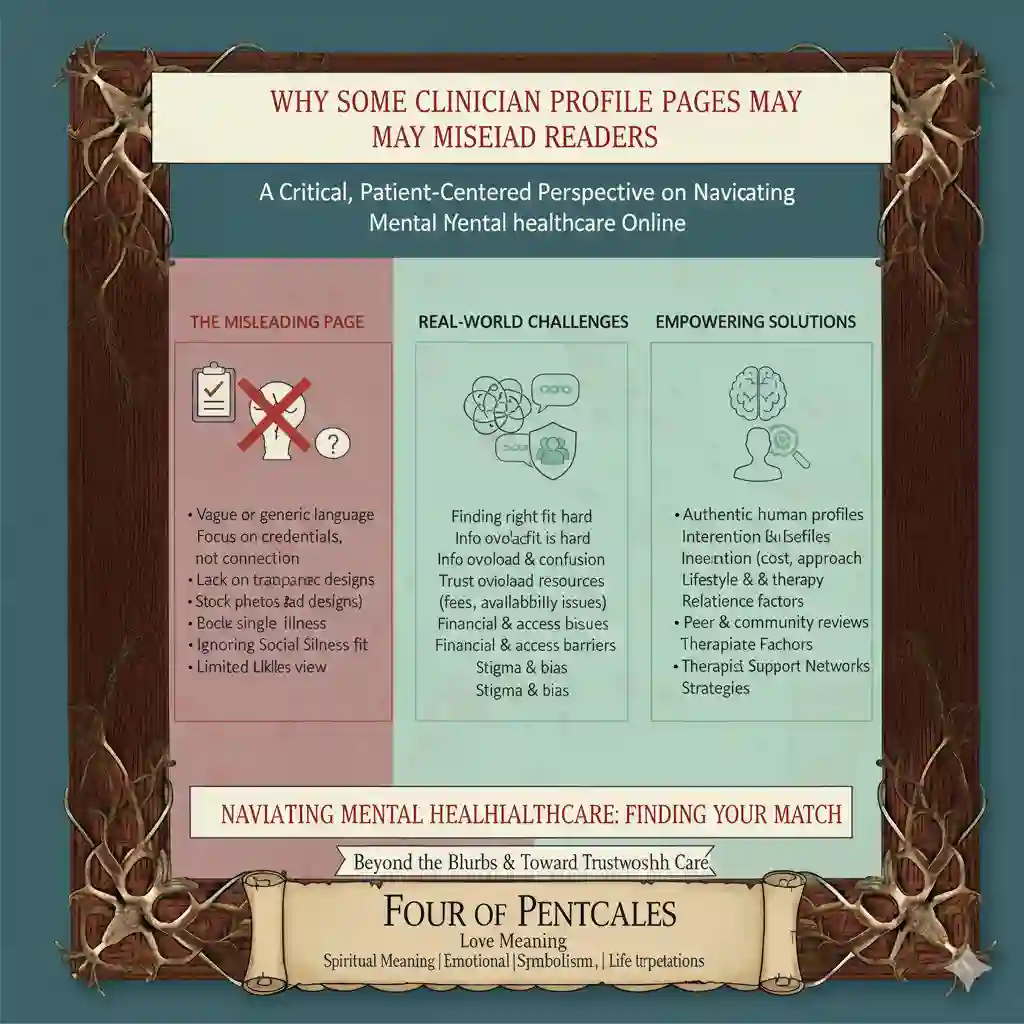
Clarify The Role: Nurse Practitioner (NP) vs Psychiatrist vs Psychologist
One of the most significant sources of confusion for patients is the variety of titles in mental health care. Understanding the differences in training and scope of practice is the first step toward making an informed decision.
Nurse Practitioner (NP)
A psychiatric-mental health nurse practitioner (PMHNP) is a registered nurse with advanced graduate-level education (a master’s or doctorate). They are trained to assess, diagnose, and treat mental health conditions. A key part of their role is prescribing and managing psychiatric medications. Depending on the state, they may practice independently or under the supervision of a physician. NPs often provide a holistic approach, integrating their nursing background with psychiatric care.
Psychiatrist (MD/DO)
A psychiatrist is a medical doctor who has completed medical school followed by a multi-year residency in psychiatry. Their training is the most extensive in the diagnosis and treatment of mental illness from a biological and neurological perspective. As physicians, they are experts in psychopharmacology (medication management) and can also provide psychotherapy, though many focus primarily on medication.
Psychologist (PhD/PsyD)
A psychologist holds a doctorate in clinical or counseling psychology. Their training focuses on psychological theory, research, assessment, and psychotherapy. They do not prescribe medication (with a few exceptions in certain states). Psychologists are the go-to experts for comprehensive psychological testing (e.g., for ADHD, learning disabilities, or complex diagnostic questions) and are highly trained in various forms of talk therapy.
The public often misinterprets these roles, assuming they are interchangeable. The training path for a psychiatrist involves over a decade of post-secondary education focused on medicine and mental illness, which differs significantly from the (still rigorous) path of a PMHNP. This is not a judgment of quality but a factual distinction in the depth and focus of training. For a patient, understanding this difference is as crucial as knowing the difference between a general contractor and a structural engineer. While both are involved in building a house, their expertise and responsibilities are not the same.
What Profile Pages Often Don’t Explain
A major reason a critique of clinician profile pages is necessary is that they are often marketing documents, not educational ones. They are designed to attract patients, which can lead to omissions that obscure important details about the care provided.
a. Differences in Clinical Authority
A profile may state that a provider “diagnoses and treats” mental health conditions, but it rarely explains the depth of that authority. A psychiatrist’s medical training equips them to handle complex differential diagnoses, ruling out underlying medical conditions that can mimic psychiatric symptoms. A psychologist is trained in using standardized assessment tools to provide a detailed cognitive and emotional profile. An NP’s diagnostic role can vary, often focusing on more common presentations of disorders. Without this context, a patient may not realize that for a complex or ambiguous problem, a more extensive diagnostic workup from a psychologist or psychiatrist might be necessary.
b. The Evidence Base Used in Practice
Many profiles use vague, reassuring language like “I use a holistic, patient-centered approach.” But what does that mean behaviorally? Does the provider primarily use Cognitive Behavioral Therapy (CBT) for anxiety? Do they use skills-based training for ADHD? Or is their approach more unstructured and supportive? Patients deserve to know if the treatment being offered is evidence-based for their specific condition. This lack of clarity is a common issue in mental health writing, where generic advice often overshadows specific, actionable strategies.
c. Limitations and Realistic Expectations
No single provider is an expert in everything. An effective and ethical clinician knows their limits and when to refer a patient to a specialist. However, a profile will rarely state, “I am not the best fit for severe, treatment-resistant depression” or “I refer out for complex personality disorders.” This creates a risk that patients may begin care with a provider who is not equipped to handle the depth of their needs, leading to wasted time, money, and hope.
Mental Health Literacy Matters
The ambiguity of clinician profiles contributes to a wider problem of low mental health literacy. When patients cannot easily distinguish between different provider roles and treatment approaches, they are less empowered to make good decisions. They might choose a provider based on a warm photo or a convenient location, not realizing that the provider’s skill set is a mismatch for their needs.
This is particularly important when considering medication. A profile might highlight a provider’s ability to prescribe, but it may not explain their philosophy on it. Is medication a first-line treatment or a last resort? How do they integrate medication management with therapy and lifestyle changes? A patient seeking comprehensive care needs to know if they are seeing a “medication manager” or an integrated practitioner. Understanding these nuances is a critical part of knowing when professional help is truly necessary and what form that help should take.
Balancing Appreciation and Skepticism
This clinician profile critical analysis is not intended to diminish the vital role that providers like Nurse Practitioners play in the healthcare system. NPs are on the front lines, often providing compassionate and effective care in areas where psychiatrists are scarce. They dramatically expand access to mental health services, and many are highly skilled clinicians who achieve excellent patient outcomes.
The issue is not the provider, but the way their role is often presented. Patients should approach every clinician profile with a blend of appreciation for the provider’s dedication and healthy skepticism about the marketing language used. The goal is to move from being a passive recipient of care to an active collaborator. This requires looking beyond the surface and questioning what the profile doesn’t say. For example, a person with high-functioning anxiety might appear fine on the surface, just as a profile might seem complete. However, understanding the hidden struggles in both cases is key to finding effective solutions.
Expert Communication vs. Marketing
There is a fine line between marketing and expert communication, and many clinician profiles blur it.
- Marketing language aims to convert a reader into a patient. It uses positive, general terms (“achieve your best self,” “a journey to wellness”) and focuses on the benefits without discussing the process or potential difficulties.
- Expert communication aims to educate. It empowers the reader to make an informed choice, even if that choice is to go elsewhere. An educational profile would clearly state the therapeutic frameworks used (e.g., “I use Acceptance and Commitment Therapy to help clients with anxiety”), the typical structure of care, and the types of problems they are best equipped to handle.
When a profile reads like a marketing blurb, it should be a signal to the patient to dig deeper and ask more questions.
What Readers Really Need to Know
To help you become a more discerning reader of clinician profiles, here is a checklist of what you should be looking for:
- Training & Credentials Explained: Does the profile just list acronyms, or does it briefly explain what those titles mean in terms of scope of practice?
- Scope Relevant to Your Problem: Does the provider’s stated specialty align with your needs? Be wary of profiles that list a dozen or more “specialties.”
- Approach & Treatment Modalities: Look for specific therapeutic terms (CBT, DBT, EMDR, etc.). If the language is vague (“integrative approach”), be prepared to ask for clarification.
- Limitations & Referral Pathways: While rarely stated, a truly transparent practice will have information on how they handle cases that require a different level of care.
- Evidence Base for Treatments: Does the provider indicate that their methods are supported by research?
Ultimately, you are looking for evidence of clear thinking. A clinician who can clearly articulate their approach on their profile is more likely to be clear and structured in their sessions. This clarity is especially important for understanding complex internal states, such as emotional numbness.
Common Misconceptions Around Provider Titles
To further improve your mental health literacy, let’s debunk a few common misconceptions:
- “An NP is the same as a psychiatrist.” No. While both can prescribe medication, a psychiatrist is a medical doctor with significantly more extensive training in the biological and neurological aspects of mental illness.
- “All clinicians provide psychotherapy.” No. Many psychiatrists and some NPs focus exclusively on medication management, which involves brief check-in appointments rather than 50-minute therapy sessions.
- “A medication prescriber will also be my therapist.” Not necessarily. In many modern care models, you may see one provider for medication and another (a psychologist or therapist) for talk therapy. It’s important to clarify if your provider offers “medication management with supportive therapy” or comprehensive psychotherapy.
When to Choose Which Professional
Here is a simplified guide to help you direct your search:
- You need a comprehensive psychiatric assessment, have a complex medical history, or have tried multiple medications without success: Start with a psychiatrist (MD/DO). Their deep medical training is best suited for complex cases.
- You need medication for a common condition like depression or anxiety and prefer an integrated, holistic approach: A psychiatric Nurse Practitioner (PMHNP) can be an excellent choice.
- You need psychological testing, have a complex diagnostic question, or want in-depth, non-medication-based therapy: Start with a clinical psychologist (PhD/PsyD).
- You are dealing with life stress, relationship issues, or mild to moderate anxiety/depression and are seeking talk therapy: A licensed therapist (LCSW, LMFT, LPC) is a great place to start.
Wrap-Up: Clarity Over Ambiguity
Clinician profiles should empower, not just impress. As a patient, you have the right to understand the training, scope, and approach of the person you are entrusting with your mental health. Clearer communication from providers helps patients make better decisions, avoid mismatched care expectations, and access the right support for their unique needs. The goal is to move beyond the polished photo and the list of degrees to find a true partner in your care.