A simple smile is one of the most powerful tools we possess. It’s a universal sign of warmth that can disarm tension, bridge cultural divides, and forge instant connections. We often think of smiling as an outward expression of inner happiness, but the science is far more fascinating. A smile doesn’t just show how we feel; it can actively change how we feel and, more surprisingly, how others feel about us. The act of smiling can quite literally trick your brain, and the brains of others, into forming a positive social bond.
Fast Answer: How Does a Smile Influence Likability?
Smiling tricks the brain into liking someone through a powerful neurobiological process. When we see someone smile, our brain’s mirror neurons often cause us to smile back, even if it’s just a subtle, internal muscular response. This action triggers a feedback loop, releasing mood-boosting neurotransmitters like dopamine and serotonin in our own brain. Simultaneously, a genuine smile on another person is perceived as a signal of safety, warmth, and trustworthiness, which makes us more inclined to like and cooperate with them.
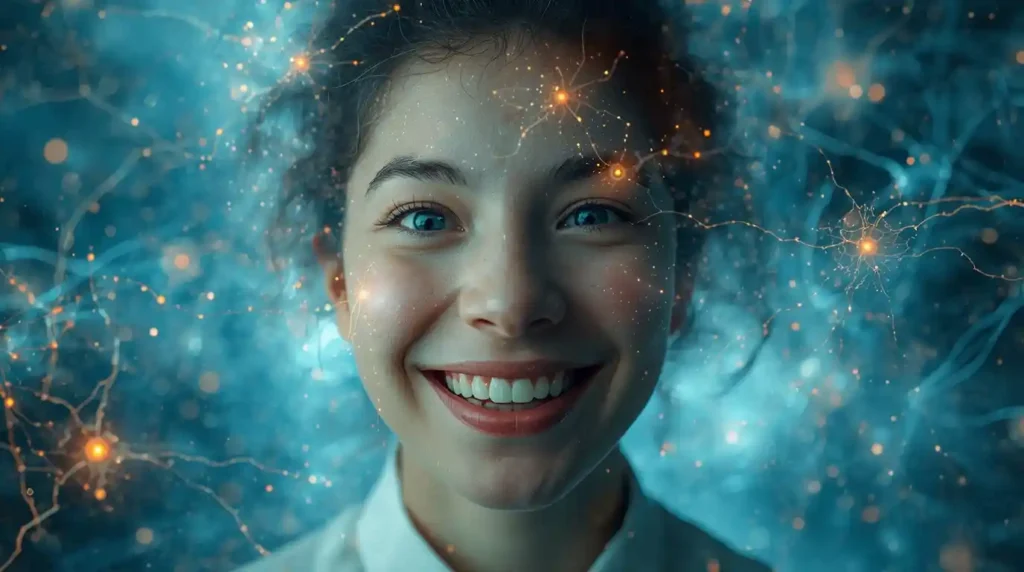
Table of Contents
- The Neuroscience of a Smile: A Chemical Cocktail for Happiness
- Mirror Neurons: The Subconscious Urge to Smile Back
- The Facial Feedback Hypothesis: Smile First, Feel Happy Later
- How a Smile Signals Trustworthiness and Competence
- Emotional Contagion: “Catching” Feelings from a Smile
- The Duchenne Smile: How Your Brain Detects Authenticity
- Cultural Nuances: Does a Smile Mean the Same Thing Everywhere?
- Using Your Smile as a Social Tool
- Frequently Asked Questions (FAQs)
- Conclusion: The Simple Power of a Smile
- Read Next
The profound impact of a smile goes far beyond simple pleasantries. By exploring the psychological and neurological mechanisms at play, we can appreciate this simple gesture as a sophisticated tool for human connection.
The Neuroscience of a Smile: A Chemical Cocktail for Happiness
When you smile, a complex and rewarding process unfolds within your brain. The physical act of contracting your smiling muscles sends a signal to your brain that triggers the release of a cascade of beneficial neurotransmitters. Endorphins, which act as natural pain relievers, are released alongside dopamine, which is associated with pleasure and reward. Serotonin, a key mood stabilizer, also gets a boost. This neurochemical cocktail not only makes you feel happier and more relaxed but also reduces stress by lowering cortisol levels. In essence, a smile is a self-perpetuating cycle of positivity. The act creates the feeling, and the feeling encourages the act.
Mirror Neurons: The Subconscious Urge to Smile Back
Have you ever noticed yourself smiling automatically when someone smiles at you? You can thank your mirror neurons for that. These specialized brain cells fire both when we perform an action and when we observe someone else performing that same action. When you see someone smile, your mirror neurons create a simulation of that action in your own brain, often prompting you to mimic the expression. This subconscious mirroring is a fundamental part of human empathy and social bonding. It creates an instant, shared emotional experience, nonverbally communicating, “I am with you; I feel what you feel.” This empathetic response is a key reason why smiling individuals are perceived as more likable—they make us feel good, almost by reflex. The mechanics of this are closely related to why we mirror other people without realizing it.
The Facial Feedback Hypothesis: Smile First, Feel Happy Later
The facial feedback hypothesis is a fascinating theory suggesting that our facial expressions can directly influence our emotional state. The idea, which dates back to Charles Darwin, proposes that the physical act of smiling can make you feel happier, even if the smile is forced. By arranging your face into a smile, you are sending signals to your brain that are associated with happiness, which can then trigger a genuine emotional shift. Studies have shown that even holding a pencil between your teeth to simulate a smile can elevate your mood. This principle demonstrates that the relationship between our bodies and minds is a two-way street. We don’t just smile because we are happy; we can also become happier because we smile.
How a Smile Signals Trustworthiness and Competence
In the rapid judgment process of a first meeting, a smile is one of the most powerful signals you can send. From an evolutionary perspective, a smile indicates a lack of threat; it communicates that you are a friend, not a foe. This perception of safety makes others more likely to trust you and cooperate with you. Research has also linked smiling to perceptions of competence and confidence. A person who smiles genuinely is often seen as more relaxed, in control, and self-assured. This plays a crucial role in everything from job interviews to leadership roles. The science of a first meeting is heavily influenced by these nonverbal cues, and a smile is a cornerstone of making a positive initial connection.
Emotional Contagion: “Catching” Feelings from a Smile
Emotional contagion is the phenomenon where we “catch” emotions from one another, much like catching a cold. A smile is one of the most effective transmitters of positive emotion. When someone directs a genuine smile at you, the positive feelings they are experiencing can be transferred to you through the process of subconscious mimicry and the resulting neurochemical changes in your brain. This is why being around happy, smiling people can lift our own spirits. It creates a shared positive emotional state that strengthens social bonds and fosters a sense of group cohesion. This contagion effect makes smiling individuals more attractive to be around, as they actively improve the emotional atmosphere of their social environment.
The Duchenne Smile: How Your Brain Detects Authenticity
Not all smiles are created equal, and your brain is remarkably good at telling the difference. A genuine smile, known as a “Duchenne smile,” involves the contraction of two key muscle groups: the zygomatic major muscle (which raises the corners of the mouth) and the orbicularis oculi muscle (which causes crinkling around the eyes, or “crow’s feet”). A fake or polite smile typically only involves the mouth. Our brains can subconsciously detect the absence of the eye crinkle, leading us to perceive the smile as less sincere. Authentic smiles are far more effective at building trust and rapport because they are seen as an honest indicator of positive feelings, a concept that ties into the secret behind charisma and influence.
Cultural Nuances: Does a Smile Mean the Same Thing Everywhere?
While the smile is one of the most universally recognized human expressions, its social application can vary across cultures. In many Western cultures, smiling at strangers is common and seen as a sign of friendliness. In some other cultures, however, smiling at someone you don’t know can be seen as inappropriate or even suspicious. The rules around when and how to smile are shaped by cultural norms. For example, some cultures value a more stoic and reserved demeanor, and an overly expressive smile might be perceived as a sign of immaturity. Understanding these cultural differences is key to effective cross-cultural communication.
Using Your Smile as a Social Tool
Knowing the science behind smiling allows you to use it more intentionally as a tool for better social interactions.
- Smile During First Impressions: Make a conscious effort to offer a genuine smile when meeting someone new to immediately signal warmth and trustworthiness.
- Smile to De-escalate Tension: In a tense or awkward situation, a smile can act as a social lubricant, signaling goodwill and reducing defensiveness.
- Smile When You Want to Feel Better: If you’re feeling down, try smiling. The facial feedback loop can provide a small but noticeable mood boost.
- Smile to Build Rapport: When listening to someone, a soft smile and nods can show you are engaged and receptive, strengthening your connection.
Frequently Asked Questions (FAQs)
1. Can forcing a smile really make me happier?
Yes, to an extent. The facial feedback hypothesis is supported by numerous studies showing that the physical act of smiling can trigger a positive emotional response in the brain. While it won’t solve deep-seated unhappiness, it can provide a temporary lift.
2. Why do I sometimes feel uncomfortable when someone smiles at me?
This can happen if you perceive the smile as insincere (not a Duchenne smile) or if it occurs in a context you deem inappropriate. It can also be a reaction to feeling suddenly in the spotlight, especially for those with social anxiety.
3. Do babies know how to smile, or is it learned?
Babies are born with the ability to smile. They exhibit “reflex smiles” from birth, and by six to eight weeks, they begin to offer genuine “social smiles” in response to interaction, showing that smiling is an innate human behavior.
4. Can smiling make you seem more attractive?
Yes. Studies have shown that smiling can increase perceived attractiveness. A smiling face is generally seen as healthier, happier, and more approachable than a neutral expression.
5. What’s the difference between a smile of politeness and a genuine smile?
A genuine Duchenne smile involves both the mouth and the eyes (creating crow’s feet). A polite or social smile often only involves the muscles around the mouth and is used to adhere to social norms rather than express true joy.
Conclusion: The Simple Power of a Smile
The smile is a remarkable feature of human behavior—a simple facial expression that is deeply interwoven with our psychology, neurology, and social structures. It is both a reflection of our inner state and a tool to shape it. A smile can generate happiness, build trust, signal competence, and create powerful bonds through a subconscious dance of mirror neurons and emotional contagion. By understanding the profound science behind this simple act, we can learn to wield its power with greater intention, fostering better connections and bringing more positivity into our own lives and the lives of those around us.
Read Next
- The Science of First Meetings: Social Interactions and Human Behavior Explained
- Why We Mirror Other People Without Realizing It
- The Secret Behind Charisma and Influence