Quick Answer Section
Breaking bad habits is a challenging yet achievable goal. Whether it’s procrastination, unhealthy eating, or smoking, the key to breaking these habits lies in understanding their roots, recognizing the triggers, and replacing them with positive alternatives. This step-by-step guide will help you identify your bad habits, understand the psychological and emotional triggers behind them, and provide practical strategies for replacing them with healthier, more productive behaviors. By following these steps, you’ll be well on your way to changing your behavior and creating lasting, positive habits.
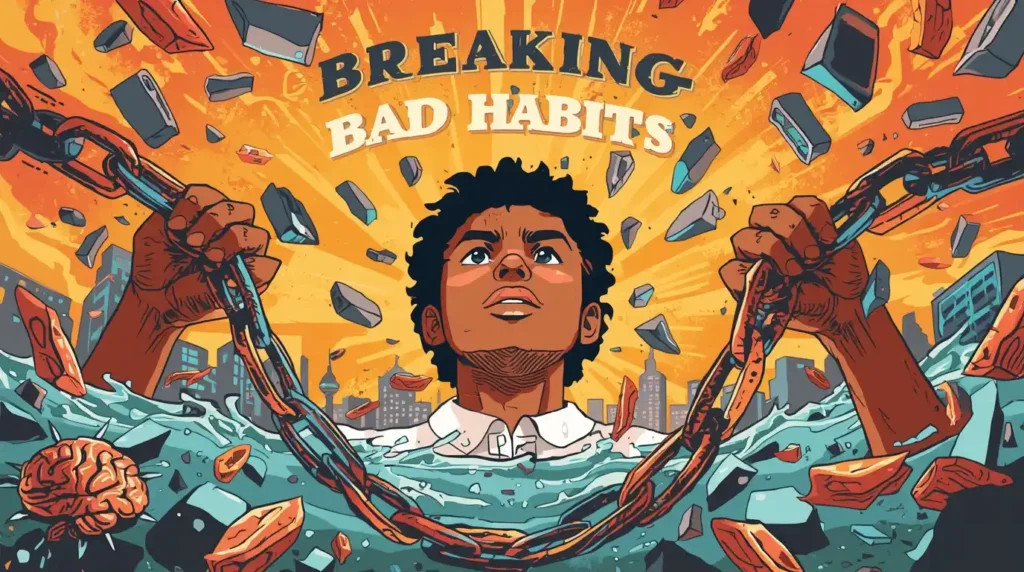
Table of Contents
- Introduction: The Challenge of Breaking Bad Habits
- The Psychology Behind Bad Habits
- How to Identify Your Bad Habits
- Step-by-Step Guide to Breaking Bad Habits
- 1. Awareness: Recognize the Habit
- 2. Identify the Triggers
- 3. Replace the Habit with a Positive Alternative
- 4. Implement a Reward System
- 5. Track Your Progress and Stay Consistent
- Why Willpower Isn’t Enough
- Dealing with Setbacks: How to Get Back on Track
- Special Section: Advanced Strategies for Breaking Bad Habits
- Frequently Asked Questions (FAQs)
- People Also Ask
- Conclusion: The Power of Breaking Bad Habits for Personal Growth
Introduction: The Challenge of Breaking Bad Habits
Breaking bad habits can feel overwhelming, but it is possible with a clear plan and consistent effort. The good news is that bad habits are not permanent—they are behaviors that can be unlearned and replaced with healthier, more productive ones. Whether it’s procrastination, smoking, excessive screen time, or unhealthy eating, recognizing and understanding the root causes of these habits is the first step toward change.
In this guide, we’ll explore psychological insights, provide actionable steps to help you break bad habits, and offer strategies to replace them with positive alternatives. By following this guide, you can create a life filled with healthy habits that support your physical and mental well-being.
The Psychology Behind Bad Habits
Bad habits are deeply ingrained behaviors that provide instant gratification but are ultimately harmful in the long run. Psychologically, habits are formed through a process of reward reinforcement. When a behavior leads to a pleasurable outcome, your brain releases dopamine, the “feel-good” neurotransmitter, which reinforces the behavior. Over time, this creates a neural pathway, making the behavior automatic.
Bad habits are often linked to emotional triggers or stress relief. For example, a person might smoke to deal with anxiety or eat unhealthy foods to cope with stress. These patterns become automatic responses to emotions, making it difficult to break them.
How to Identify Your Bad Habits
Before you can break a bad habit, it’s important to identify it. Many people go through life unconsciously engaging in behaviors that no longer serve their best interests. Here’s how to identify your bad habits:
- Self-reflection: Take time to reflect on your daily routines. What actions do you engage in regularly that don’t align with your goals or values?
- Keep a Habit Journal: For a week, track your behaviors and note times when you engage in the habit. This will help you pinpoint patterns or triggers.
- Seek feedback: Sometimes, others can help you identify your habits. Ask close friends or family members if they notice any patterns in your behavior that could be holding you back.
Step-by-Step Guide to Breaking Bad Habits
1. Awareness: Recognize the Habit
The first step to breaking a bad habit is awareness. You must be fully aware of the behavior you want to change and acknowledge its impact on your life. Without awareness, you can’t actively work to change the habit.
How to do it:
- Start by writing down your bad habits and the negative consequences they have on your life.
- Be honest with yourself about how the habit affects your health, relationships, and productivity.
2. Identify the Triggers
Habits are often triggered by certain cues or triggers—whether they’re internal (emotions, stress) or external (environmental factors, people). Identifying these triggers is essential for breaking the habit.
How to do it:
- Reflect on when and where the habit typically occurs. Are you triggered by stress, boredom, social situations, or something else?
- Keep track of these triggers in your habit journal to spot patterns.
Example:
- Trigger: Feeling stressed or anxious.
- Habit: Reaching for a sugary snack or smoking a cigarette.
- Alternative response: Practice deep breathing or go for a walk to reduce stress.
3. Replace the Habit with a Positive Alternative
Once you’ve identified the habit and its triggers, it’s time to replace it with a positive alternative. This is where habit substitution comes into play. Instead of simply trying to “stop” the bad habit, you need to replace it with a new, healthier behavior that satisfies the same need or craving.
How to do it:
- Choose a positive habit that aligns with your goals and is easy to implement. For example, if you want to break the habit of procrastination, replace it with a habit of setting a timer to work for 25-minute intervals (the Pomodoro Technique).
- Practice the new behavior every time the old habit is triggered until it becomes automatic.
4. Implement a Reward System
Habits are reinforced through rewards. When you engage in a positive behavior, your brain releases dopamine, reinforcing the new habit. Reward yourself for sticking to your new habit, but be careful not to reward yourself in a way that could reinforce the old habit.
How to do it:
- After a week of consistently practicing your new habit, reward yourself with something meaningful—a small treat, a day off, or even a simple acknowledgment of your progress.
- Make sure your rewards are aligned with your goals and don’t sabotage your efforts.
5. Track Your Progress and Stay Consistent
Tracking your progress is a powerful motivator. It allows you to see how far you’ve come and gives you a sense of accomplishment. Staying consistent is key to making the new habit stick, so make it a part of your daily routine.
How to do it:
- Use a habit tracker or an app to monitor your progress.
- Stay consistent even when things get difficult. If you slip up, don’t be discouraged. Just get back on track the next day.
Why Willpower Isn’t Enough
While willpower is important, relying on it alone is not enough to break bad habits. Willpower is a limited resource, and trying to will yourself to change without the right environment or support can lead to failure. Instead, focus on creating an environment that supports your goals and removes triggers for the bad habit.
Dealing with Setbacks: How to Get Back on Track
Setbacks are a normal part of the habit-changing process. Everyone experiences moments of relapse or slippage, but what matters most is how you respond. Rather than getting discouraged, use setbacks as opportunities to learn and improve your strategy.
How to do it:
- Acknowledge the setback: Understand what led to the slip-up and learn from it.
- Adjust your approach: If necessary, tweak your plan, remove additional triggers, or seek help from an accountability partner.
- Get back on track immediately: Don’t wait for the “perfect time.” The sooner you return to your new behavior, the better.
Special Section: Advanced Strategies for Breaking Bad Habits
- Habit Stacking: Attach a new, positive habit to an existing routine. For example, after brushing your teeth (existing habit), do 10 minutes of stretching (new habit).
- Environmental Design: Alter your environment to make it easier to engage in good habits. For instance, keep healthy snacks in visible places and junk food out of sight.
- Accountability Partners: Find someone who will hold you accountable and check in with you regularly to track your progress.
Frequently Asked Questions (FAQs)
- How long does it take to break a bad habit?
- On average, it takes 21 to 66 days to break a habit, depending on its complexity and consistency.
- What should I do if I relapse into my bad habit?
- Acknowledge the setback, analyze the triggers, and get back on track immediately. Consistency is key.
- Can I replace multiple bad habits at once?
- It’s best to focus on one habit at a time. Trying to change too many behaviors at once can lead to overwhelm.
People Also Ask
- What is the best strategy to break bad habits?
- The most effective strategy is to identify the triggers, replace the bad habit with a positive alternative, and reinforce the new behavior with rewards.
- Why is breaking a bad habit so difficult?
- Bad habits are often deeply ingrained and linked to emotional triggers. They are automatic behaviors that have been reinforced over time, making them hard to change without focused effort.
Conclusion: The Power of Breaking Bad Habits for Personal Growth
Breaking bad habits is a journey, not a one-time event. With awareness, strategy, and consistent effort, you can replace negative behaviors with positive ones that align with your goals and well-being. By understanding the psychology and triggers behind your habits, you can take control and create lasting change.