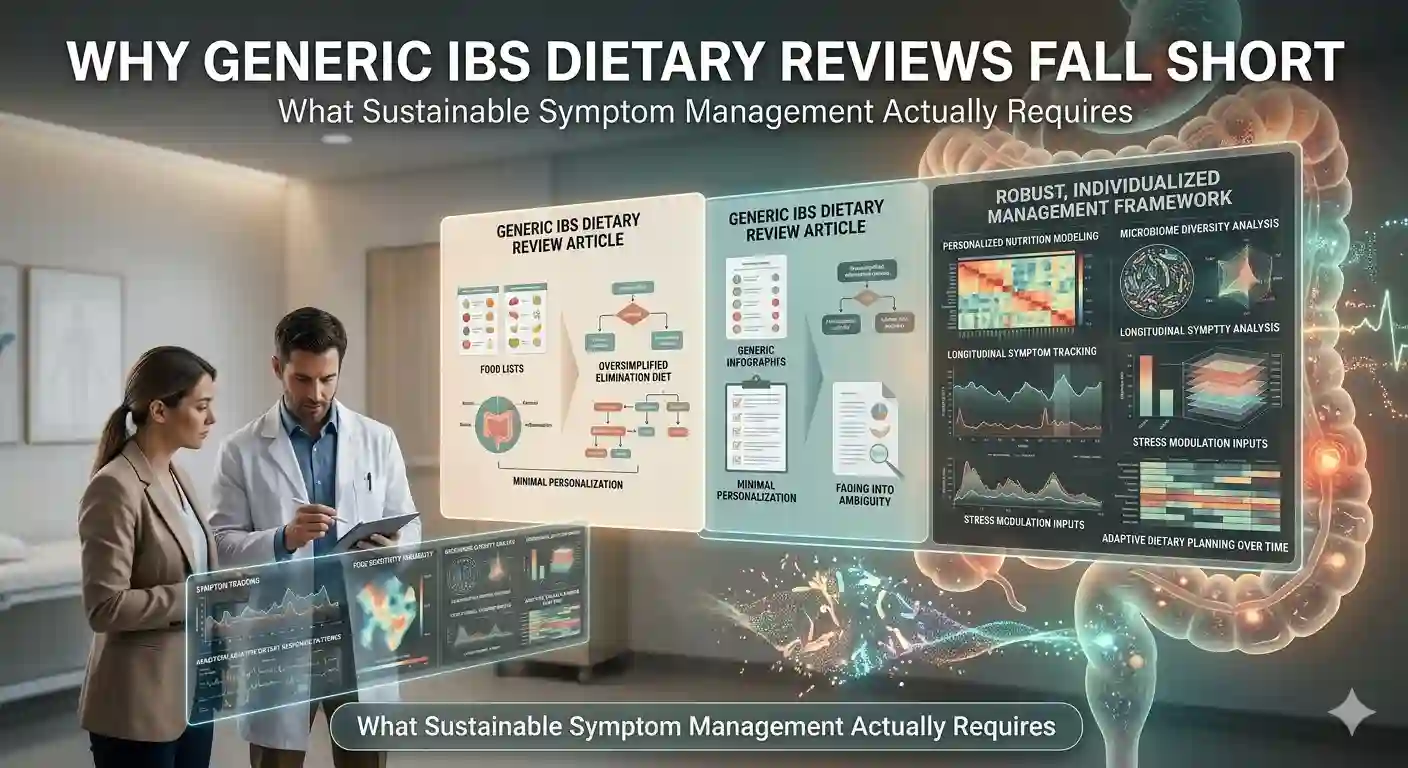
When patients and clinicians look for answers regarding Irritable Bowel Syndrome (IBS), they frequently turn to standard academic reviews. These papers generally position strict dietary protocols as the ultimate solution for chronic digestive distress. However, managing human digestion requires much more than simply removing fermentable carbohydrates from a meal plan.
Currently, there are major problems with low-FODMAP IBS diet reviews. They present a highly controlled, protocol-driven ideal that often fails to match the complex, emotionally driven reality of living with chronic gut issues. To build effective, sustainable interventions, we must look beyond standard symptom-score reductions. Let us explore what truly robust IBS dietary management actually requires.
1. Fast Summary: What the Original Article Promotes

If you read the 2024 review by Tuck et al. in Best Practice & Research Clinical Gastroenterology, you will find a comprehensive summary of dietary interventions for IBS. The paper discusses various approaches, including gluten-free, Mediterranean, and fiber-modified diets. However, it strongly positions the low-FODMAP diet as the most studied and effective first-line approach.
The review highlights a 50–75% response rate in randomized controlled trials (RCTs). It explains the physiological mechanisms—such as osmotic effects, fermentation, and visceral hypersensitivity—and outlines the standard protocol of elimination, re-challenge, and personalization. The authors conclude that diet plays a central role in IBS management and that clinicians should offer the low-FODMAP diet early in the treatment pathway.
While low-FODMAP evidence is substantial, the broader picture of sustainable IBS symptom control is far more nuanced and requires deeper exploration of placebo magnitude, long-term adherence, individual predictors, and holistic gut-brain-nutrition outcomes.
2. Why “First-Line Low-FODMAP” Is Misleading in IBS Reviews
Calling the low-FODMAP diet the absolute “first-line” therapy creates a misleading narrative. This emphasis highlights impressive short-term RCT symptom scores but drastically downplays the massive placebo response inherent in functional gastrointestinal trials. In many IBS studies, the placebo response ranges from 30% to 50%. Simply putting a patient on any structured, carefully monitored diet often yields temporary relief.
A major IBS diet critique low-FODMAP limitations reveal is that generic claims make people think this restrictive diet is superior long-term. Standard reviews rarely address the lack of clear superiority over other structured diets (like traditional dietary advice) in head-to-head trials. Furthermore, they often fail to quantify real-world adherence rates or the slow recovery of the gut microbiome after prolonged carbohydrate restriction.
3. The Limits of Short-Term RCT and Symptom-Score Framing
Relying on 4- to 12-week trials and basic symptom severity endpoints overlooks the harsh realities of long-term dietary restriction. Short-term trials completely miss the delayed nutritional deficiencies—such as lowered calcium, iron, and fiber intake—that develop when patients stay in the elimination phase too long.
Furthermore, these studies ignore the high drop-out rates seen in real-world clinic settings. They frequently fail to address the psychological comorbidities, like severe anxiety and catastrophizing, that actively amplify symptom perception. Treating a temporary symptom flare without addressing the underlying nervous system response is an incomplete strategy. Understanding why standard stress vs anxiety articles fall short helps us see that managing temporary physical distress requires looking at the deeper psychological drivers. Short-term relief does not equal sustained quality-of-life improvement.
4. The Role of Personalization and Gut-Brain Literacy
To achieve sustainable management, clinicians and dietitians need deep gut-brain literacy. Simply handing a patient a “foods to avoid” list is dangerous. Professionals must understand the complexities of FODMAP stacking, individual fermentable thresholds, and how to actively modulate visceral hypersensitivity.
Predictive biomarkers, breath tests, microbiome profiling, and thorough psychological screening lead to much better outcomes. Recognizing the difference between a true dietary trigger and a stress-induced autonomic response is crucial. This level of behavioral insight requires understanding the science of emotional triggers. Re-challenge success, psychological flexibility, and overall nutritional balance matter far more than the initial symptom reduction rate.
5. Structural and Patient Factors Affecting Outcomes
Generic review articles almost always under-emphasize the structural and socioeconomic barriers that patients face. Accessing a specialized GI dietitian is expensive and often difficult. Furthermore, low-FODMAP specialty foods carry a high financial premium.
Standard reviews also ignore the profound gender differences in symptom reporting and the impact of comorbid functional disorders, like pelvic floor dysfunction, which drastically reduce dietary efficacy. Most importantly, prescribing an intense elimination diet carries a severe risk of triggering orthorexia or restrictive eating patterns. Living with constant, unpredictable visceral pain often causes patients to detach from their bodily sensations entirely. This physical and emotional detachment closely mirrors why do I feel emotionally numb when dealing with chronic stress. True IBS management extends far beyond food restriction to full biopsychosocial integration.
6. Behavioral Patterns Predicting Long-Term Success
You can predict a patient’s long-term success by observing their behavioral patterns during treatment. Successful symptom management relies on structured re-challenges paired with symptom diaries and accurate food trigger mapping.
The most effective outcomes occur when patients combine dietary changes with gut-directed hypnotherapy or cognitive behavioral therapy (CBT). Mindful eating and acceptance-based approaches help calm the enteric nervous system. Conversely, constantly analyzing every single ingredient on a food label becomes a debilitating mental trap, clearly demonstrating why overthinking is a habit, not a personality flaw. Clinicians must watch for early behavioral warning signs like unintentional weight loss, fear of eating out, or persistent bloating despite strict dietary adherence.
7. Effective IBS Dietary Management
Effective dietary care looks very different from the rigid protocols promoted in basic literature reviews. A robust approach actively targets functional outcomes IBS dietary interventions aim to improve. This includes:
- Integrated biopsychosocial care: Combining targeted dietary therapy with gut-brain interventions, physical activity tracking, and sleep optimization.
- Personalization over protocol: Moving away from strict elimination and toward understanding individual FODMAP tolerance and microbiome resilience.
- Broad functional goals: Prioritizing normalized bowel habits, reduced healthcare visits, and sustained nutritional status over simple symptom-score drops.
Patient empowerment and shared decision-making must take center stage. When clinicians dictate rigid rules without patient input, they create a controlling dynamic that stifles long-term healing, much like the restrictive environments created by narcissistic mother traits.
8. The Pitfall of Equating Short-Term Response With Long-Term Management
Assuming a patient is “cured” because they felt better during a four-week elimination diet is a massive clinical pitfall. Long-term low-FODMAP adherence issues plague the GI community. Many responders relapse entirely or continue restricting their diets unnecessarily out of sheer terror of their symptoms returning.
Routine low-FODMAP recommendations given without a clear, scheduled re-challenge plan cause active harm. Remaining on a nutrient-depleted diet out of fear perfectly illustrates why we self-sabotage. When patients eventually eat a trigger food and experience a severe flare-up, the physical and emotional crash leaves them exhausted, mirroring the draining aftermath of panic attack hangovers. We must emphasize reflective, adaptable IBS care over simplistic restrictive diets.
9. Clinician and Patient-Centered Questions
To ensure an IBS management plan actually works, both clinicians and patients must ask critical questions:
- What objective evidence supports the long-term (greater than 12 months) benefits versus harms of remaining on a low-FODMAP diet?
- Are there measurable, scheduled re-challenge protocols and nutritional monitoring plans in place?
- How are we addressing psychological co-factors, anxiety, and visceral hypersensitivity?
- Have we properly trialed alternative, less restrictive patterns, such as a modified Mediterranean diet or gentle fiber titration?
- Does this dietary plan realistically adapt to the patient’s lifestyle, budget, and cultural background?
Do not accept a dietary protocol blindly. When treatments fail, patients and practitioners often get stuck analyzing the same failed meal plans, running in endless mental circles much like why we replay conversations in our head. Break the cycle by asking better questions.
10. Balanced Conclusion
The 2024 review provides a highly useful summary of current dietary evidence and rightly identifies the low-FODMAP diet as a validated tool in the gastroenterology toolkit. It successfully highlights the physiological mechanisms that trigger acute IBS symptoms.
However, dietary management of IBS is not just about proving low-FODMAP efficacy in short-term clinical trials. It requires active engagement with dietary personalization, rigorous re-challenge success, deep gut-brain integration, and uncompromised nutritional safety. By stepping past the oversimplified recommendations found in generic reviews, we can maximize long-term symptom control and truly restore our patients’ quality of life.