
Quick Summary
Talk therapy is a general term for psychological treatments where individuals speak with trained professionals to address emotional, behavioral, or mental health concerns. Also known as psychotherapy, it includes various approaches like cognitive-behavioral therapy (CBT), psychodynamic therapy, and humanistic therapy.
Whether you’re dealing with anxiety, trauma, depression, or relationship issues, talk therapy provides a space to process experiences, develop insight, and build coping strategies. This article explores how talk therapy works, the types available, who it helps, and what to expect from the process.

Table of Contents
- What is Talk Therapy?
- How Does Talk Therapy Work?
- Common Types of Talk Therapy
- What Conditions Can Talk Therapy Treat?
- Benefits of Talk Therapy
- What to Expect in a Therapy Session
- Who Is Talk Therapy For?
- Talk Therapy vs. Medication
- How to Choose the Right Therapist
- Conclusion: The Power of Talking It Out
1. What is Talk Therapy?
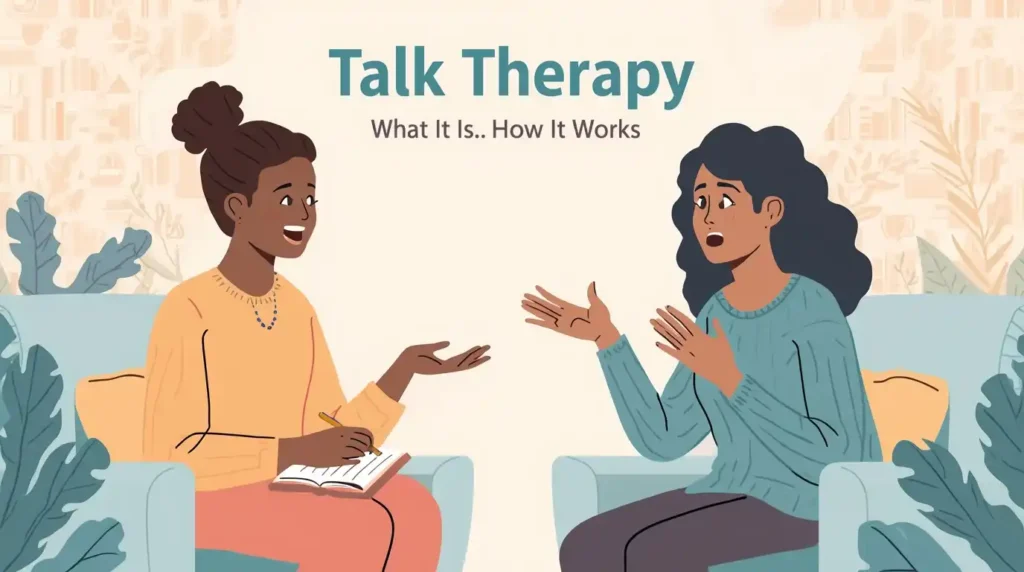
Talk therapy refers to structured conversations between a mental health professional and a client, aimed at improving emotional well-being and psychological functioning. It’s one of the most widely used forms of mental health treatment and can be delivered in individual, group, couples, or family settings.
Unlike advice from friends or family, talk therapy is grounded in psychological theory and guided by a trained therapist with professional boundaries, confidentiality, and specific therapeutic goals.
2. How Does Talk Therapy Work?
At its core, talk therapy helps individuals:
- Identify and understand their thoughts, feelings, and behaviors.
- Uncover patterns or triggers contributing to distress.
- Explore past experiences and how they influence present behavior.
- Develop new ways of thinking or relating to others.
- Build emotional regulation and coping strategies.
The therapeutic relationship itself is a major factor in healing. A strong, trusting bond between therapist and client—often called the therapeutic alliance—is one of the best predictors of successful outcomes.
3. Common Types of Talk Therapy
Cognitive-Behavioral Therapy (CBT)
- Focuses on identifying and changing negative thought patterns and behaviors.
- Highly structured and goal-oriented.
- Effective for anxiety, depression, phobias, and more.
Psychodynamic Therapy
- Explores unconscious processes, past experiences, and emotional conflicts.
- Rooted in Freudian and depth psychology principles.
- Helps clients gain self-awareness and insight.
Humanistic Therapy
- Emphasizes personal growth, self-acceptance, and free will.
- Includes person-centered therapy, gestalt therapy, and existential therapy.
Dialectical Behavior Therapy (DBT)
- Combines CBT with mindfulness and emotional regulation skills.
- Originally developed for borderline personality disorder, now used more broadly.
Interpersonal Therapy (IPT)
- Focuses on improving relationship patterns and communication skills.
- Often used for depression and grief.
Solution-Focused Therapy
- Short-term, goal-oriented.
- Focuses on strengths and solutions rather than problems.
4. What Conditions Can Talk Therapy Treat?
Talk therapy is effective for a wide range of mental health issues, including:
- Anxiety disorders
- Depression
- Trauma and PTSD
- Obsessive-compulsive disorder (OCD)
- Eating disorders
- Substance use disorders
- Grief and loss
- Relationship problems
- Personality disorders
- Life transitions and stress
It’s also valuable for people seeking personal growth, better self-understanding, or support in making life decisions.
5. Benefits of Talk Therapy
- Improves emotional regulation and stress management
- Enhances self-awareness and self-esteem
- Strengthens interpersonal relationships
- Reduces symptoms of mental illness
- Encourages healthier coping mechanisms
- Helps break unhealthy behavioral patterns
- Supports long-term psychological growth
6. What to Expect in a Therapy Session
While each type of therapy differs, a typical talk therapy session might include:
- A check-in about recent experiences or mood
- Exploration of current problems or goals
- Discussion of thought patterns or emotions
- Practical strategies for coping or change
- Reflection and insight-building
Sessions are usually 45–60 minutes and held weekly, though frequency may vary depending on need.
7. Who Is Talk Therapy For?
Anyone can benefit from talk therapy—not just those in crisis. It’s appropriate for:
- Adults, teens, and children
- Individuals, couples, and families
- People managing mental illness
- Those facing stress, conflict, or life changes
- Anyone interested in improving their mental wellness
You don’t need a diagnosis to seek therapy. Many use it proactively for personal development.
8. Talk Therapy vs. Medication
| Aspect | Talk Therapy | Medication |
|---|---|---|
| Focus | Thoughts, behavior, emotions | Brain chemistry, symptom control |
| Side Effects | Minimal to none | Can include physical or emotional side effects |
| Duration | Often longer-term | Can be short-term or long-term |
| Best For | Mild to moderate issues, insight building | Severe symptoms, biological disorders |
In many cases, a combination of therapy and medication offers the best outcomes, especially for conditions like major depression or bipolar disorder.
9. How to Choose the Right Therapist
Factors to consider when choosing a therapist:
- Credentials: Licensed psychologist, therapist, counselor, or clinical social worker
- Specialty: Experience with your specific issues or therapy type
- Approach: Do they offer CBT, psychodynamic, trauma-informed, etc.?
- Comfort: Do you feel heard, respected, and safe?
- Accessibility: Location, scheduling, insurance, teletherapy availability
A good therapist won’t judge or direct you—they’ll guide, support, and collaborate with you on your goals.
10. Conclusion: The Power of Talking It Out
Talk therapy is more than just conversation—it’s a powerful tool for healing, growth, and change. Whether you’re processing past trauma, managing stress, or simply wanting to better understand yourself, the act of talking with a trained professional can lead to meaningful insights and lasting improvements in mental health.
In a world that often encourages silence or self-reliance, talk therapy reminds us that being heard is part of being healed.