Fast Answer: Understanding and Transforming Jealousy
Jealousy and envy are normal human emotions that can disrupt our mental well-being if left unaddressed. They typically arise from social comparison, deep-seated insecurity, or a perceived threat to something we value. The first and most crucial step toward managing these feelings is awareness and acknowledgment without judgment. By using tools like mindfulness, self-reflection, and cognitive reframing, we can learn to manage the emotional intensity in the moment. Ultimately, we can channel the energy consumed by these feelings into personal growth, turning envy into a powerful motivator for achieving our own goals.
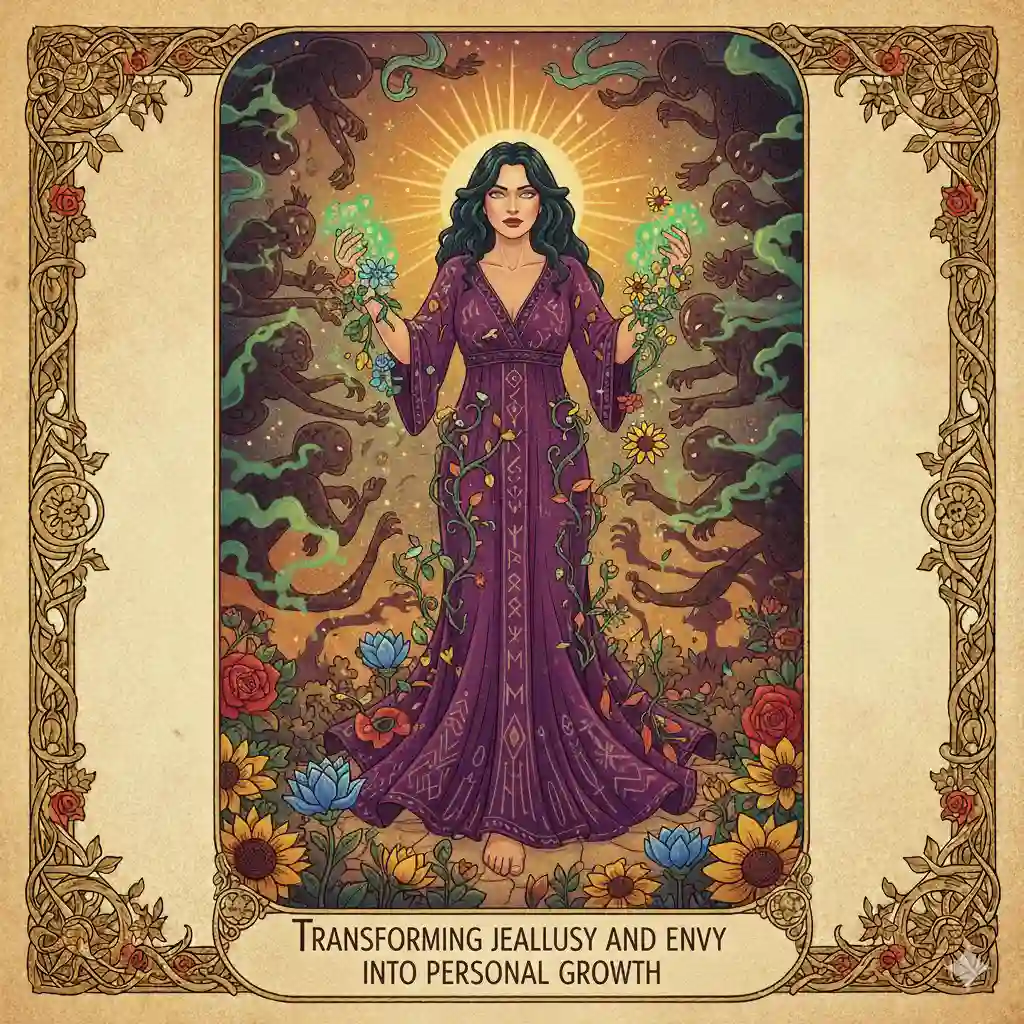
Introduction: The Hidden Costs of Jealousy
You’re scrolling through Instagram and see a friend posing on a beautiful beach, another announcing a promotion, and a third sharing photos of their seemingly perfect family. You feel a familiar, uncomfortable tightness in your chest. It’s a mix of resentment, inadequacy, and a longing for something you don’t have. At work, a colleague gets praise for a project, and instead of feeling purely happy for them, you feel a bitter pang of rivalry. In your relationship, seeing your partner laugh with someone else sends a jolt of fear and suspicion through you.
These are the quiet, often shameful, experiences of jealousy and envy. We are taught that these are “negative” emotions, signs of a flawed character. We push them down, deny them, or feel guilty for having them. But this internal battle is exhausting. The constant comparisons, the simmering bitterness, and the nagging insecurities take a significant emotional toll, straining our relationships and stealing our peace.
What if these painful feelings weren’t a flaw but a signal? What if, instead of being a reflection of your inadequacy, jealousy and envy were simply messengers pointing toward your deepest desires and insecurities? This article offers a compassionate, psychologically informed guide to understanding these powerful emotions. The goal is not to eliminate them, but to learn how to listen to them, manage them, and transform them from sources of pain into catalysts for profound personal growth.
Understanding Jealousy vs. Envy
To manage these emotions, we first need to speak their language. While we often use jealousy and envy interchangeably, psychology draws a critical distinction between them. Understanding this difference is key to addressing the root cause of your feelings.
According to research by psychologists like Robin Kowalski, the core difference is simple:
- Envy is a two-person emotion. It’s about wanting something someone else possesses. You (Person A) want what Person B has—their career, their talent, their relationship, their home. The internal monologue is, “I wish I had what you have.” It’s a feeling of longing and often inferiority, born from social comparison.
- Jealousy is a three-person emotion, a “social triangle.” It is the fear of losing something or someone you already have to a rival. You (Person A) are afraid of losing Person B’s affection or attention to Person C. The internal monologue is, “I am afraid I will lose you to them.” It’s rooted in insecurity and the fear of abandonment.
Psychologist Michael McCullough and his colleagues have studied the evolutionary basis of these emotions, suggesting they served a purpose in protecting our social standing and relationships. Envy might have motivated our ancestors to strive for more resources, while jealousy motivated them to guard their mates and social bonds.
Today, these emotions often feel more destructive than helpful. Envy can lead to resentment and a feeling of “less than,” while jealousy can manifest as suspicion, possessiveness, and conflict. By identifying whether you are feeling envy (a desire for something) or jealousy (a fear of loss), you can get to the heart of the matter. Is your pain coming from an unmet personal aspiration, or from a deep insecurity in a relationship you value?
The Brain and Body Connection
The visceral, often overwhelming nature of jealousy and envy is not imagined. It is a powerful neurobiological event. When these emotions are triggered, specific brain circuits and hormonal responses are activated.
- The Amygdala (The Threat Detector): Your amygdala is the brain’s alarm system. When you perceive a threat—whether it’s the threat of social rejection (jealousy) or the threat to your social standing from comparison (envy)—the amygdala fires. It floods your system with stress hormones like cortisol and adrenaline, preparing your body for a fight-or-flight response. This is the physiological source of the racing heart, the tight chest, and the hot flush of anger you feel.
- The Nucleus Accumbens (The Reward Center): This brain region is central to our reward and motivation systems, driven by the neurotransmitter dopamine. The nucleus accumbens is highly involved in social comparison. Interestingly, studies have shown that it can activate not just when we experience a win, but also when we see a rival or someone we envy fail (a phenomenon known as Schadenfreude). This reveals how deeply our brains are wired to track our social status relative to others. When someone else gets the promotion you wanted, the lack of reward you experience can feel like a punishment.
The behavioral consequences of this neural activation are significant. The surge of stress hormones can lead to impulsive actions—sending a text you’ll regret, making a sarcastic comment. The activation of these circuits also fuels negative thinking, as your brain gets stuck in a loop of trying to “solve” the perceived threat, leading to social withdrawal as you pull away to protect yourself from further pain.
Common Triggers
While the brain provides the hardware, our experiences and environment provide the triggers that set off these painful emotional programs.
- Social Comparison and Unrealistic Expectations: Modern life, and social media in particular, is a minefield of social comparison triggers. We are constantly bombarded with images of others’ successes, creating a gap between our reality and a curated, unrealistic ideal. This gap is fertile ground for envy.
- Past Rejection or Trauma: If you have a history of being abandoned, betrayed, or left out, your amygdala becomes hypersensitive to potential threats in your current relationships. A minor event, like a partner not answering their phone, can trigger a disproportionate fear of abandonment (jealousy) because it taps into an old wound.
- Relationship Insecurities: Low self-esteem is a major driver of jealousy. If you don’t believe you are worthy of love and commitment, you will constantly be on the lookout for threats and evidence that your partner will leave you.
- Career or Achievement Competition: In environments where status and success are highly valued, competition can be fierce. Seeing others succeed can trigger envy, especially if you feel your own progress has stalled.
Signs You’re Experiencing Jealousy or Envy
These emotions often wear disguises. Recognizing their early signs can help you address them before they grow into consuming, destructive forces.
Emotional Signs:
- Resentment or Bitterness: A persistent feeling of unfairness or ill will toward the other person.
- Insecurity and Fear: A nagging feeling of inadequacy or a constant fear of being replaced or abandoned.
- Irritability: Finding yourself easily annoyed, especially by the person you are jealous of or envious of.
Cognitive Signs:
- Constant Comparison: The habit of mentally measuring your life, achievements, or attributes against someone else’s.
- Rumination: Getting stuck in obsessive thought loops, replaying scenarios, or analyzing the other person’s life.
- Negative Fantasies: Imagining worst-case scenarios, such as your partner leaving you or your rival achieving even greater success.
Behavioral Signs:
- Gossip or Belittling: Trying to bring the other person down, either directly or behind their back, to make yourself feel better.
- Withdrawal: Avoiding the person or situation that triggers your envy, or emotionally pulling away from a partner to protect yourself from potential hurt.
- Passive-Aggressive Behavior: Making sarcastic “jokes,” giving the silent treatment, or using subtle actions to express your displeasure.
Short-Term Coping Strategies
When you’re in the grip of a strong jealous or envious emotion, your primary goal is to down-regulate your nervous system and create space for rational thought.
1. Pause and Recognize the Feeling Without Judgment
The first step is to simply name it. “I am feeling envy right now.” “This is jealousy.” This act of labeling, a core tenet of mindfulness, creates a small but crucial separation between you and the emotion. You are not the jealousy; you are the one experiencing jealousy.
2. Mindfulness and Grounding Techniques
When your mind is racing, bring your attention back to your body and your senses.
- Feel your feet on the floor.
- Notice the temperature of the air on your skin.
- Take three slow, deep breaths, focusing on the sensation of the air entering and leaving your lungs. This simple act can help deactivate the amygdala’s alarm signal.
3. Journal Your Triggers and Emotional Patterns
Externalize the thoughts. In a private journal, write down exactly what happened, what you are feeling, and the story you are telling yourself. This “brain dump” can prevent the thoughts from spiraling and help you see the situation with more clarity.
4. Practice Cognitive Reframing
Challenge the initial, emotionally-driven thoughts.
- Shift to Gratitude: Interrupt the comparison loop by consciously listing three things in your own life that you are genuinely grateful for.
- Expand the Story: You are only seeing one chapter of the other person’s story. Remind yourself that you don’t know the struggles, sacrifices, or challenges they faced to get where they are.
5. Healthy Expression
Find a safe outlet for the intense energy of the emotion. This could be through vigorous exercise, creative expression like painting or writing, or talking to a trusted, non-judgmental friend.
Long-Term Strategies for Transformation
Coping in the moment is about survival. True transformation is about using these emotions as a catalyst for growth.
1. Cultivate Self-Awareness and Self-Compassion
Use envy as a compass. What is it pointing to? The person you envy often embodies a quality or has achieved a goal that you secretly desire for yourself. Instead of resenting them, get curious. “What is this envy telling me about what I value?”
When you feel the pain of jealousy, practice self-compassion. Recognize that this feeling comes from a place of fear and a deep human need for security and belonging. Treat yourself with the same kindness you would offer a friend who is feeling insecure. For more on this, our guide on how to stop being controlled by guilt, shame, and regret offers powerful self-compassion techniques.
2. Set Goals Aligned with Your Personal Values
Once envy has shown you what you value, use that information to set authentic goals for yourself. If you are envious of a friend’s artistic talent, your goal isn’t to be them; it’s to develop your own creativity. Sign up for a class, dedicate time to practice, and focus on your personal journey of improvement. This shifts you from a passive state of resentment to an active state of creation.
3. Practice Gratitude and “Mudita”
Gratitude is the direct antidote to the scarcity mindset of envy. A daily gratitude practice can literally rewire your brain to focus on abundance rather than lack.
Go a step further and practice Mudita, the Buddhist concept of finding joy in the good fortune of others. This is a radical act of self-regulation. When a friend shares good news, actively try to feel happy for them. It may feel forced at first, but with practice, it can replace the knee-jerk reaction of envy with a feeling of shared joy and connection.
4. Consider Therapy or Coaching
If your jealousy and envy are chronic and deeply rooted in past trauma, low self-esteem, or an insecure attachment style, working with a professional can be incredibly beneficial. A therapist can help you heal the underlying wounds that are making you so vulnerable to these painful emotions.
Real-Life Scenarios & Exercises
Scenario 1: The Workplace Promotion
- The Situation: Your coworker gets the promotion you wanted. Envy and resentment are making it hard to be in the same room with them.
- The Transformation:
- Acknowledge and Validate: “It is okay to feel disappointed and envious. I worked hard for this too.”
- Separate Person from Goal: Congratulate them genuinely. Your issue is with the outcome, not them as a person.
- Use It as Data: Schedule a meeting with your boss. Ask for specific feedback on what you can do to be better prepared for the next opportunity. Create a professional development plan.
- Reframe: See your colleague not as a rival, but as a source of information. What did they do that you can learn from?
Scenario 2: The Social Media Comparison Trap
- The Situation: You find yourself endlessly scrolling through the feed of someone from your past whose life seems perfect, and it leaves you feeling depressed and inadequate.
- The Transformation:
- Mindful Consumption: Unfollow or mute accounts that consistently make you feel bad. Curate your feed to be inspiring, not demoralizing.
- Reality Check: Remind yourself that you are comparing your behind-the-scenes footage to their highlight reel.
- Turn Inward: When you feel the urge to scroll, pause. What feeling are you trying to escape in your own life? Use that moment for a quick journal entry or a 2-minute meditation instead.
Scenario 3: Relationship Insecurity
- The Situation: Your partner is spending more time with a new group of friends, and you feel a rising panic and jealousy.
- The Transformation:
- Regulate Your Fear: Do not act on the initial impulse to accuse or control. Use breathing techniques to calm your nervous system.
- Communicate Vulnerably: Instead of “Why are you always with them?”, try “I’ve been feeling insecure and a bit lonely lately. I miss our connection. Can we plan a date night soon?”
- Invest in Your Own Life: Jealousy often thrives when a partner becomes the center of your universe. Reconnect with your own friends, hobbies, and passions. A full life is the best defense against insecurity. If you find your jealousy is part of a larger pattern of resentment, our article on letting go of resentment and grudges can provide further insight.
Journaling Prompt for Growth:
- “The last time I felt envious, the person I was envious of had/was […]. This shows me that I value […]. A small step I can take this week to cultivate that in my own life is […]”
Frequently Asked Questions
How do I stop being jealous of others?
You can’t simply “stop” a feeling. Instead, focus on changing your response. Acknowledge the feeling without judgment, practice gratitude to shift your focus, and use the envy as a clue to what you truly want to build in your own life.
Can envy harm my relationships?
Yes. Unchecked envy can lead to resentment, bitterness, and passive-aggressive behavior, which can poison friendships and family relationships. It prevents you from celebrating the successes of people you care about, creating distance and distrust.
How can I transform jealousy into motivation?
When you feel jealous, ask yourself: “What is this emotion telling me I want?” If you’re jealous of someone’s confidence, let that motivate you to work on your public speaking skills. If you’re jealous of a relationship, let it motivate you to improve your own communication and connection skills.
Is it normal to feel envy sometimes?
It is completely normal. Envy is a fundamental part of the human experience of living in social groups. The goal is not to never feel it, but to learn how to manage it so that it doesn’t control you.
What are practical exercises to reduce jealousy daily?
Start a daily gratitude journal, listing three things you appreciate about your own life. When you see someone succeed, make it a practice to silently (or openly) wish them well. Practice mindfulness meditation to become better at observing your thoughts without getting caught up in them. When jealousy is rooted in deep insecurity, our guide on how to handle insecurity can offer additional strategies.