Fast Answer: Why Emotional Pain Feels Heavy in the Chest
Emotional pain feels heavy in the chest because the brain and body interpret intense emotions as threats, activating the nervous system in ways that tighten muscles and amplify bodily sensations. The heart and chest area are especially sensitive to social and emotional signals, acting as a primary sounding board for your internal state.
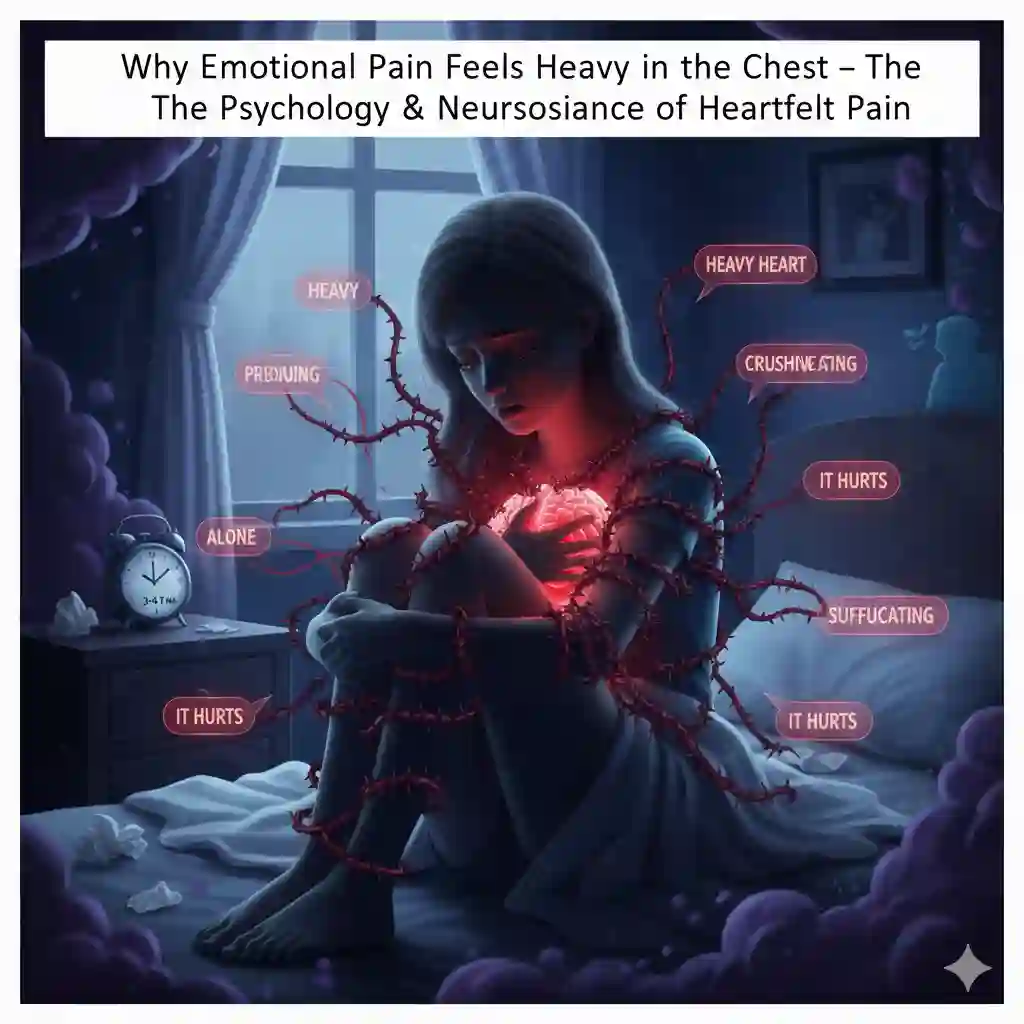
When you experience deep sadness, rejection, or grief, the brain’s anterior cingulate cortex—which processes both physical and social pain—lights up. This triggers the vagus nerve and the autonomic nervous system, often causing a tangible constriction in the chest wall, changes in heart rate variability, and a sensation of pressure. This heaviness is not a medical emergency or a sign of weakness; it is your body physically registering the weight of an emotional experience.
Introduction: The Mind-Body Link in Emotional Pain
We often speak of emotions as if they are purely mental events—abstract thoughts floating in our minds. Yet, anyone who has experienced profound grief, anxiety, or heartbreak knows the truth: emotions are physical. We feel a “broken heart” not as a metaphor, but as a genuine ache in the center of the chest. We feel anxiety as a tightening band around the ribs.
This physical manifestation of emotion is an evolutionary adaptation. Humans evolved to feel emotions physically to ensure we paid attention to them. Physical sensation demands focus in a way that thoughts do not. The heaviness in your chest is a survival signal, highlighting that something significant—usually a threat to connection or safety—is occurring.
Many people try to logic their way out of this feeling, telling themselves to “just calm down.” However, because the sensation is rooted in the autonomic nervous system, rational thought often fails to resolve it immediately. Understanding why emotional pain feels heavy in the chest requires bridging the gap between psychology and biology, recognizing that the body is simply telling the story of the mind.
Neuroscience Behind Chest Heaviness
To understand why emotional pain feels heavy in the chest, we must look at the brain-body connection. Several key brain regions are involved in translating emotional distress into physical sensation.
- The Anterior Cingulate Cortex (ACC): This region is pivotal. It activates during physical injury, but it also lights up during social rejection or grief. It doesn’t distinguish between a physical blow and an emotional one; it simply registers “pain.”
- The Insula: This part of the brain is responsible for “interoception”—your ability to sense the internal state of your body. During emotional distress, the insula becomes hyper-active, amplifying your awareness of your heartbeat, breath, and chest tension.
- The Amygdala: As the brain’s threat detector, the amygdala triggers the release of stress hormones like cortisol and adrenaline. These hormones directly affect the cardiovascular system, altering heart rate and blood flow, which contributes to the sensation of pressure or heaviness.
This neural activity explains why heartache feels physical. It is not an illusion; it is a cascade of electrical and chemical signals turning emotional data into somatic experience.
Psychology of Emotional Pain in the Chest
Psychologically, the chest is often experienced as the center of the “self” or the “heart.” It is where we feel connection, love, and protection. When these core needs are threatened, the pain localizes there.
- Attachment Distress: Our earliest bonds are formed through physical holding, usually chest-to-chest. Consequently, psychological threats to attachment—like breakups or loneliness—often trigger a somatic memory of separation distress centered in the chest.
- The Weight of Experience: We often describe burdens as “heavy.” This metaphor is rooted in physical reality. Depression and grief can alter posture (slumping) and muscle tone, literally making the body feel heavier and harder to move.
- Trauma and Conditioning: If you have a history of anxiety or trauma, your nervous system may be sensitized to interpret emotional intensity as physical danger, causing the chest to tighten protectively at the first sign of stress.
This interplay helps explain why emotional pain hurts more than physical pain, as the emotional experience is laden with deep psychological meaning that physical injury often lacks.
Nervous System & Chest Sensation
The sensation of heaviness is largely a product of the autonomic nervous system reacting to stress.
- Sympathetic Activation (Fight or Flight): When emotional pain strikes, the sympathetic nervous system mobilizes the body. It increases heart rate and blood pressure. To protect the vital organs (heart and lungs), the muscles of the rib cage may unconsciously tighten, creating a feeling of being “squeezed” or “crushed.”
- Parasympathetic Withdrawal: Alternatively, a sudden emotional shock can cause a drop in tone, leading to a feeling of emptiness or sinking in the chest.
- The Vagus Nerve: This major nerve runs from the brainstem down through the chest and into the gut. It is heavily involved in emotional regulation. Intense emotion can overstimulate the vagus nerve, contributing to sensations of pain or aching in the chest area.
This reaction happens milliseconds before you have a conscious thought about the emotion. The body reacts to the “danger” of the emotion before the mind can label it.
Common Physical Sensations Linked to Chest Heaviness
Emotional pain in the chest rarely presents as a single sensation. It is often a complex cluster of physical feelings.
- Tightness or Pressure: Often described as an elephant sitting on the chest or a tight band around the ribs. This is usually due to intercostal muscle tension.
- Heart Palpitations: You may feel your heart pounding, fluttering, or skipping a beat. This is the result of adrenaline acting on the heart muscle.
- Shallow Breathing: Emotional distress often shifts breathing from the diaphragm to the upper chest. This inefficient breathing pattern can lead to a feeling of “air hunger” or breathlessness, reinforcing the panic.
- Fatigue and Tension: The tension often radiates outward, causing aching in the shoulders, neck, and upper back.
Each of these is a natural physiological adaptation to stress, not a sign that your body is failing.
Emotional Interpretation of Chest Pain
The specific flavor of the chest sensation often correlates with the underlying emotion.
- Grief: Often feels like a hollow ache or a heavy, crushing weight. It is the physical manifestation of emptiness and longing.
- Anxiety: Usually feels like a high-frequency vibration, tightness, or a “fluttery” sensation. It signals hyper-arousal and preparation for threat.
- Heartbreak: Can feel like a sharp, piercing pain or a dull, bruised sensation. This aligns with why heartbreak feels unbearable, as the body registers the loss of an attachment figure.
- Overwhelm: Often feels like a constricting pressure, as if the chest cannot expand enough to hold the experience.
These sensations are your body’s way of communicating the depth of your experience. They are adaptive responses trying to get you to pay attention to your emotional state.
Why Chest Heaviness Persists
Sometimes the emotional event passes, but the heaviness remains. This persistence can be confusing and distressing.
- Recurrent Triggers: If you are constantly reminded of the loss or source of stress, your nervous system never gets a chance to fully reset. The muscles remain guarded, and the chest remains tight.
- Rumination Loops: Replaying the painful event keeps the amygdala active. Every time you think about the pain, you send a fresh signal to the body to maintain the defensive posture. This is linked to why we relive painful memories, creating a cycle of physical and mental recall.
- Unresolved Meaning: If the brain cannot make sense of the pain, it maintains a state of alert. The heaviness persists as a physical marker of the unresolved conflict.
- Stress Memory: The muscles themselves can hold tension patterns. Long after the acute emotion has faded, the body may remain in a “braced” shape, maintaining the sensation of heaviness.
Coping With Emotional Chest Heaviness
Resolving the heaviness in the chest requires a “bottom-up” approach—calming the body to soothe the mind.
- Grounding and Breathing: Consciously shifting your breath deep into the belly (diaphragmatic breathing) signals safety to the vagus nerve. This counteracts the shallow, chest-based breathing of distress.
- Emotional Labeling: Simply naming the feeling (“This is grief,” “This is anxiety”) can reduce activity in the amygdala and lower the intensity of the physical sensation. This is a key part of understanding emotional reactions.
- Gentle Physical Release: Stretching the chest, rolling the shoulders, or practicing yoga postures that “open” the heart area can mechanically release the muscle tension contributing to the heaviness.
- Mindfulness and Body Scanning: Instead of fighting the sensation, observe it with curiosity. “I notice a heaviness in my chest.” This creates distance and prevents the panic that makes the sensation worse.
Reflective Prompts
Use these prompts to explore the message behind the sensation:
- Which emotions are present when my chest feels heavy? Am I sad, scared, or angry?
- What memory or thought is activating this sensation? Is there a specific trigger linked to this physical feeling?
- How does my body respond physically and emotionally? Do I slump? Do I hold my breath?
- What can I do to safely release tension without judgment? Can I place a hand on my heart and offer myself comfort?
These questions help you connect the somatic experience to the psychological root, aiding in the psychology of emotional resilience.
Core Insight
Emotional chest heaviness is not a sign of fragility—it is your body’s natural way of signaling that an intense experience needs acknowledgment. The pressure you feel is the weight of your own humanity. Recognizing the sensation as a messenger rather than a threat restores insight, self-trust, and resilience.
Frequently Asked Questions (FAQs)
Why does emotional pain feel like pressure in the chest?
The brain interprets intense emotional distress as a threat, triggering the sympathetic nervous system. This causes the muscles of the chest wall to tighten and heart rate to change, creating a tangible sensation of pressure.
Can anxiety make chest pain worse?
Yes. Anxiety leads to hyperventilation and increased muscle tension, which can amplify existing chest discomfort. It also makes you hyper-aware of bodily sensations, making the pain feel more intense. This is a common aspect of emotional triggers and nervous system responses.
Are chest sensations dangerous or just emotional?
While you should always consult a doctor for unexplained chest pain to rule out medical issues, chest heaviness linked to clear emotional triggers is usually a benign, albeit uncomfortable, physiological response to stress.
Why does chest heaviness come with grief or heartbreak?
Grief and heartbreak are processed in the brain regions that overlap with physical pain (like the anterior cingulate cortex). The heaviness is the somatic expression of this “social pain.”
How long can emotional chest pain last?
It varies. Acute heaviness may last minutes to hours. However, if the underlying emotion (like grief) is chronic, the sensation can come and go in waves for weeks or months. This is similar to why emotional pain comes in waves.
Can mindfulness or breathwork relieve chest heaviness?
Yes. Slow, deep breathing stimulates the vagus nerve, which activates the relaxation response (parasympathetic nervous system), helping to loosen chest muscles and slow the heart rate.
Why do some people feel it more strongly than others?
Differences in “interoceptive awareness” (how strongly you feel internal bodily states) mean some people are naturally more sensitive to the physical side of emotions. Past trauma can also sensitize the nervous system.
Is chest heaviness a sign of unresolved emotion?
It can be. If the sensation persists without an obvious current trigger, it may indicate that the body is holding onto the energy of a past emotion that hasn’t been fully processed or released. This can be related to why emotional wounds last longer.
Why does rejection specifically hurt the chest?
Rejection threatens our evolutionary need for belonging. The brain registers this threat with high priority, often activating the vagus nerve which influences the heart and lungs, leading to that specific “heart-dropping” or aching feeling. This is tied to why rejection lowers self-esteem.
Can crying help relieve the pressure?
Yes. Crying is a biological release mechanism that helps shed stress hormones and brings the body back to a state of equilibrium, often physically relieving the feeling of tightness in the chest.