When conversation stalls or a room goes quiet, the resulting discomfort can feel physical. It isn’t just “awkwardness”—it is a distinct physiological and psychological response. For many, silence feels heavier than noise. It creates a sudden spike in self-awareness, a rush to find something to say, or a subtle sense of threat.
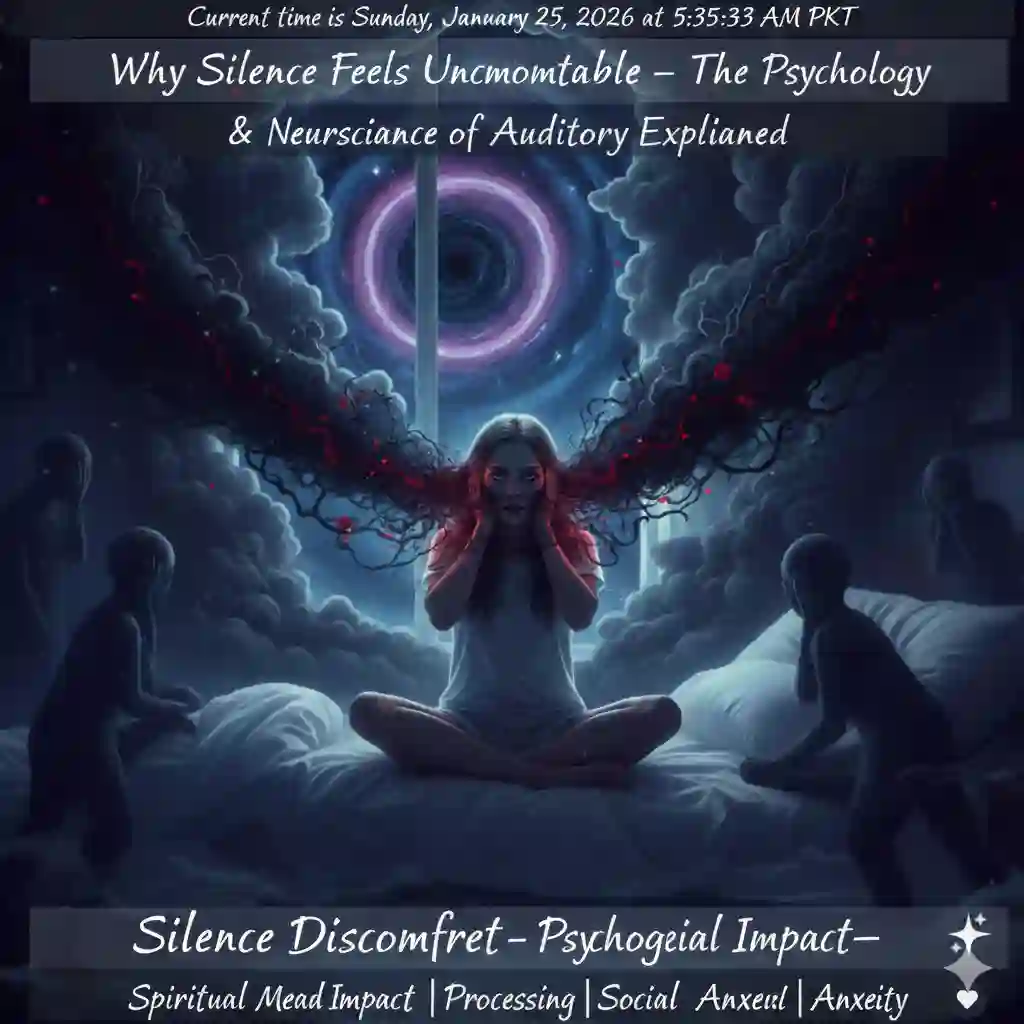
This reaction is not a personality flaw. It is a byproduct of how the human brain evolved to process social information. To the brain, silence is rarely neutral; it is data. Specifically, it is ambiguous data that the nervous system must interpret rapidly to ensure safety and social belonging.
Fast Answer: Why Silence Feels Uncomfortable
Silence often feels uncomfortable because the human brain is wired to interpret social ambiguity as a potential threat. In the absence of verbal feedback, the brain’s prediction mechanisms falter, leading to a state of heightened alertness known as “prediction error.” The nervous system activates social monitoring circuits to scan for signs of rejection, judgment, or disapproval. This physiological arousal—a literal fight-or-flight response to social uncertainty—manifests as the feeling of awkwardness or tension.
Introduction: Silence Is Not Neutral to the Brain
Humans are profoundly social creatures. For most of our evolutionary history, survival depended on belonging to a group. Constant communication—whether through vocalizations, gestures, or language—served as a signal that the social bond was intact. Noise, in a social context, often equates to safety. It signals presence, engagement, and predictability.
When that noise stops, the brain’s safety signal is interrupted. We do not process silence merely as the absence of sound; we process it as the presence of a gap. This is a crucial distinction. External silence (a quiet forest) is often relaxing, but social silence (a pause in conversation) is alarming. The difference lies in expectation.
When you are with another person, your brain expects a continuous loop of feedback: you speak, they respond, you read their tone, they read yours. Silence breaks this loop. It creates a sudden void of information. Because the brain prioritizes survival, it defaults to a “better safe than sorry” interpretation. It assumes the silence might indicate a problem—disagreement, boredom, or anger—until proven otherwise. The discomfort you feel is your brain attempting to force you into action to resolve this ambiguity and restore the flow of reassuring social data.
The Neuroscience of Silence Discomfort
To understand why silence feels unsettling, we must look at what happens in the brain when external stimulation drops.
The Default Mode Network (DMN)
When you are engaged in conversation, your brain is focused outward. When conversation stops, the brain switches gears. It activates the Default Mode Network (DMN), a network of interacting brain regions active when a person is not focused on the outside world. The DMN is responsible for self-referential thinking: reflecting on oneself, remembering the past, and worrying about the future.
In a silent moment, the DMN lights up. Your focus turns inward instantly. You become hyper-aware of your own performance: “Did I say something wrong? Do I look weird? Why can’t I think of anything to say?” This sudden shift from connection to introspection can feel jarring and isolating.
Prediction Error and Uncertainty
The brain is fundamentally a prediction machine. It constantly forecasts what will happen next based on past patterns. In a conversation, the brain predicts a rhythm of exchange. Silence disrupts this rhythm, causing a “prediction error.” The brain hates uncertainty because uncertainty carries risk.
To resolve this error, the brain scrambles to find a cause. Without verbal input, it fills the gaps with assumptions, often leaning toward negative interpretations to prepare for potential social rejection. This process is explored deeply in our guide on the neuroscience of silence discomfort, which details how the brain processes ambiguous social gaps as cognitive threats.
Silence as a Social Threat Signal
Silence is not just a pause; in many contexts, it acts as a social threat signal. We are conditioned to associate silence with withholding. The “silent treatment,” for example, is a form of aggression. Even in benign situations, the brain scans silence for signs of exclusion.
Social Pain Circuits
Neuroscience has shown that social pain—such as rejection or exclusion—activates the same neural regions as physical pain, specifically the dorsal anterior cingulate cortex and the anterior insula. When a conversation dies and silence stretches out, the brain’s threat detection system (the amygdala) may ping these pain centers.
This is why awkward silence can feel visceral—a knot in the stomach or heat in the face. The brain is reacting as if you are being pushed away from the tribe. It interprets the lack of responsiveness as a breach of the social contract. For more insight into this mechanism, you can read about why being ignored hurts so much.
Why Silence Makes People Overshare or Nervous Laugh
When the tension of silence builds, the brain urges us to break it. This often leads to behaviors that seem irrational in hindsight but serve a clear regulatory purpose in the moment.
Oversharing as Tension Release
Oversharing—revealing too much personal information too quickly—is a common response to silence. It acts as a “bid” for connection. The brain reasons that if the silence is caused by a lack of intimacy or trust, offering a vulnerability will bridge the gap. It is a frantic attempt to restore the social rhythm. However, this often stems from an inability to tolerate the physiological arousal of the pause. You can explore the mechanics of this impulse in our article on why some people overshare immediately.
Nervous Laughter as Regulation
Laughter is not always about humor; it is often about relief. Nervous laughter releases tension. When silence spikes cortisol (stress hormone) levels, laughter helps discharge that energy. It signals submissiveness and friendliness, essentially telling the other person, “I am not a threat, and I hope you aren’t either.” It is a way to downgrade the brain’s alert status. Learn more about this specific reflex in our piece on why we laugh when we’re scared or nervous.
Personality, Anxiety, and Silence Sensitivity
Not everyone experiences silence with the same intensity. Individual differences in neurology and personality play a significant role.
High Self-Monitors
People who are “high self-monitors” are acutely aware of social norms and how they are perceived. For them, silence feels like a spotlight. They interpret the pause as a failure of performance, leading to higher distress.
Social Anxiety vs. Introversion
Introverts may actually enjoy silence because their brains are easily overstimulated by social interaction; silence offers a reprieve. However, those with social anxiety—regardless of whether they are introverted or extroverted—fear silence because they interpret it as evidence of their own social inadequacy. The anxious brain has a lower threshold for detecting social threat, meaning a three-second pause that feels neutral to one person may feel like an eternity of judgment to another.
Situational Silence: Why Some Places Feel Worse
The context of silence changes how the brain processes it. Silence is not absolute; it is relative to the environment.
Elevators and Confined Spaces
In an elevator, you are physically trapped in close proximity to others without a defined social task. The social norm is usually “civil inattention”—acknowledging others but not engaging. However, the silence amplifies the sound of breathing, shifting, or clothing rustling. The brain feels the physical intimacy of the space but lacks the verbal intimacy to match it, creating dissonance. This phenomenon is dissected in our article on why we feel awkward in elevators.
Digital Silence
The “typing…” bubble that appears and then disappears can trigger immense anxiety. Digital silence lacks all non-verbal cues. In person, you can see if someone is thinking or distracted. In text, silence is a blank screen. The brain projects its worst fears onto that blank screen, often assuming the person has changed their mind or is angry.
Eye Contact, Attention, and Silent Pressure
Silence becomes exponentially more uncomfortable when combined with eye contact. Vision and hearing are our two primary social senses. When we speak, eye contact is usually intermittent—we look away to think and look back to connect.
In silence, eye contact feels intense because it signals purely “being watched.” Without words to focus on, the gaze feels evaluative. This triggers the “spotlight effect,” where we feel we are being scrutinized more than we actually are. The brain perceives the stare as dominance or aggression when it is not softened by verbal cooperation. This pressure often leads us to break the gaze, a behavior rooted in primate submission signals. For a deeper look at gaze psychology, read why we avoid eye contact with strangers.
Emotional Amplification in Silence
Silence acts as an amplifier for internal states. Noise and conversation serve as distractions—they pull cognitive resources away from introspection. When the noise stops, those resources return to the body and mind.
The Volume of Internal Pain
If you are carrying underlying stress, shame, or sadness, silence will bring it to the surface. It is difficult to outrun an emotion when there is nowhere to hide. This is why many people keep the TV on or listen to podcasts constantly; they are using noise to regulate their internal emotional volume.
In silence, the brain becomes sensitized to interoceptive signals—the feeling of the heartbeat, muscle tension, or a “heavy” chest. Because the brain is searching for input, it turns up the volume on these internal signals, making emotional pain feel physically louder. This mechanism is explained further in our guide on why pain feels stronger in silence.
Cultural and Learned Silence Responses
Our tolerance for silence is heavily influenced by upbringing and culture. The brain learns what silence “means” based on early experiences.
Learned Danger
If you grew up in a volatile household where silence was the calm before a storm—a signal that a parent was angry—your nervous system learned to encode silence as a prelude to danger. As an adult, silence triggers a trauma response, putting you into a state of hypervigilance.
Cultural Variance
In many Western cultures, conversation is viewed as a way to build rapport; silence is a void to be filled. In some East Asian and Nordic cultures, silence is viewed as a sign of respect, thoughtfulness, and trust. It signals that the relationship is strong enough to exist without constant verbal reinforcement. This proves that the discomfort is often a learned cognitive framework rather than a biological absolute.
When Silence Is Actually Healthy
It is important to distinguish between “forced silence” and “chosen silence.” Forced silence (being ignored) creates distress. Chosen silence (a quiet moment with a friend) can be profoundly regulating.
When safety is established, silence shifts from a threat to a resource. It allows the nervous system to downregulate. It gives the brain a break from the high cognitive load of processing language and social cues. In a secure relationship, silence is “companionable”—it means the brain has ceased scanning for threats and is content to simply exist in the presence of another.
How to Become Comfortable With Silence (Psychologically)
Building tolerance for silence is a form of cognitive exposure therapy. It involves retraining the brain’s prediction error response.
Reframing Silence as Neutral
The first step is cognitive: consciously remind yourself that silence is neutral information. It does not automatically equal rejection. When a pause occurs, resist the urge to fill it immediately. Observe the impulse to speak without acting on it.
Nervous System Regulation
If silence triggers physiological arousal (racing heart, tight chest), focus on physical regulation. A long exhale signals to the vagus nerve that you are safe. By calming the body, you send a signal back to the brain that the silence is not a threat.
Reducing Social Threat Interpretation
Challenge your projections. Instead of thinking, “They are bored,” consider, “They are thinking,” or “They are comfortable enough not to perform.” By offering the brain an alternative, safe interpretation for the ambiguity, you reduce the activation of the amygdala.
The Deeper Psychological Message of Silence Discomfort
Ultimately, our reaction to silence is a mirror. It reflects our dependency on external validation to feel safe. When the external feedback stops, we are left with our own self-regard. If that self-regard is shaky, silence will feel like a judgment.
Discomfort with silence is not about emptiness—it’s about the brain searching for meaning when feedback disappears. It is a sign that your mind is working hard to protect your social standing. Recognizing this mechanism is the first step toward disarming it. When we stop viewing silence as a verdict on our worth, it ceases to be a source of pain and becomes simply a pause for breath.
For more insights into human behavior and emotional patterns, visit the MindBehaviorGuide homepage.
Frequently Asked Questions (FAQs)
Why does silence feel awkward in conversation?
Silence feels awkward because the brain interprets it as a disruption in social flow. It creates ambiguity, which the brain perceives as a potential threat to the social bond, triggering a mild stress response.
Is discomfort with silence a sign of anxiety?
It can be. While most people feel some pressure to fill silence, intense discomfort or panic during pauses is often linked to social anxiety or a fear of negative evaluation.
Why do I feel pressure to talk during silence?
This is a tension-release mechanism. The silence increases physiological arousal (stress), and speaking is a way to discharge that energy and restore a sense of control and safety.
Why does silence make emotions stronger?
Silence removes external distractions, allowing the brain’s focus to turn inward (via the Default Mode Network). This amplifies awareness of internal physical and emotional states that were previously ignored.
Can learning to tolerate silence improve confidence?
Yes. Learning to sit in silence without rushing to fix it signals to yourself (and others) that you are secure in your social standing. It demonstrates that you do not need constant validation to feel safe.
Why does digital silence hurt more than real silence?
Digital silence lacks context. In person, body language can explain a pause. In text, a lack of reply is a complete void, allowing the brain to project its worst insecurities onto the silence without any corrective data.