Quick Answer Section
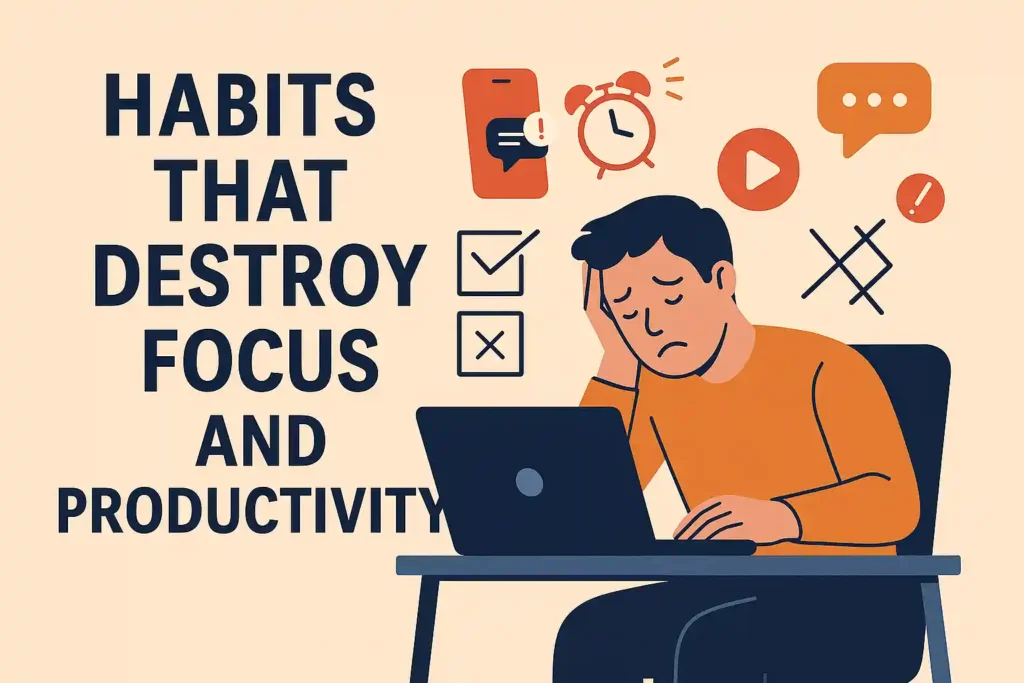
Your habits can either help you stay productive or hold you back. Certain everyday behaviors may seem harmless but can gradually erode your focus and productivity. Identifying these habits and understanding how they affect your ability to concentrate and get things done is crucial for improving efficiency and achieving your goals. In this article, we’ll highlight the habits that destroy focus and productivity and provide actionable tips on how to break them.
Table of Contents
- Introduction: The Impact of Habits on Focus and Productivity
- Common Habits That Destroy Focus and Productivity
- 1. Multitasking
- 2. Constantly Checking Your Phone
- 3. Procrastination
- 4. Lack of Sleep
- 5. Poor Time Management
- 6. Overworking Without Breaks
- 7. Cluttered Workspace
- 8. Negative Thinking Patterns
- How to Break These Habits and Boost Focus
- Special Section: Strategies to Enhance Productivity
- Frequently Asked Questions (FAQs)
- People Also Ask
- Conclusion: How to Create Habits That Boost Focus and Productivity
Introduction: The Impact of Habits on Focus and Productivity
The habits you practice daily have a profound effect on your productivity and ability to focus. You might not realize it, but seemingly small behaviors—such as checking your phone, procrastinating, or overloading yourself with tasks—can significantly decrease your efficiency. As productivity becomes more valued in both personal and professional life, understanding the habits that sabotage focus is essential for long-term success.
In this article, we will uncover some common habits that destroy focus and productivity, and provide actionable tips on how to eliminate or replace them with healthier, more productive behaviors.
Common Habits That Destroy Focus and Productivity
1. Multitasking
While multitasking seems like a good way to get more done, it actually reduces productivity and focus. The brain is not designed to handle multiple tasks simultaneously. When you switch between tasks, it takes time for your brain to refocus, which results in wasted time and decreased productivity.
How it affects focus:
- Cognitive overload: Constantly shifting your attention between tasks can make it harder to stay focused and process information effectively.
- Quality suffers: When you multitask, you’re less likely to complete any task at your best level.
Solution:
- Prioritize one task at a time. Use techniques like time blocking or the Pomodoro Technique to maintain focus on one task without distractions.
2. Constantly Checking Your Phone
Your phone is a constant source of distractions, whether it’s social media, emails, or notifications. The habit of checking your phone every few minutes breaks your concentration and reduces your focus.
How it affects focus:
- Interrupts workflow: Every time you check your phone, your focus is interrupted, and it can take several minutes to get back to your task.
- Increases mental fatigue: The constant influx of information can overwhelm your brain, making it harder to think clearly.
Solution:
- Put your phone on “Do Not Disturb” mode while working or place it in another room to avoid the temptation.
- Set specific times to check your phone, such as during breaks.
3. Procrastination
Procrastination is a habit that leads to unnecessary stress and prevents you from completing tasks on time. This habit not only reduces your productivity but also affects your mental well-being, causing anxiety as deadlines approach.
How it affects focus:
- Creates anxiety: The longer you delay, the more anxious you become about the task, which makes it harder to focus.
- Disrupts momentum: When you delay tasks, it becomes harder to start, and you lose momentum for completing the rest of your tasks.
Solution:
- Break tasks into smaller, manageable parts. Use the two-minute rule—if a task takes less than two minutes, do it right away.
- Set clear goals and deadlines to avoid delays and build momentum.
4. Lack of Sleep
Sleep is critical for cognitive function, focus, and productivity. Skimping on sleep may seem like a way to get more done, but it actually decreases mental sharpness, impairs decision-making, and reduces your ability to concentrate.
How it affects focus:
- Mental fatigue: Without proper rest, you’re more likely to feel tired, distracted, and unproductive.
- Memory and learning difficulties: Sleep deprivation negatively affects the brain’s ability to process and retain information.
Solution:
- Aim for 7-9 hours of sleep each night.
- Create a bedtime routine that promotes relaxation, such as turning off screens and practicing relaxation techniques before sleep.
5. Poor Time Management
Without an effective time management strategy, tasks can pile up, and you may find yourself scrambling to complete them at the last minute. This habit not only diminishes productivity but also negatively affects your ability to focus.
How it affects focus:
- Unorganized approach: Poor time management leads to rushing through tasks, which makes it difficult to maintain focus on any one task.
- Lack of prioritization: Without a clear schedule, it’s easy to waste time on non-essential activities.
Solution:
- Use tools like calendars or task management apps (e.g., Google Calendar, Trello, or Todoist) to plan your day and prioritize tasks.
- Break your day into chunks, designating time for focused work and breaks.
6. Overworking Without Breaks
While working hard is important, working non-stop without breaks can lead to burnout, decreased focus, and poor productivity. The brain needs time to rest and recharge to maintain peak performance throughout the day.
How it affects focus:
- Decreased cognitive function: Overworking leads to fatigue, which makes it harder to concentrate and perform tasks efficiently.
- Burnout: Extended periods of non-stop work can lead to emotional and physical exhaustion, lowering your motivation and productivity.
Solution:
- Take regular breaks (e.g., every 60-90 minutes) to refresh your mind.
- Practice the Pomodoro Technique, where you work for 25 minutes, followed by a 5-minute break.
7. Cluttered Workspace
A cluttered or disorganized workspace can significantly impact your ability to focus. When surrounded by mess, it’s easy to feel distracted, overwhelmed, and unproductive.
How it affects focus:
- Visual distractions: Clutter pulls your attention away from the task at hand, reducing focus and mental clarity.
- Stress and anxiety: A chaotic workspace can lead to a feeling of being overwhelmed, making it hard to get started or stay on track.
Solution:
- Declutter your workspace regularly and keep only essential items on your desk.
- Use organizational tools like trays, folders, or digital tools to keep your workspace clean and organized.
8. Negative Thinking Patterns
Negative self-talk and focusing on the potential for failure can destroy motivation and hinder your ability to concentrate. If you constantly doubt yourself, it becomes challenging to maintain focus on tasks and push through difficult moments.
How it affects focus:
- Creates mental blocks: Negative thoughts make it difficult to get started or stay focused because they trigger anxiety or self-doubt.
- Reduces motivation: Constantly thinking about what could go wrong reduces your drive to act.
Solution:
- Practice positive affirmations to combat negative thinking.
- Challenge negative thoughts by replacing them with practical solutions and focusing on what you can control.
How to Break These Habits and Boost Focus
Now that you’re aware of the habits that destroy your focus, the next step is to replace them with positive, productivity-enhancing behaviors. Here are a few tips:
- Start small: Focus on eliminating one negative habit at a time.
- Set realistic goals: Create clear and achievable goals to work toward.
- Track your progress: Use tools like habit trackers or journaling to stay on top of your focus and productivity goals.
Special Section: Strategies to Enhance Productivity
- Use time-blocking: Dedicate specific time slots to different tasks to stay focused.
- Limit distractions: Turn off unnecessary notifications and create a distraction-free zone.
- Prioritize tasks: Tackle the most important tasks first, leaving minor tasks for later.
Frequently Asked Questions (FAQs)
- What is the best way to stay focused?
- The best way is to eliminate distractions, use time-blocking, and prioritize tasks to stay on track.
- How can I avoid procrastination?
- Break tasks into smaller parts, set deadlines, and use accountability to stay motivated and focused.
- Why do I feel distracted all the time?
- Distractions may be due to poor time management, negative thinking, or constant interruptions from technology or your environment.
Additional
- What are the most common focus-killing habits?
- Multitasking, constantly checking your phone, procrastination, and lack of sleep are some of the top focus-killers.
- How can I build better habits for productivity?
- Start by eliminating distractions, practicing time management, and maintaining a clean and organized workspace.
Conclusion: How to Create Habits That Boost Focus and Productivity
Your habits shape your ability to focus and get things done. By identifying and breaking the habits that destroy your productivity, you can replace them with behaviors that foster focus, mental clarity, and efficiency. Start small, stay consistent, and over time, you’ll find yourself more focused and productive, achieving your goals with greater ease and satisfaction.