Empathy is the invisible thread that weaves together the fabric of human society. It’s the ability to step into someone else’s shoes, to feel what they feel, and to understand their perspective. It is the force that transforms a simple interaction into a moment of genuine connection and the foundation upon which trust, compassion, and meaningful relationships are built. While it can feel like a magical or intuitive quality, empathy is a complex psychological process rooted in our neurobiology and social evolution.
Fast Answer: What Is Empathy and How Does It Work?
Empathy is the capacity to understand and share the feelings of another person. It operates on two levels: Emotional Empathy, which is feeling with someone, driven by mirror neurons in the brain that simulate their emotions in our own body; and Cognitive Empathy, which is understanding why someone feels a certain way through conscious perspective-taking. Together, these processes allow us to resonate with others’ experiences, build social bonds, and navigate the complexities of human interaction.
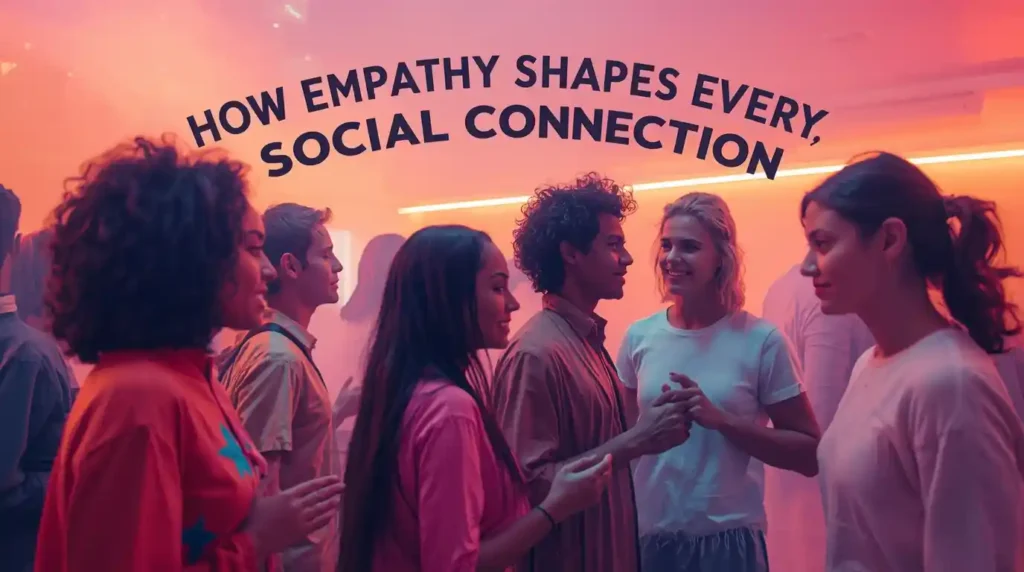
Table of Contents
- The Two Faces of Empathy: Feeling vs. Understanding
- The Neuroscience of Connection: Mirror Neurons
- From Empathy to Compassion: The Urge to Help
- How Empathy Defeats Groupthink
- The Empathy Deficit: What Happens When It’s Missing?
- Can Empathy Be Learned? Cultivating a Core Skill
- The Dark Side of Empathy: When It’s Used for Manipulation
- Empathy in the Digital Age
- Frequently Asked Questions (FAQs)
- Conclusion: Empathy as Our Social Superpower
- Read Next
Understanding empathy is not just an academic exercise; it’s a key to unlocking deeper connections, fostering more effective teams, and building a kinder, more compassionate world.
The Two Faces of Empathy: Feeling vs. Understanding
Empathy is not a single, monolithic feeling. Psychologists generally divide it into two core components: emotional empathy and cognitive empathy. Emotional empathy is the vicarious, gut-level experience of sharing someone else’s feelings. When you see a friend cry and you feel a pang of sadness yourself, that’s emotional empathy at work. It’s an automatic, often subconscious, response. Cognitive empathy, on the other hand, is the more conscious ability to understand someone’s emotional state and perspective. It’s about putting yourself in their shoes and seeing the world from their point of view, even if you don’t share their emotional reaction. Both are crucial. Emotional empathy creates the initial bond, while cognitive empathy allows us to respond in a helpful and appropriate way.
The Neuroscience of Connection: Mirror Neurons
One of the most exciting discoveries in modern neuroscience is the mirror neuron system. These remarkable brain cells fire not only when we perform an action but also when we see someone else perform that same action. They essentially “mirror” the other person’s experience inside our own brain. This system is believed to be a fundamental neurological basis for emotional empathy. When you see someone smile, your mirror neurons fire as if you were smiling, which can trigger a genuine feeling of happiness. This is a key reason how smiling tricks your brain into liking someone. This neural mirroring allows us to have a direct, embodied understanding of what another person is going through, creating a bridge between minds.
From Empathy to Compassion: The Urge to Help
Empathy is the spark, but compassion is the fire. While empathy is about sharing or understanding a feeling, compassion is the desire to act on that feeling to alleviate another’s suffering. You can feel empathy for someone in pain, but compassion is what motivates you to offer them help. Research by neuroscientists like Tania Singer has shown that empathy and compassion activate different neural pathways. Empathy for another’s pain can activate our own pain centers, which can lead to distress and burnout. Compassion, however, activates areas of the brain associated with reward and affiliation. This distinction is vital. It suggests that while feeling another’s pain is important, cultivating compassion is the more sustainable path to helping others without becoming emotionally overwhelmed.
How Empathy Defeats Groupthink
Empathy is a powerful antidote to one of the most dangerous social phenomena: groupthink. As we know from the psychology of groupthink, this occurs when a group’s desire for harmony leads to poor decision-making because dissenting opinions are suppressed. An empathetic leader or team member is more likely to consider the perspectives of those who disagree. They can use cognitive empathy to understand why someone has a different opinion, rather than dismissing them as disruptive. By fostering an environment where different viewpoints are genuinely heard and valued, empathy breaks down the pressure to conform and allows for a more robust and critical evaluation of ideas.
The Empathy Deficit: What Happens When It’s Missing?
A lack of empathy can have profound and damaging consequences for both individuals and society. On a personal level, it makes it difficult to form and maintain meaningful relationships, leading to loneliness and social isolation. In its more extreme forms, an empathy deficit is a hallmark of personality disorders like psychopathy and narcissism, where individuals are unable or unwilling to consider the feelings of others, often leading them to exploit and harm people without remorse. On a societal level, a lack of empathy can fuel prejudice, conflict, and inequality, as it allows us to dehumanize those who are different from us.
Can Empathy Be Learned? Cultivating a Core Skill
The good news is that empathy is not a fixed trait. While some people may be naturally more empathetic than others, it is a skill that can be consciously developed and strengthened. One of the most effective ways to build empathy is to actively practice perspective-taking. This involves making a deliberate effort to imagine the world from another person’s point of view. Other strategies include reading fiction (which has been shown to improve theory of mind), traveling to different cultures, and practicing active listening—where you focus on truly understanding what someone is saying rather than just waiting for your turn to speak. This is a foundational element of the secret behind charisma and influence.
The Dark Side of Empathy: When It’s Used for Manipulation
Like any powerful tool, empathy can be used for both good and ill. While it is often a force for connection and kindness, it can also be weaponized. A skilled manipulator can use cognitive empathy to understand a person’s deepest fears, desires, and insecurities. They can then use this knowledge to exploit them for personal gain. This “dark empathy” is particularly dangerous because it uses the tools of connection to create a false sense of trust. The person on the receiving end feels understood and cared for, making them more vulnerable to manipulation. This highlights the importance of pairing empathy with a strong ethical compass.
Empathy in the Digital Age
Our increasingly digital world presents unique challenges for empathy. The lack of nonverbal cues in online communication makes it harder to both express and perceive empathy. A supportive comment can be misread, and the emotional context of a situation can be lost, which is a key reason why we overthink text messages. The anonymity and distance of online interactions can also lower the barrier to cruelty, as it’s easier to be unkind to an avatar than to a person standing in front of you. However, digital tools can also foster empathy by connecting us with people and stories from around the world, expanding our understanding of different human experiences.
Frequently Asked Questions (FAQs)
1. What’s the difference between empathy and sympathy?
Sympathy is feeling sorry for someone. It creates a sense of pity and distance (“That’s too bad for you”). Empathy is feeling with someone. It creates a sense of connection (“I understand what you’re going through”).
2. Can you have too much empathy?
Yes. Unchecked emotional empathy can lead to “empathic distress” or burnout, where you become so overwhelmed by the negative feelings of others that you are unable to function or help effectively.
3. Are some people born more empathetic than others?
Yes, research suggests there is a genetic component to empathy. However, life experiences and conscious practice play an even larger role in shaping our empathetic capacity.
4. How does empathy relate to emotional intelligence?
Empathy is a cornerstone of emotional intelligence (EQ). EQ is the broader ability to perceive, use, understand, manage, and handle emotions, and empathy is the specific skill of understanding and responding to the emotions of others.
5. Why do I feel more empathy for animals than for some people?
This is a common experience. Animals are often perceived as innocent and defenseless, which can trigger a strong protective and empathetic response. Our feelings toward people, on the other hand, can be complicated by biases, past experiences, and complex social judgments.
Conclusion: Empathy as Our Social Superpower
Empathy is more than just a soft skill; it is a fundamental aspect of our humanity and a social superpower. It is the engine of connection, the foundation of morality, and the antidote to cruelty and division. While it has its complexities and potential pitfalls, a world guided by empathy is a world that is more connected, understanding, and compassionate. By consciously practicing perspective-taking, listening with intent, and choosing compassion over distress, we can all contribute to strengthening the invisible threads that bind us together.
Read Next
- The Psychology of Groupthink: Social Interactions and Human Behavior Explained
- Why We Feel Excluded So Easily
- How Smiling Tricks Your Brain Into Liking Someone