Fast Answer
We tend to forget names but remember faces because names are arbitrary verbal labels, while faces are processed by specialized regions in the brain, such as the fusiform face area. Our brains evolved to prioritize visual recognition of faces for survival, social bonding, and memory encoding. Faces provide emotional and contextual cues, while names lack inherent meaning or emotional depth. Remembering a name requires effortful recall; remembering a face taps into automatic visual memory—this cognitive imbalance explains the common disconnect.
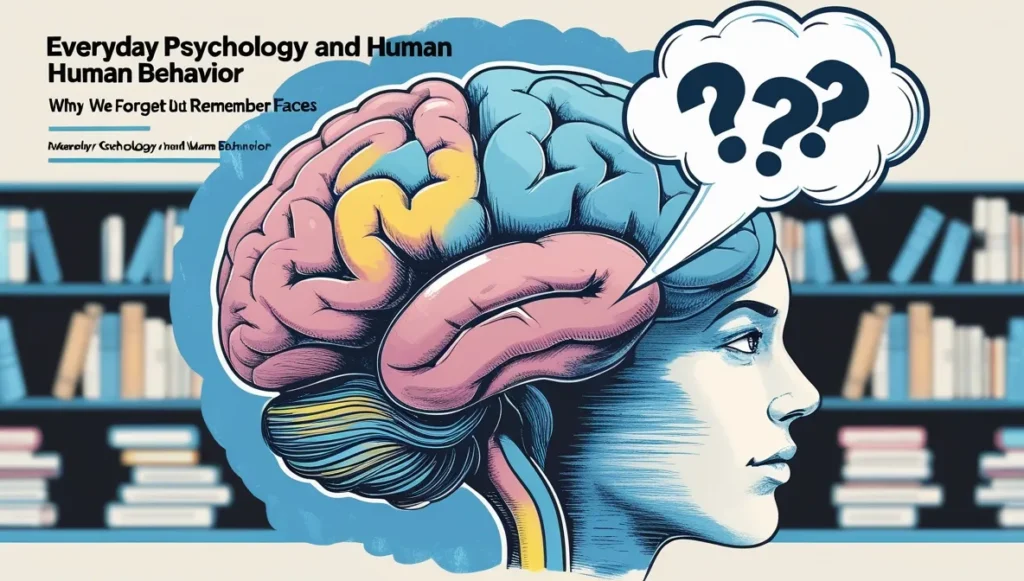
Table of Contents
- The Science of Face Recognition
- Why Names Are Harder to Retain Than Faces
- Brain Areas Involved in Face and Name Processing
- Evolutionary Importance of Facial Recognition
- The “Tip-of-the-Tongue” Phenomenon
- Contextual Encoding: Why Faces Have an Advantage
- How Emotion and Repetition Shape Face Memory
- Memory Errors: When You Remember the Face but Not the Name
- Strategies to Improve Name Recall
- FAQs + Additional Questions
- Conclusion
- Next Articles You Might Like
The Science of Face Recognition
Face recognition is a deeply ingrained human ability. Our brains are biologically wired to process facial information quickly and efficiently—detecting features, expressions, and subtle emotional shifts within milliseconds.
The fusiform face area (FFA), located in the temporal lobe, is responsible for facial identification. It works almost like facial “software,” helping us distinguish between thousands of unique faces, even those we’ve seen only once.
This automatic recognition is why we often feel instant familiarity with faces—even when names escape us.
Why Names Are Harder to Retain Than Faces
Names are arbitrary labels without built-in meaning. The brain doesn’t naturally “anchor” names to deeper sensory or emotional context unless we make a conscious effort to do so.
Names are stored as semantic memory, while faces are tied to visual and emotional memory—systems that work differently. Faces are multi-dimensional and emotionally rich; names are often flat data with no natural hook unless repetition or relevance is added.
This is similar to how emotional relevance boosts recall in How Smells Trigger Deep Emotions — the more emotionally meaningful the input, the stronger the memory trace.
Brain Areas Involved in Face and Name Processing
Faces and names activate different parts of the brain:
- Faces: Fusiform face area (visual), amygdala (emotional), hippocampus (contextual memory)
- Names: Left temporal lobe (verbal memory), angular gyrus (name recall), prefrontal cortex (working memory)
The FFA processes facial details rapidly and automatically, while recalling a name involves more effortful, attention-heavy processing, often under pressure (e.g., during introductions), which interferes with encoding.
Evolutionary Importance of Facial Recognition
From an evolutionary standpoint, recognizing faces was essential for survival, trust, and reproduction. Our ancestors needed to identify friends, foes, and kin quickly.
This evolutionary demand shaped our brains to prioritize face memory as a social navigation tool. Names, however, are recent human inventions and don’t have evolutionary roots. That’s why face memory is instinctive, while name memory feels like a chore.
The “Tip-of-the-Tongue” Phenomenon
Often, you can describe someone’s job, voice, or personality—but not their name. This is called the “tip-of-the-tongue” state, where memory retrieval fails temporarily despite partial recall.
Names are especially prone to this because they’re stored and retrieved in isolation, rather than through meaningful associations. Your brain may “know” the person but struggle to connect them to their label.
Contextual Encoding: Why Faces Have an Advantage
Memory works through contextual encoding—the more associations you have with something, the easier it is to recall. Faces are encoded along with:
- Emotional expression
- Voice
- Environment
- Body language
Names, by contrast, are often introduced once and quickly—without repetition or strong emotional ties. This leads to shallow encoding and fast forgetting.
This parallels how memory distortions emerge from lack of context (How Memory Distorts Everyday Experiences)—our minds prioritize stories, not standalone data.
How Emotion and Repetition Shape Face Memory
The more emotionally charged or repetitive an encounter is, the more likely you are to remember the face. For example, emotionally significant people (family, romantic partners, authority figures) become etched into memory through emotional bonding.
Meanwhile, names that aren’t reinforced through use or importance are likely to be discarded by the brain. The emotional weight of a memory determines how deeply it’s stored.
Memory Errors: When You Remember the Face but Not the Name
This disconnect creates common cognitive errors:
- False familiarity: Thinking you “know” someone because their face looks familiar
- Name displacement: Assigning the wrong name to the right face
- Recognition without recall: Feeling certain you’ve met someone but failing to place them
These errors occur because face memory and name memory are encoded separately. You may retrieve one, but not the other—especially in socially pressurized moments.
Strategies to Improve Name Recall
You can train your brain to bridge the face-name gap using:
- Repetition: Say the person’s name aloud multiple times
- Association: Link the name to a feature, object, or rhyme
- Visualization: Create a visual image connected to the name
- Emotional anchoring: Focus on something interesting about them to create deeper memory
- Mindful attention: Be fully present during introductions
The more intentional you are, the more likely the name will stick—turning passive exposure into active memory creation.
FAQs + Additional Questions
1. Why is it easier to remember someone’s face than their name?
Because the brain evolved to prioritize facial recognition through visual and emotional systems, while names require verbal memory effort.
2. Is forgetting names a sign of memory loss?
Not necessarily. It’s a common and normal cognitive gap. Only when it becomes persistent and disruptive should it raise concern.
3. What part of the brain remembers names?
The left temporal lobe, particularly the angular gyrus and associated verbal memory areas.
4. Can I train myself to be better at remembering names?
Yes. Techniques like repetition, association, and emotional anchoring can improve name recall.
5. Why do I remember a face from years ago but not the name?
Faces are stored in visual/emotional memory, which decays more slowly than isolated verbal information like names.
6. Are some people naturally better at remembering names?
Yes. Memory skills vary, but most people can improve with practice and awareness.
7. Why do I blank on names during introductions?
Because you’re focusing on social performance rather than encoding the name. The brain prioritizes impression over information.
8. What’s the best way to recall a forgotten name?
Relax and recall context: where you met, shared experiences, emotional state. This often reactivates related memory networks.
9. Does emotion help in remembering names?
Yes. When a person is emotionally significant or interesting, their name is more likely to be remembered.
10. Can face blindness (prosopagnosia) affect name memory?
Yes. In those with prosopagnosia, face recognition is impaired, so names often must be memorized without visual cues.
Conclusion
Our brains are amazing at faces but often clumsy with names—and that’s not a flaw, it’s evolution at work. Faces hold emotional cues, survival data, and social context. Names are just labels—easy to forget unless we give them meaning.
By understanding how memory systems work, we can bridge the gap between familiarity and recall—and turn introductions into deeper human connection.
Next Articles You Might Like
- How Memory Distorts Everyday Experiences
- Why We Judge People in Seconds
- The Real Science of Motivation
- Why We Replay Embarrassing Moments in Our Heads