
Quick Answer: Why Do We Create Fake Scenarios?
We create fake scenarios in our heads as a fundamental way to process the world. Psychologically, this behavior serves several key purposes: it allows us to prepare for future events by mentally rehearsing them (adaptive daydreaming), it helps us regulate emotions by exploring anxieties or desires in a safe space, it fulfills wishes and explores idealized outcomes, and it serves as a creative outlet for problem-solving. This mental simulation is a natural function of our brain’s default mode network and is a core part of being human.
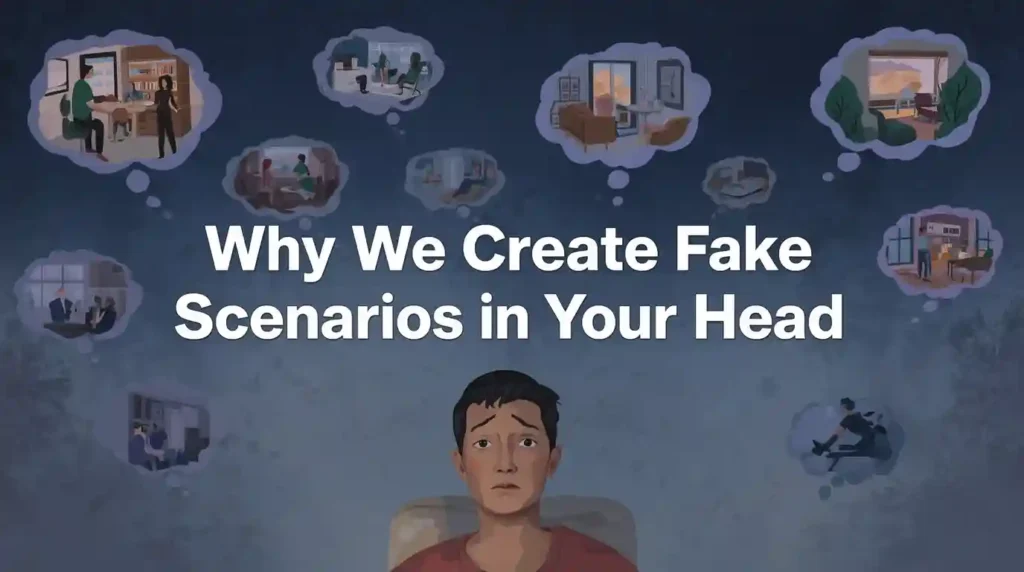
Table of Contents
- Introduction: The Private Cinema of the Mind
- The Brain’s Rehearsal Room: The Default Mode Network
- Mental Simulation: Preparing for the Future
- Emotional Regulation: A Safe Space for Feelings
- Wish Fulfillment: Crafting Our Ideal Reality
- Maladaptive Daydreaming: When Fake Scenarios Take Over
- The Link Between Anxiety and Negative Scenarios
- Creativity and Problem-Solving: The Productive Side of Daydreaming
- How to Manage Unproductive Scenario-Building
- Frequently Asked Questions (FAQs)
- Conclusion: Embracing Your Inner Storyteller
Introduction: The Private Cinema of the Mind
Have you ever found yourself mentally replaying a conversation, imagining what you should have said? Or perhaps you’ve spent an afternoon crafting a detailed fantasy about winning the lottery, accepting an award, or having a perfect first date with a crush. You’re not alone. This act of creating fake scenarios in our head is a universal human experience, a private cinema where we are the writer, director, and star. While it might feel like an idle distraction, this mental habit is deeply rooted in our psychology and serves a range of vital functions, from helping us prepare for challenges and process complex emotions to fueling our creativity. It’s a powerful tool our mind uses to navigate the complexities of life. Understanding why we do it is the first step toward harnessing this inner world for our benefit, rather than letting it control us.
To begin, we need to look at the part of our brain that acts as the mind’s natural storyteller.
The Brain’s Rehearsal Room: The Default Mode Network
The reason our minds drift so easily into creating these scenarios lies in our brain’s own architecture. Scientists have identified a network of brain regions called the Default Mode Network (DMN). This network becomes most active when we are not focused on an external task—when we’re letting our minds wander, daydreaming, or thinking about ourselves in the past or future. The DMN is essentially the brain’s “idle” mode, but it’s far from inactive. Its job is to process our sense of self, our social relationships, and our personal narrative. When you create a fake scenario about an upcoming job interview or a past argument, your DMN is hard at work, piecing together memories, emotions, and future possibilities to create a coherent story. This internal simulation is not a glitch; it’s a feature of our cognitive hardware designed to help us make sense of our lives.
One of the most important functions of this internal simulation is to prepare us for what’s to come.
Mental Simulation: Preparing for the Future
One of the primary psychological reasons we create fake scenarios is to prepare for the future. This process, known as mental simulation, is like a flight simulator for our social and professional lives. By mentally rehearsing an upcoming event—a difficult conversation, a public speaking engagement, or a first date—we can explore potential outcomes and practice our responses in a low-stakes environment. For example, if you’re nervous about asking for a raise, you might run through the conversation in your head multiple times. You’ll imagine your boss’s possible reactions and prepare your counter-arguments. This mental practice can build confidence, reduce anxiety, and improve your actual performance when the time comes. It allows you to anticipate obstacles and craft a strategy, so you feel less like you’re improvising and more like you’re following a well-rehearsed script.
Beyond practical preparation, these scenarios also serve a crucial emotional purpose.
Emotional Regulation: A Safe Space for Feelings
Our minds create fake scenarios to help us process and regulate our emotions. This inner world provides a safe, private space to explore feelings that might be too overwhelming or complicated to deal with in reality. If you’re angry with someone, you might imagine a confrontational argument where you say everything you wish you could, allowing you to vent that anger without real-world consequences. If you’re grieving, you might create scenarios where you can speak to a lost loved one one more time, providing a sense of comfort and connection. These mental constructions act as an emotional sandbox. They allow us to touch, shape, and understand our feelings, which can be a vital coping mechanism for managing everything from daily stress to significant trauma. By playing out emotionally charged situations, we gain a sense of control and can begin to process them at our own pace.
Of course, not all scenarios are about preparing for the worst; many are about dreaming of the best.
Wish Fulfillment: Crafting Our Ideal Reality
Another powerful driver behind creating fake scenarios is simple wish fulfillment. Our minds love to construct fantasies where our deepest desires come true. These daydreams can range from the mundane, like imagining a crush confessing their feelings, to the grandiose, like becoming a world-famous musician. This isn’t just idle fantasy; it’s a way of connecting with our goals and motivations. These idealized scenarios provide a source of pleasure, hope, and inspiration. They remind us of what we want out of life and can fuel the ambition needed to pursue those goals. When we imagine our ideal future, we generate positive emotions that can help us stay motivated through difficult times. In this way, our daydreams act as a mental vision board, keeping our aspirations at the forefront of our minds.
However, this inner world can sometimes become a prison rather than a playground.
Maladaptive Daydreaming: When Fake Scenarios Take Over
For most people, creating fake scenarios is a healthy and controllable mental activity. For some, however, it can become an excessive and consuming habit known as maladaptive daydreaming. Individuals with this condition spend hours a day immersed in complex, vivid daydreams, often to the detriment of their real-life responsibilities and relationships. These fantasies are not just fleeting thoughts; they are elaborate narratives with detailed plots and characters that can feel more real and rewarding than reality itself. Maladaptive daydreaming is often a coping mechanism for trauma, loneliness, or depression. While it provides a temporary escape, it can become a behavioral addiction that prevents the person from engaging with and improving their actual life. Recognizing when daydreaming crosses the line from a healthy escape to a compulsive behavior is the first step toward seeking help.
The content of our scenarios is often tied to our underlying emotional state, especially anxiety.
The Link Between Anxiety and Negative Scenarios
If your mental scenarios often skew negative—imagining car crashes, social rejection, or professional failure—it’s likely linked to anxiety. This is a phenomenon known as “catastrophizing,” where the mind automatically jumps to the worst-possible outcome. For someone with anxiety, creating these negative scenarios is a misguided attempt to prepare for and control potential threats. The brain thinks, “If I can imagine every terrible thing that could happen, I won’t be caught off guard.” However, this habit often has the opposite effect. Instead of preparing you, it floods your system with stress hormones and reinforces anxious thought patterns, making you feel more fearful and overwhelmed. This cycle of negative simulation keeps the brain in a constant state of high alert, perpetuating the very anxiety it’s trying to manage.
Despite these potential downsides, it’s crucial to remember the incredibly productive role this mental process can play.
Creativity and Problem-Solving: The Productive Side of Daydreaming
Creating fake scenarios is the bedrock of human creativity and innovation. Before an author writes a novel, they live with the characters and plot in their head. Before an architect designs a building, they walk through its imaginary halls. This ability to construct and manipulate realities in our mind is what allows us to solve complex problems. When faced with a challenge, our mind can run countless “what if” scenarios, testing different solutions without any real-world risk. This process of mental exploration is how we generate new ideas, make scientific breakthroughs, and create art. So, the next time you find your mind wandering, remember that you’re engaging the same cognitive tools that have led to some of humanity’s greatest achievements.
Given that these scenarios can sometimes be unproductive, learning to manage them is a valuable skill.
How to Manage Unproductive Scenario-Building
If you find yourself frequently caught in negative or obsessive mental loops, there are strategies to regain control.
- Practice Mindfulness: Mindfulness is the practice of bringing your attention to the present moment without judgment. When you notice you’re lost in a scenario, gently guide your focus back to your breath or your physical surroundings. This trains your brain to disengage from mental loops.
- Schedule “Worry Time”: If you’re prone to anxious scenarios, set aside a specific, limited time each day (e.g., 15 minutes) to intentionally think about your worries. When a negative scenario pops up outside of this time, tell yourself you’ll deal with it during your scheduled worry time.
- Challenge Your Thoughts: When a negative scenario arises, question it. Ask yourself: What is the evidence for this outcome? What is a more likely outcome? This cognitive-behavioral technique can help break the cycle of catastrophizing.
- Engage in a Grounding Activity: Get out of your head and into your body. Go for a walk, do some exercise, cook a meal, or listen to music. Engaging your senses can provide a powerful interruption to obsessive thinking.
Frequently Asked Questions (FAQs)
1. Is creating fake scenarios a sign of a mental illness?
No, it is a normal and healthy cognitive function for the vast majority of people. It only becomes problematic when it is excessive, uncontrollable, and negatively impacts your ability to function in daily life, as in the case of maladaptive daydreaming.
2. Can I stop creating fake scenarios in my head completely?
It’s neither possible nor desirable to stop this process entirely, as it’s a fundamental part of how our brain works. The goal is not to eliminate it but to manage it, ensuring it serves you productively rather than causing distress.
3. Why do I get so emotionally attached to the scenarios I create?
Your brain doesn’t always clearly distinguish between real and imagined experiences on an emotional level. When you vividly imagine a scenario, your brain can trigger the same emotional and physiological responses as if the event were actually happening, leading to a strong attachment.
4. Is there a difference between creating scenarios and manifestation?
The psychological concept of mental simulation is the cognitive mechanism that underlies practices like manifestation or visualization. While manifestation adds a spiritual or energetic belief system, the core process of vividly imagining a desired future to motivate action and create positive emotions is rooted in the same brain function.
Conclusion: Embracing Your Inner Storyteller
The tendency to create fake scenarios in our heads is not a flaw or a bug in our system; it is a fundamental aspect of what makes us human. It is our brain’s way of preparing, processing, dreaming, and creating. From the anxious mind rehearsing a worst-case scenario to the hopeful heart crafting a vision of a better future, this inner cinema is constantly playing. By understanding the psychological drivers behind this behavior, we can learn to become more conscious directors of our own mental movies. We can learn to distinguish between productive rehearsal and destructive catastrophizing, and between inspiring daydreams and escapist fantasies. Embracing your inner storyteller means recognizing its power and learning to guide it with intention, using it as a tool to build a more resilient, creative, and fulfilling life.