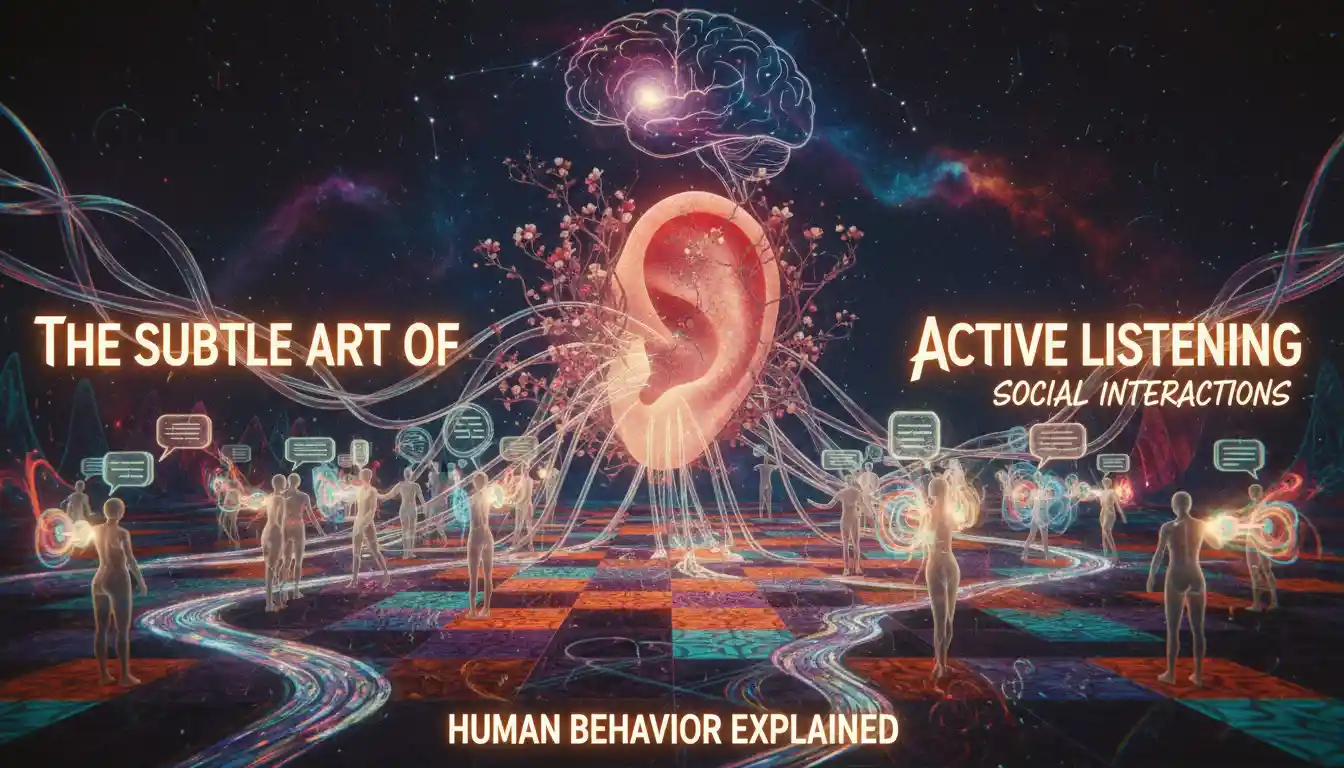
Active listening is one of the most fundamental skills in human interaction. It is a practice that involves truly hearing and understanding what the other person is saying, both verbally and non-verbally. Active listening creates meaningful social connections, helps resolve conflicts, and fosters empathy between individuals. In this article, we will delve into the subtle art of active listening, its impact on social interactions, and how it influences human behavior.
Table of Contents
- Introduction to Active Listening
- What is Active Listening?
- The Difference Between Hearing and Listening
- The Four Components of Active Listening
- The Importance of Active Listening in Social Interactions
- Building Trust and Understanding
- Strengthening Emotional Connections
- The Role of Body Language in Active Listening
- Non-Verbal Cues and Their Impact
- The Power of Eye Contact
- Common Barriers to Active Listening
- External Distractions
- Internal Distractions: Judgment, Assumptions, and Prejudices
- How Active Listening Affects Human Behavior
- Emotional Intelligence and Empathy
- Improving Communication Skills
- Practical Tips for Mastering Active Listening
- Reflective Listening
- Asking Clarifying Questions
- Avoiding Interruptions
- The Science Behind Active Listening and Behavior
- FAQs About Active Listening
- Conclusion
Introduction to Active Listening
In today’s fast-paced world, it is easy to overlook the importance of truly listening to others. We often find ourselves distracted by our thoughts, phones, or the desire to respond quickly. However, active listening—an intentional process of paying close attention to someone else’s words, tone, and body language—is a critical skill that enhances social interactions, builds stronger relationships, and fosters deeper understanding.
Active listening is not just about hearing the words spoken but also understanding the underlying emotions and intentions. It’s a skill that requires patience, empathy, and a willingness to engage fully in the conversation. Mastering active listening can significantly improve your relationships, whether in personal, professional, or casual social interactions.
What is Active Listening?
Active listening is more than simply hearing the words someone is saying. It is the act of fully concentrating, understanding, responding, and remembering what is being communicated. It involves several components that go beyond verbal communication, requiring a keen awareness of the speaker’s emotions and non-verbal cues.
The Difference Between Hearing and Listening
While hearing is a passive process of perceiving sound, listening is an active, engaged process where you consciously focus on understanding the message being conveyed. Hearing is automatic, but listening requires focus, attention, and effort.
Active listening involves:
- Focusing completely on the speaker without distractions.
- Responding appropriately to indicate understanding.
- Remembering the message to follow up effectively.
Unlike hearing, which requires no active engagement, listening demands that you interpret the speaker’s words, emotions, and intentions.
The Four Components of Active Listening
- Paying Attention: This means giving the speaker your undivided attention, avoiding distractions such as phones or other tasks.
- Withholding Judgment: Active listening requires you to listen without forming an opinion or judgment until the speaker has finished.
- Reflecting: This involves repeating or paraphrasing what the speaker has said to ensure understanding.
- Responding Appropriately: Active listening involves providing thoughtful responses that show you have understood the speaker’s message.
The Importance of Active Listening in Social Interactions
In social interactions, effective communication depends largely on how well we listen. When we practice active listening, we are more likely to foster stronger relationships, resolve misunderstandings, and create meaningful connections. Here’s why active listening matters in social settings:
Building Trust and Understanding
Active listening creates an environment of trust. When someone feels heard, they are more likely to feel respected and valued. This establishes a foundation of mutual understanding, where both parties can openly share their thoughts, feelings, and ideas without fear of judgment.
In personal relationships, this can deepen emotional bonds, while in professional relationships, it helps develop collaborative and respectful dynamics. By demonstrating that you care about what others have to say, you build trust and rapport.
Strengthening Emotional Connections
Through active listening, we create emotional connections that go beyond the words spoken. Listening attentively to someone’s words, tone, and non-verbal cues can help you understand their feelings and emotions, even when they don’t explicitly state them. This is especially powerful in romantic or close relationships, where understanding emotions and offering empathy is crucial.
In friendships and family dynamics, active listening helps nurture a sense of emotional safety and creates deeper emotional intimacy, allowing relationships to thrive.
The Role of Body Language in Active Listening
While verbal communication is essential, non-verbal communication is just as important in active listening. Body language—such as posture, eye contact, facial expressions, and gestures—plays a significant role in conveying attentiveness and understanding.
Non-Verbal Cues and Their Impact
Non-verbal cues can either reinforce or contradict what is being said verbally. For example, if you are nodding while someone speaks but your arms are crossed, this may indicate discomfort or a lack of openness, even though your verbal responses seem engaged.
Here’s what you can do to enhance your active listening through body language:
- Maintain open body posture to signal attentiveness.
- Lean slightly forward to show interest.
- Nod occasionally to show you’re following along.
- Relax your face to show that you are not judging.
The Power of Eye Contact
Eye contact is a key indicator of active listening. It shows that you are engaged and paying attention. However, it’s important to find a balance: too little eye contact can signal disinterest, while too much can feel intense or confrontational. The ideal amount of eye contact is around 60-70% of the conversation, depending on cultural norms and context.
Common Barriers to Active Listening
Despite its importance, active listening can be difficult to master due to various internal and external barriers. Here are some of the most common barriers to effective listening:
External Distractions
External distractions, such as background noise, other conversations, or visual distractions, can make it difficult to concentrate on the speaker. In these cases, it’s crucial to try to minimize distractions to focus on the conversation.
Internal Distractions: Judgment, Assumptions, and Prejudices
One of the biggest internal barriers to active listening is the tendency to judge or make assumptions. If you enter a conversation with preconceived notions or judgments, you may miss important details. It’s important to remain open-minded and withhold judgment until the conversation has fully unfolded.
Additionally, if your mind is wandering or if you’re distracted by your own thoughts, it can hinder your ability to listen fully.
How Active Listening Affects Human Behavior
Active listening not only enhances communication but also influences human behavior in profound ways. When we listen actively, we engage our emotional intelligence, strengthen empathy, and improve our ability to connect with others on a deeper level. Let’s explore the broader effects of active listening:
Emotional Intelligence and Empathy
Active listening is a cornerstone of emotional intelligence (EQ). When you listen carefully and empathetically, you are better able to understand others’ emotions and respond appropriately. This fosters greater emotional awareness and improves relationships, both personal and professional.
Improving Communication Skills
By practicing active listening, you improve your overall communication skills. You learn to focus on the speaker, understand their emotions, and respond thoughtfully. This not only enhances conversations but also prevents misunderstandings and conflict.
Practical Tips for Mastering Active Listening
Mastering active listening takes time and practice. Here are some practical tips to help you become a better listener in social interactions:
Reflective Listening
Reflective listening involves paraphrasing what the speaker has said to confirm that you’ve understood their message. For example, you can say, “What I’m hearing is that you’re feeling frustrated because…” This helps validate the speaker’s feelings and demonstrates that you are truly listening.
Asking Clarifying Questions
If you’re unsure about something the speaker said, ask for clarification. This shows that you are engaged and interested in understanding their perspective. Questions like, “Can you elaborate on that?” or “What did you mean when you said…?” can help clear up confusion.
Avoiding Interruptions
Interrupting the speaker can disrupt the flow of conversation and may make the other person feel unheard or unimportant. Practice patience and wait for the speaker to finish before offering your thoughts. This will encourage open communication and respect.
The Science Behind Active Listening and Behavior
The ability to actively listen is tied to neurological and psychological processes that influence behavior. When we listen actively, the brain processes information differently, leading to better understanding and retention of information. Listening also triggers the mirror neurons in the brain, which help us empathize with others and understand their emotions.
FAQs About Active Listening
- Why is active listening important?
- Active listening is important because it builds trust, improves communication, and strengthens relationships. It helps ensure that the speaker feels heard and understood.
- How can I improve my listening skills?
- You can improve your listening skills by focusing on the speaker, avoiding distractions, and practicing reflective listening. It’s also helpful to ask clarifying questions when needed.
- What are the common barriers to active listening?
- Common barriers include external distractions (e.g., noise), internal distractions (e.g., judgment or assumptions), and emotional bias.
- Can active listening improve relationships?
- Yes, active listening enhances emotional understanding, empathy, and connection, which are all essential for building strong and healthy relationships.
Conclusion
The subtle art of active listening is a powerful tool in social interactions. It enhances communication, builds stronger emotional bonds, and fosters empathy. By mastering the skills of active listening, you can improve your personal and professional relationships, navigate complex social situations, and become more emotionally intelligent. Practice active listening every day, and you will begin to notice the profound impact it has on your interactions and overall behavior.
Explore More About Social Interactions and Human Behavior