Supporting a vulnerable person through illness, aging, or disability is one of the most profoundly human experiences. However, the language we use to describe this support often lacks precision. People frequently use the terms “caretaking” and “caregiving” interchangeably, assuming they describe the exact same actions. In behavioral science, this assumption is incorrect.

Understanding the psychological distinction between caretaking vs caregiving is not just an exercise in semantics. It is a vital step in recognizing the intense emotional labor, physical demands, and psychological boundaries required to support another person sustainably. When we fail to separate the transactional nature of caretaking from the empathetic, patient-centered approach of caregiving, we invite severe emotional exhaustion, resentment, and relationship breakdown.
This comprehensive guide explores the true definitions of these roles. We will critique common misconceptions, examine the psychological realities of caregiver burden, and provide evidence-based strategies to protect your mental health while navigating these complex dynamics.
What Caretaking Traditionally Means
To understand the core of caretaking psychology, we must look at the word’s origins. Historically, a caretaker was someone hired to maintain a property, piece of land, or building in the owner’s absence. The role was entirely functional, transactional, and task-oriented.
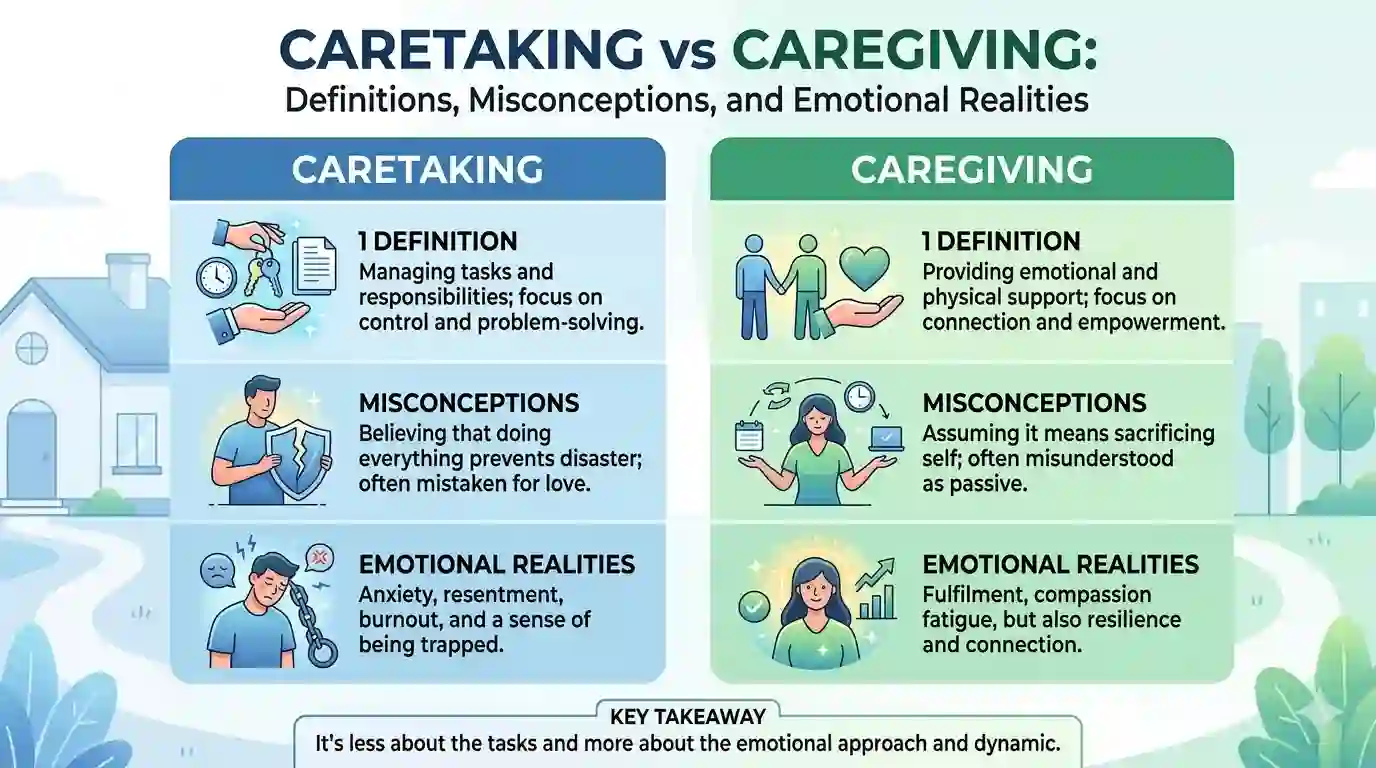
When applied to human relationships, caretaking often retains this transactional flavor. It typically refers to the functional management of a person’s physical needs or their environment. A caretaker focuses heavily on ensuring tasks are completed: administering medication on a schedule, preparing meals, or cleaning a living space.
In informal care scenarios, such as among family and friends, caretaking can sometimes adopt a slightly negative psychological connotation. In family systems theory, a “caretaker” might be someone who over-functions for another person out of a need for control or a desire to feel indispensable. This type of caretaking often involves doing things for a person that they could reasonably do themselves, which can accidentally foster dependence rather than autonomy.
What Caregiving Actually Means
Caregiving, by contrast, implies a holistic, deeply empathetic approach to supporting another human being. It extends far beyond the mere execution of physical tasks. Caregiving encompasses emotional support, psychological encouragement, and the preservation of the recipient’s dignity.
Whether we are discussing professional caregiving vs family caregiving, the core philosophy remains the same: the goal is to empower the care partner. A caregiver assists with daily living activities, but they do so in a way that respects the individual’s autonomy and personhood. They practice patient centered care.
The caregiving role is incredibly complex. It requires the caregiver to attune to the emotional state of their loved one, anticipate needs without being overbearing, and provide a safe space for the person to express fear, grief, or frustration. This level of emotional engagement is what separates clinical, task-based management from genuine everyday care.
Why the Distinction Matters
Clarifying the difference between a caretaking approach and a caregiving approach is critical for the well-being of both the provider and the receiver. When someone internalizes the role identity caregiver vs caretaker, it shifts their entire behavioral framework.
The following table highlights the fundamental differences between the two approaches when applied to interpersonal support:
| Aspect | Caretaking Psychology | Caregiving Psychology |
|---|---|---|
| Primary Focus | Task completion and physical management | Emotional support and holistic well-being |
| Power Dynamic | Often hierarchical (caretaker has control) | Collaborative (empowering the care partner) |
| Emotional Labor | Low to moderate (focused on logistics) | Exceptionally high (requires deep empathy) |
| Recipient Autonomy | Can foster dependence | Encourages independence wherever possible |
| Underlying Motivation | Duty, control, or anxiety reduction | Compassion, connection, and empathy |
Recognizing these differences helps individuals identify when their supportive behaviors are slipping into an unhealthy need for control, allowing them to recalibrate toward a healthier, more sustainable caregiving model.
Common Misconceptions in Popular Usage
Mainstream psychology resources often oversimplify the distinction between these terms. For instance, some articles suggest that caretaking is simply the professional version of caregiving, or they reduce the difference to a matter of formal vs informal care.
This is a profound misunderstanding of human behavior. You can hire a highly trained professional who operates with deep caregiving empathy, and you can have a family member whose support is rigidly transactional and controlling (caretaking).
Another massive misconception is focusing solely on task performance while ignoring the emotional reality of the work. Mainstream definitions often fail to capture the psychological weight that differentiates these roles. Simply executing a duty of care is not the same as walking alongside someone through their pain. By minimizing the emotional labor required for true caregiving, society inadvertently invalidates the profound psychological toll this role takes on individuals.
Emotional Labor in Caregiving Roles
The concept of emotional labor caregiving is central to understanding why this work is so exhausting. Caregivers do not just manage schedules; they manage emotions. They must frequently suppress their own fears, frustrations, and exhaustion to present a calm, reassuring presence for their care partner.
This continuous emotional regulation requires immense cognitive effort. Caregivers naturally absorb the distress, anxiety, and physical pain of the people they support. This psychological phenomenon is known as emotional contagion. When you spend hours a day with someone who is suffering, your nervous system begins to mirror their distress. You can explore the biological mechanisms behind this emotional mirroring in the science of emotional contagion and why we catch feelings.
Over time, this intense emotional labor leads to compassion fatigue. Caregivers may find themselves feeling numb, detached, or unable to muster empathy. This is not a moral failure; it is a neurological response to prolonged emotional overload.
Caregiver vs Caretaker Identity: Social and Cultural Perspectives
How we view caregiving responsibilities is deeply influenced by social and cultural frameworks. In many cultures, caregiving is viewed as an inherent family obligation, particularly for women. These gendered assumptions place an enormous, often unspoken burden on female family members to step into caregiving roles without formal support or recognition.
This cultural pressure forces many individuals to adopt a caregiving identity at the expense of their personal goals, careers, and self-worth. When a person’s entire identity becomes wrapped up in keeping someone else alive and comfortable, their own psychological well-being plummets. They may begin to feel that their only value lies in their utility to others.
Breaking free from this identity trap requires deep psychological work. Individuals must learn to separate their innate worth from their caregiving output. If you struggle with feeling inadequate or tethered strictly to your utility, discovering strategies for overcoming insecurity and building self-worth is a vital step in reclaiming your identity outside of the caregiving role.
Caregiver Burden: What Psychology Research Says
The phrase “caregiver burden” is well-documented in behavioral science. Caregiver burden psychology refers to the physical, emotional, financial, and social stress experienced by individuals providing continuous care.
Research indicates that chronic caregiver stress fundamentally alters the body’s stress response system. Caregivers frequently experience elevated cortisol levels, poor sleep architecture, and a weakened immune system. When the brain is locked in a perpetual state of hypervigilance—constantly waiting for the next medical emergency or emotional crisis—the resulting allostatic load causes profound physical and mental damage.
Understanding how this biological stress loop operates is crucial for survival. You can learn more about how prolonged tension warps human reactions in the guide on how stress impacts emotional responses and managing reactions.
Caregiver burnout symptoms typically manifest as:
- Chronic irritability or sudden anger over minor issues
- Social withdrawal and isolation from friends
- Changes in appetite and significant weight fluctuations
- Feelings of hopelessness or impending doom
- Loss of interest in previously enjoyed activities
Professional Caregiving: When Technical Skill Matters
While informal family caregiving relies heavily on relationship history and emotional bonds, professional caregiving introduces a different dynamic. Healthcare professionals navigate the difficult balance of providing empathetic personal care assistance while maintaining strict clinical boundaries.
Understanding the difference between nursing vs caregiving roles is essential in institutional care. Nurses provide specialized medical interventions, complex wound care, and medication administration. Professional caregivers or nursing assistants generally handle daily living activities, hygiene, and mobility support.
However, the best professionals in long-term care psychology blend technical skill with the empathy of true caregiving. Caregiver training and education programs are increasingly focusing on the psychological aspects of care. They teach professionals how to preserve a patient’s dignity during vulnerable moments, proving that formal care does not have to equal cold, detached caretaking.
Role of Intent and Relationship in Care
The psychological impact of caregiving is heavily dictated by the intent behind it and the history of the relationship. There is a massive psychological difference between providing care out of deep, chosen love versus providing care out of bitter obligation.
When caregiving is driven by familial obligation rather than choice, the relationship often breeds toxic behavioral patterns. The caregiver may perform the necessary tasks perfectly but harbor deep-seated resentment toward the care partner or toward other family members who are not helping. This quiet bitterness destroys psychological well-being. Processing and releasing this quiet anger is essential; you can find actionable steps for this in letting go of resentment and grudges for emotional freedom.
Conversely, the care partner’s behavior also heavily impacts the caregiver. For example, individuals with dementia or severe cognitive decline may become combative, verbally abusive, or entirely reject the person trying to help them. When a loved one pushes you away or forgets your face, the brain registers this rejection as acute physical pain. Understanding why this hurts so deeply can be explored in why rejection feels physical and the neuroscience of social pain.
How to Support Caregivers and Reduce Burnout
Mitigating caregiver stress requires more than just well-wishes; it requires systemic intervention and robust caregiving support resources. Evidence-based practices show that caregiver survival relies on proactive psychological maintenance.
Utilize Respite Care
Caregivers must step away. Respite care—whether through a professional service or relying on other family members—allows the primary caregiver to sleep, decompress, and temporarily drop the heavy mantle of responsibility.
Overcome Caregiver Guilt
Many caregivers refuse to take breaks because they suffer from intense guilt. They believe that prioritizing their own rest is a betrayal of their loved one. Unlearning this toxic narrative is a matter of survival. To break this destructive cycle, caregivers must learn how to stop being controlled by guilt, shame, and regret.
Build Emotional Resilience
Coping with the daily grief of watching a loved one decline requires mental fortitude. Engaging in counseling, joining support groups, and learning cognitive reframing techniques helps build a protective psychological buffer. You can explore how to intentionally cultivate this mental toughness in the secret behind emotional resilience as a learned skill.
Caregiving Across the Lifespan
Caregiving responsibilities look vastly different depending on the age and condition of the care recipient.
Aging Caregiving vs Medical Caregiving
Elder care psychology deals with the unique grief of role reversal. Adult children must navigate the emotional complexity of parenting their own parents. This requires helping an aging adult navigate the loss of their independence, driving privileges, and physical autonomy. Medical caregiving for a younger adult or spouse, however, often centers around acute trauma, navigating the healthcare system, and grieving the sudden loss of a shared future.
Parenting Caregiving Differences
Raising a neurotypical child is inherently a caregiving role, but society generally refers to this simply as “parenting.” However, parenting a child with profound special needs or severe medical complexities elevates the role into chronic caregiving. This involves lifelong advocacy, navigating institutional care, and managing intense physical demands.
These diverse caregiving demands often spark severe conflicts within families. Siblings may clash over perceived imbalances in workload or financial contributions, leading to intense family drama. Navigating these bitter sibling dynamics often requires turning jealousy into personal growth to prevent the family unit from entirely fracturing.
Caregiving in the Context of Mental Health
Perhaps the most psychologically complex form of caregiving involves loved ones care strategies for those suffering from severe mental illness. Supporting someone with severe depression, bipolar disorder, or schizophrenia requires an entirely different toolkit.
In these scenarios, caregivers cannot “fix” the physical environment to solve the problem. The emotional labor is exceptionally high because the caregiver must constantly navigate the care partner’s distorted reality, mood swings, and potential crises.
Caregiver education is vital here. Caregivers must learn to set rigid psychological boundaries to avoid being pulled into the care partner’s mental health spirals. The anxiety of constantly anticipating a loved one’s mental health crisis easily bleeds into the caregiver’s own mind, causing chronic rumination. Caregivers dealing with this specific strain will find clarity in understanding why we overthink and the psychology of anxiety and worry.
Frequently Asked Questions
What’s the real difference between caregiving and caretaking?
Caretaking is primarily functional, transactional, and focused on managing tasks or controlling an environment. Caregiving is a holistic, empathetic approach focused on supporting a person’s physical, emotional, and psychological well-being while respecting their autonomy.
Is caregiving always emotional?
Yes. While it involves many physical tasks, true caregiving requires emotional attunement, empathy, and patience. The emotional labor of absorbing a loved one’s distress and managing your own fears is what makes caregiving so profoundly exhausting.
Can caretaking become caregiving over time?
Absolutely. Someone might begin by simply managing a loved one’s finances or hiring nurses (caretaking). As the relationship deepens or the loved one’s vulnerability increases, the provider may naturally transition into a more emotionally engaged, patient-centered role (caregiving).
Are professional caregivers better trained than family members?
Professional caregivers possess formal training in technical skills, safety protocols, and daily living assistance. However, family caregivers possess decades of intimate knowledge regarding the care partner’s preferences, history, and personality. The best care environments utilize a collaboration between professional technical skill and deep family knowledge.
Conclusion
The distinction between caretaking vs caregiving is much more than a debate over vocabulary; it represents a fundamental shift in human behavior, psychology, and relational dynamics. While caretaking focuses on the cold execution of tasks and the management of logistics, caregiving embraces the messy, beautiful, and deeply exhausting reality of human connection.
Whether you are navigating formal vs informal care, dealing with the heavy realities of elder care psychology, or managing the profound burden of a loved one’s chronic illness, recognizing the weight of your role is the first step toward self-preservation. Caregiving is an act of profound love, but it is also an act of immense psychological labor. By honoring the emotional reality of this work, seeking out robust support systems, and setting firm boundaries, caregivers can protect their own psychological well-being while continuing to offer life-sustaining compassion to those who need it most.