
Have you ever packed your bags for a beautiful weekend in nature, hoping to completely reset your mind, only to come back feeling just as overwhelmed as before? I know I absolutely have! Recently, I was reading through some fascinating academic papers about the explosion of “glamping” (glamorous camping). Researchers are incredibly excited about it! They pitch these luxurious canvas tents and eco-pods as the ultimate fix for post-pandemic travel.
But as I read through the data, a thought struck me: are we oversimplifying this? Just because a vacation takes place in a beautiful eco-tent doesn’t automatically make it a sustainable habit for our minds and behaviors!
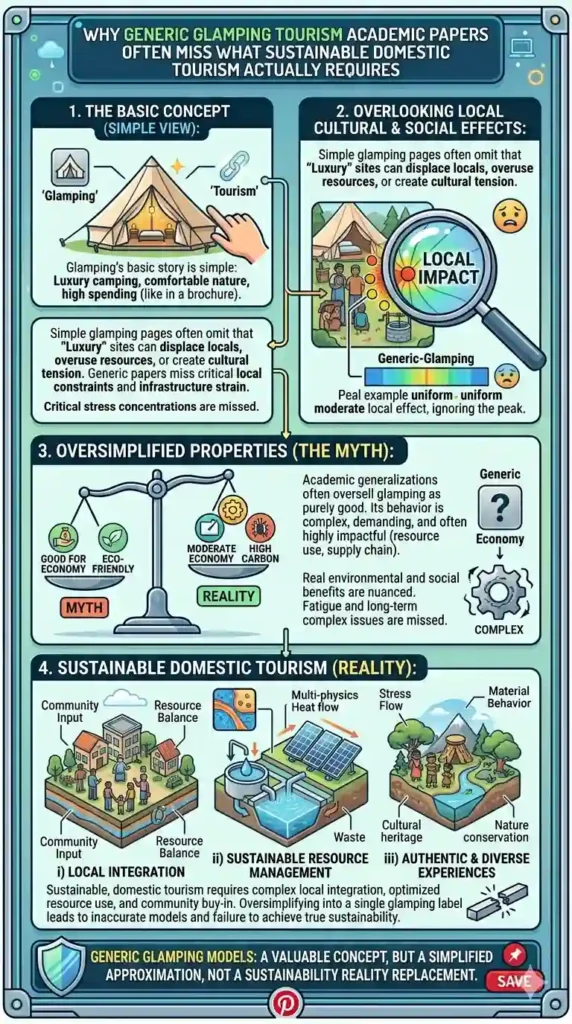
Today, we are going to dive deep into why generic academic research often misses the wonderful, messy, and complex reality of traveler psychology. We’ll explore what true, sustainable domestic tourism actually looks like when we look beyond the economics and focus on our well-being. Let’s get started!
1. Fast Summary of the Original Article
Let’s quickly review what the typical research actually says! A prime example is a recent ScienceDirect paper focusing on post-COVID tourism recovery in Romania. The researchers enthusiastically position glamping as a brilliant, sustainable luxury-nature hybrid designed to reinvigorate domestic travel!
The paper heavily emphasizes rapid economic recovery, environmental benefits, and the building of beautiful local infrastructure. It is beautifully presented as a quick, highly scalable solution to meet our endless post-pandemic travel demands! However, while these studies often use complex methodologies like a between-subjects design in psychology to measure consumer interest, they tend to stop there.
While glamping infrastructure offers real, undeniable potential, the broader picture of sustainable domestic tourism is far more nuanced. It absolutely requires deeper psychological and behavioral exploration!
2. Why the Term “Sustainable Glamping” Is Often Misleading
The word “sustainable” is incredibly popular right now! But in tourism research, it is wildly ambiguous. Sometimes it means genuine, long-term behavioral change, and other times, it is simply clever green marketing.
When generic papers throw around “sustainable glamping,” it often leads us to think that this one-size-fits-all vacation solves everything. But traveler psychology varies so much! Often, we book these trips because we naturally crave validation from others online, posting gorgeous photos rather than connecting with nature.
True sustainability challenges our ethical choices, much like the stages found in Kohlberg’s stages of moral development theory. If we are just treating nature as a beautiful backdrop for luxury, we aren’t practicing true sustainability!
3. The Limits of Economic & Environmental Framing Alone
Here is where the academic framing falls short! Heavy reliance on infrastructure and revenue completely overlooks our rich, internal emotional worlds. Measuring the success of transnational corporations investing in glamping sites tells us nothing about how the traveler actually feels!
When we travel, we experience a whirlwind of emotions. If a paper doesn’t differentiate between our surface reactions and deeper feelings—our primary vs secondary emotions—it misses the point. You might feel a quick burst of joy upon seeing your luxury tent, but if you spend the entire weekend continuing to replay conversations in your head from work, your stress hasn’t been sustainably managed! Short-term tourism boosts simply do not equal long-term traveler well-being.
4. The Role of Psychological Literacy in Sustainable Tourism
This is my absolute favorite part! Travelers need deep self-understanding skills, not just fancy glamping facilities! Emotional awareness and cognitive flexibility are the true predictors of long-term sustainable travel choices.
Think of it like dating! When you go on a trip, your mindset matters more than the destination, much like how your expectations shape third date psychology. If you expect a magical tent to fix your burnout, you will be disappointed. We also have to know the difference between taking care of our deep needs and just going through the motions, understanding the line between caretaking vs caregiving for ourselves!
5. Structural & Social Factors That Affect Tourism Outcomes
Academic papers often ignore the complex baggage we bring on vacation with us! True sustainability extends far beyond campsites. It involves our social connections, work-life balance, and even our personal identity.
For example, who are we traveling with? Poor communication during trips can be incredibly damaging, highlighting exactly what kills long-distance relationships. Sometimes, family vacations trigger old wounds, bringing up hidden narcissistic mother traits that make relaxation impossible!
When we are stressed on a trip, we tend to take things personally if the itinerary goes wrong. We might even apologize even when it’s not our fault just to keep the peace at the campsite! Research rarely measures these massive social factors.
6. Behavioral Patterns That Predict Long-Term Sustainable Travel Success
So, what actually makes a travel habit sustainable? It is all about how we process our experiences!
Instead of just running away from our problems—which is a classic example of repression vs suppression in psychology—we need to actively reframe our travel decisions. We need to be aware of the early warning signs of travel burnout! If a trip leaves you exhausted, you might experience a literal crash, similar to panic attack hangovers.
When we know we need a true mental break, we often procrastinate even when we know it’s important to book the right kind of restorative trip. A sustainable traveler practices emotional self-monitoring and adaptive coping instead of pure escapism!
7. What Effective Sustainable Tourism Actually Looks Like
Let’s paint a picture of what a truly robust, effective travel model looks like! It contrasts sharply with generic glamping frames.
- Integrated multidisciplinary models: This means combining beautiful infrastructure with actual psychological support and community skills coaching!
- Psychoeducation instead of passive luxury: Imagine learning why you feel burnt out while enjoying nature, engaging different parts of your identity as outlined in Erik Erikson’s psychosocial development theory.
- Functional goals: We should measure success by our ability to return to meaningful life roles with renewed clarity, not just by hotel occupancy rates!
8. The Pitfall of Equating Infrastructure With Progress
We have to stop pretending that building more luxury tents equals progress! Travelers can easily get stuck in “glamping loops” without any real behavioral change.
Sometimes, our obsession with finding the perfect vacation spot becomes almost compulsive! We start confusing our intense hobbies with our well-being, blurring the lines between autistic special interests vs ADHD hyperfixations on travel gear. We demand flawless experiences because perfectionism is secretly holding us back from just enjoying the mud and the rain!
When we rely on routine luxury without cognitive progress, we just reinforce our escapism. We completely self-sabotage our own rest by prioritizing the glamour over genuine resilience!
9. Traveler-Centered Questions Readers Should Ask
Before you book your next post-pandemic getaway, I highly recommend asking yourself these practical, highly effective questions! They will empower you to take control of your psychological well-being:
- What psychological evidence supports this travel choice? (Am I running away, or am I recharging?)
- Are there measurable functional well-being goals? (How do I want to feel on Monday morning?)
- How is my long-term behavioral change evaluated? (Am I bringing healthy habits back home?)
- What mental skills am I developing? (Am I learning patience, mindfulness, or connection?)
- Does this plan adapt to my growth? (Will this trip still serve me next year?)
10. Balanced Conclusion
Glamping is absolutely wonderful! It is cozy, it gets us outdoors, and it undeniably supports economic recovery and nature reconnection for so many people. I will always love a weekend in a beautiful canvas tent!
However, we must argue for better framing in our academic research. Sustainable domestic tourism is not just about tents, occupancy rates, and revenue. It’s about our active engagement with our own psychological growth! It requires behavioral change, functional life improvements, and a deep understanding of our incredible, complex minds. The next time you travel, pack your self-awareness alongside your hiking boots, and get ready for a truly transformative adventure!