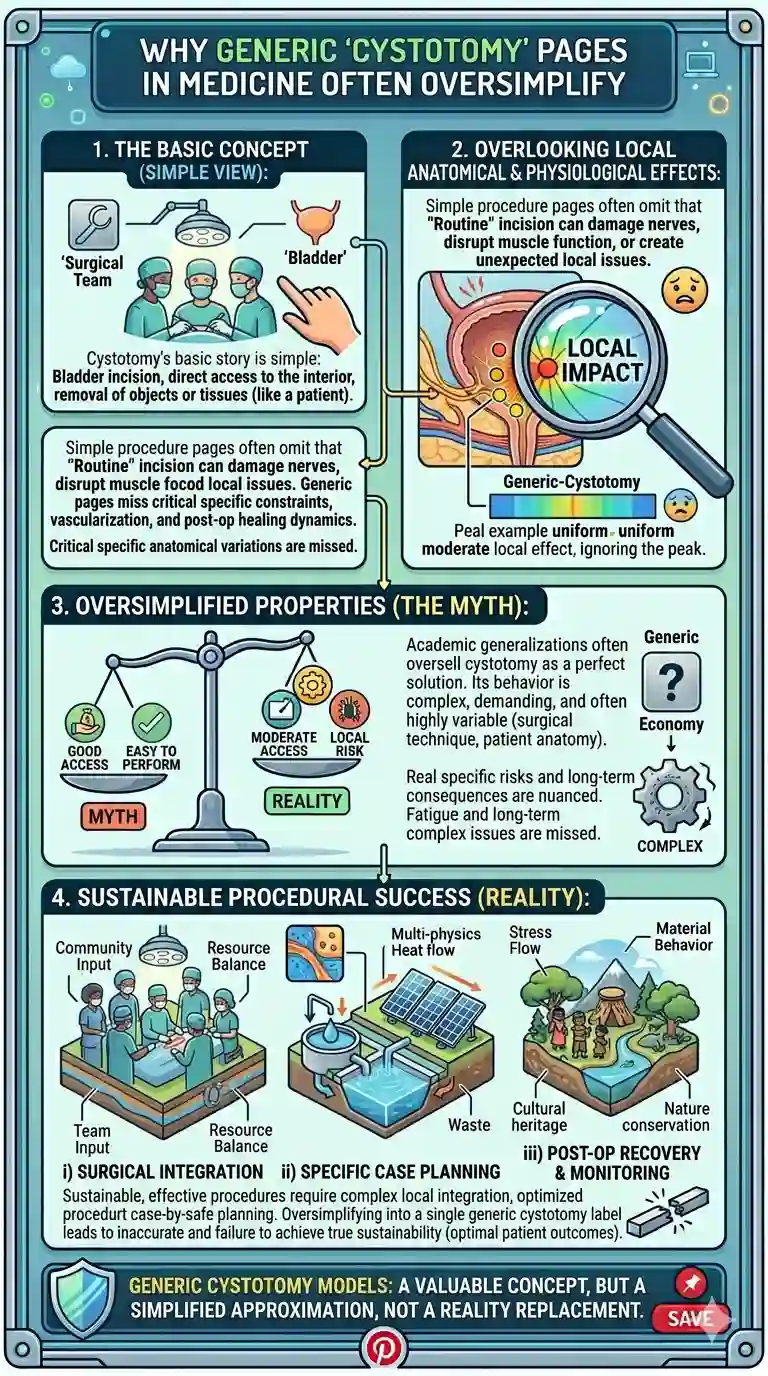
Have you ever looked up a medical procedure online, only to find a dry, dictionary-like definition that leaves you with more questions than answers? I certainly have! When it comes to urological health, it is so important to have clear, comprehensive, and compassionate information. Today, we are going to dive deep into a critical topic: cystotomy risks and outcomes!
We will explore what this procedure really entails, moving past the generic summaries to give you a vibrant, evidence-based perspective on indications, risks, and recovery. Grab a comfortable seat, and let’s explore the fascinating world of bladder health together!
1. Fast Summary: What Typical Pages Present
If you search for “cystotomy,” most medical pages will give you a very brief summary. They usually define it simply as a surgical incision into the urinary bladder. They will list basic indications, such as removing large bladder stones, repairing trauma, or gaining access for other complex procedures.
While technically accurate, these descriptions often treat cystotomy as a simple cut-and-close procedure! This completely overlooks vital clinical decision processes, risk stratification, longer-term functional outcomes, and amazing alternatives. It is like describing a beautiful, complex clock by just saying it has hands and a face!
2. Anatomy and Functional Context — It’s Not Just a “Bladder Cut”
The urinary bladder is an incredible organ! It is not just a simple storage balloon. The bladder features a complex, layered muscular wall (the detrusor muscle), a highly sensitive trigone region, and an intricate relationship with your ureters and pelvic nerves.
Disrupting this beautiful anatomy matters immensely! The bladder must perfectly balance storage and voiding functions. When a surgeon makes an incision, repairing this functional anatomy isn’t always a straightforward reversal of injury. The delicate nerve pathways and muscle fibers need time and care to heal properly.
3. Indications: When Cystotomy Is Truly Clinically Justified
So, when do we actually need this procedure? Let’s engage in a thoughtful cystotomy indication critique. The surgery is typically justified for:
- Massive bladder stones that are completely resistant to minimally invasive removal
- Specific bladder tumors not amenable to transurethral resection
- Traumatic bladder ruptures from accidents
- Complex foreign bodies that cannot be safely retrieved otherwise
However, we must always evaluate the nuance! Minimally invasive urology surgery alternatives, such as endoscopic lithotripsy or laser ablation, often drastically reduce morbidity and get patients back to their happy lives much faster!
4. Risk Stratification — What Generic Descriptions Ignore
Let’s talk about the real risks, because being informed is your superpower! Generic pages often gloss over the true complexities. The bladder is richly vascularized and closely tied to your pelvic nerves. Real risks include:
- Infection and uncomfortable urinary leakage
- Neurourological dysfunction
- Anastomotic failure (where the surgical connection doesn’t heal perfectly)
- Hemorrhage and pelvic bleeding
- Fistula formation
When patients face these risks, it is completely normal to feel overwhelmed! It is easy to understand why we overthink the psychology neuroscience of anxiety and worry when looking at a surgical consent form.
5. Long-Term Functional Outcomes: Beyond the Operating Room
What happens after you leave the hospital? Bladder surgery functional outcomes are so important to your daily joy! Many generic pages completely miss the long-term changes you might experience, such as alterations in bladder capacity or differences in sensation, like newfound urgency or frequency.
Surgical trauma can sometimes induce fibrosis (scarring) and affect how stretchy the bladder is, which can diminish your quality of life. Patients often worry about these changes, leading to an interesting parallel with why we replay conversations in our head; we constantly replay our physical sensations, wondering if they are normal!
6. Pain and Neuromuscular Consequences
Bladder pain is absolutely not just an “incision ache”! Pelvic nerve irritation can lead to chronic urgency. There is a massive interplay between your pelvic floor muscles and your central nervous system sensory pathways.
Sometimes, overlapping conditions like Interstitial Cystitis or Bladder Pain Syndrome (IC/BPS) can emerge. The nervous system becomes hyper-vigilant! It acts almost like our digital habits—much like why notifications feel addictive or why we check our phones without notifications, our pelvic nerves can send “phantom alerts” of pain or urgency even when the bladder is mostly empty!
7. Alternatives and Adjunct Therapies
I am thrilled to share that you often have amazing choices! Not every indication traditionally treated by open cystotomy mandates that approach.
We can explore wonderful alternatives like cystolitholapaxy (using a tiny camera to crush stones), balloon dilation, or targeted pharmacotherapy. Pelvic physical therapy is also a fantastic adjunct! Sometimes, patients ignore early symptoms because they fear major surgery. This avoidance behavior is fascinating, much like why we ignore messages or why we procrastinate even when we know its important.
8. Evidence Synthesis — What Clinical Studies Say
What does the actual science tell us? High-level clinical studies show that minimally invasive procedures generally offer faster recovery timelines and lower morbidity compared to open cystotomy.
Research heavily focuses on functional patient-reported measures, proving that preserving the bladder’s natural state whenever possible leads to happier, healthier outcomes.
9. Patient-Centered Decision Framework
Making a surgical decision should be a team effort! Here is a helpful framework you and your doctor should absolutely discuss:
- Severity of your symptoms versus available alternatives
- Your expected recovery time and lifestyle needs
- Expected functional outcomes and quality of life
- Your personal risk tolerance
During these talks, communication is key! Patients sometimes get nervous communicating with doctors. We might downplay symptoms, similar to why we delete messages before sending, or we might overcompensate, explaining why we overexplain ourselves. It is also common to experience anxiety while waiting for test results, much like the stress of why we check typing indicator repeatedly or why blue ticks trigger anxiety.
10. Multidisciplinary Care Matters
You deserve a spectacular support team! True healing involves multidisciplinary care. Your care team should include urologists, anesthesia pain management experts, pelvic floor physical therapists, and wonderful continence care nurses.
Multipronged support drastically improves outcomes! Navigating the medical system can be emotional. Sometimes, delays in care can make us feel abandoned, reminding us why we feel anxious when someone leaves us on read. Having a warm, communicative team makes all the difference! If you want to dive deeper into how our minds process health and wellness, visit the Mind Behavior Guide for incredible insights!
11. Common Misconceptions to Correct
Let’s bust some common myths together!
“Cystotomy is a quick fix”
It is definitely not a quick fix! Healing takes time, patience, and often specialized pelvic rehabilitation. Frustration during recovery is totally normal, explaining why we get angry so fast when our bodies don’t heal instantly.
“Postoperative healing resets bladder function perfectly”
False! Surgery can leave lasting sensory changes. Sometimes, patients struggle with these changes and wonder why we take things personally when our body fails us.
“No alternatives exist”
There are almost always options! We often lean toward traditional surgery because of why we trust familiar brands—we trust what has been done for decades. But modern medicine has amazing new tools!
“Risk is negligible”
Every surgery has risks! Dismissing risks is a form of medical self-sabotage, much like why we self-sabotage. It is crucial to have honest conversations with your doctor. If a doctor seems rushed, we might misinterpret their bedside manner, showing why we think someone is mad at us. And because surgical trauma is profound, it explains why we forget names but remember insults—our brains are wired to remember painful or stressful events vividly! Sometimes, drafting questions for your doctor causes anxiety, similar to why we reread messages before sending.
12. Balanced Conclusion
Cystotomy is undeniably an important and potentially life-saving surgical tool! However, it should always be framed within a broader, beautiful landscape of clinical decision-making and functional outcomes.
By moving past oversimplified definitions and embracing a patient-centered, multidisciplinary approach, you and your healthcare team can achieve the best possible results. Always ask questions, explore alternatives, and advocate for your vibrant, wonderful health!