The sensation is familiar to almost everyone. You are juggling a dozen tasks, or perhaps navigating a difficult conversation, or simply trying to hold it together after a long week. Suddenly, the dam breaks. Tears well up, your throat tightens, and despite your best efforts to remain composed, you find yourself crying. You aren’t necessarily sad in the traditional sense. You are simply full. This phenomenon—crying when overwhelmed—is a distinct and powerful human experience. It is not a sign of fragility; it is a complex biological and psychological signal that your system has reached capacity.
Fast Answer: Why We Cry When Overwhelmed
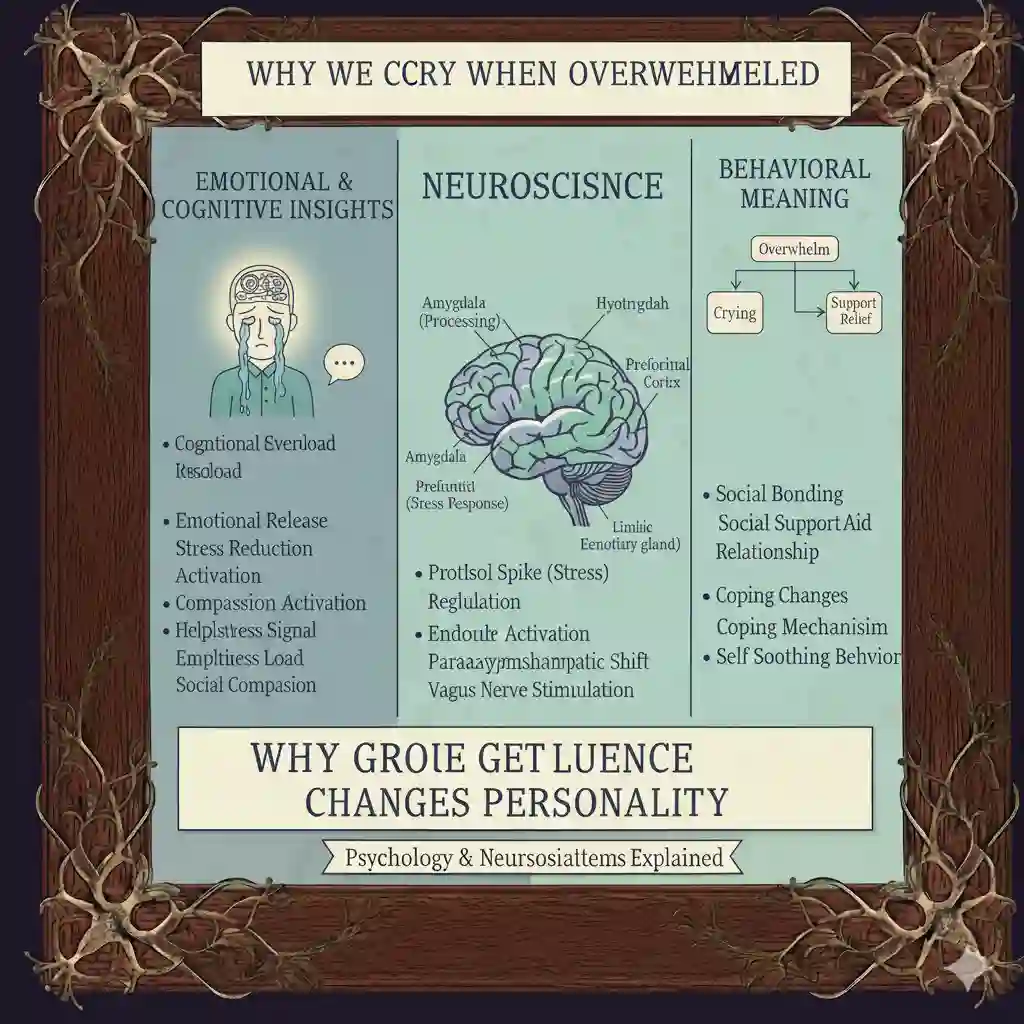
Crying when overwhelmed is a natural emotional release mechanism designed to restore balance to a strained nervous system. It reflects cognitive overload, intense stress processing, and the brain’s urgent need to downregulate. When emotional or sensory input exceeds your ability to process it, the brain triggers tears to release tension and signal a need for recovery. Crying is not weakness—it is the body’s sophisticated way of resetting its emotional state and signaling to yourself (and others) that you have reached your limit.
Introduction: The Science Behind Emotional Overflow
We often associate crying exclusively with sadness or grief, but tears are a universal language for high-intensity emotion. You might cry from frustration, from anger, from relief, or simply from having too much to do in too little time. This is “emotional overflow.” When the brain is bombarded with more stimuli than it can organize, the emotional centers override the logical centers, triggering a physiological release.
From a psychological perspective, crying under stress indicates that your “cognitive cup” is full. You have run out of mental bandwidth to process incoming data, leading to a system reset. Neurologically, this process is even more fascinating. Emotional tears are chemically distinct from the reflex tears that clear dust from your eye. They contain stress hormones and natural painkillers, suggesting that the act of crying is literally expelling stress from the body.
Behaviorally, these tears serve a crucial function. They force a pause. You cannot maintain high-level multitasking while sobbing. The tears demand that you stop, breathe, and acknowledge your internal state. By exploring the neuroscience and psychology behind why we cry when overwhelmed, we can stop viewing it as a failure of control and start understanding it as a vital mechanism for emotional regulation.
Neurological & Physiological Basis of Crying
To understand why we cry when the world feels too heavy, we must look at the brain’s intricate wiring. Crying is not just an emotional event; it is a neurological one involving a cascade of activity across several brain regions.
The Brain on Overload
The process begins in the amygdala, the brain’s emotional command center. The amygdala detects emotional intensity—whether it is fear, stress, or excitement. When this intensity hits a certain threshold, it sends a distress signal to the hypothalamus. The hypothalamus, acting as the bridge between the nervous system and the endocrine system, triggers the autonomic nervous system.
Simultaneously, the prefrontal cortex—the logical, decision-making part of the brain—attempts to regulate these emotions. However, when you are overwhelmed, the prefrontal cortex becomes fatigued. It can no longer inhibit the emotional surges from the limbic system. This “cortical inhibition” fails, and the tears flow.
The Chemistry of Relief
Physiologically, crying is a tool for homeostasis (balance). Emotional tears have been found to contain higher levels of adrenocorticotropic hormone (ACTH), a chemical linked to stress. By shedding these tears, the body may be physically ridding itself of stress byproducts.
Furthermore, the act of crying stimulates the production of endorphins (natural painkillers) and oxytocin (the bonding hormone). This chemical cocktail acts as a natural sedative, helping to numb emotional pain and induce a sense of calm. This explains why, after a “good cry,” people often feel exhausted but lighter, a sensation similar to the relief described in our guide on why emotional pain feels heavy in the chest.
Nervous System Reset
Crying also engages the parasympathetic nervous system—the “rest and digest” system. While the buildup to crying is often driven by the sympathetic “fight or flight” system (high heart rate, rapid breathing), the act of crying forces a shift. The rhythmic inhalation of sobbing helps cool down the brain and body, guiding you back to a state of equilibrium.
Psychological Interpretations of Crying When Overwhelmed
Psychologically, tears of overwhelm act as a safety valve. If we did not have this mechanism, the accumulation of psychological tension could manifest in more harmful ways, such as severe anxiety attacks or physical illness.
A Cognitive Reset Button
Think of your mind like a computer browser with too many tabs open. Eventually, the system freezes. Crying is the “force quit” command. It is a total system reboot. It forces a break in cognitive processing, clearing the cache of immediate stressors so you can eventually restart with a clearer focus.
Vulnerability and Exhaustion
Crying often signals that we have depleted our coping resources. It is an admission of vulnerability. In a culture that prizes stoicism and productivity, reaching this point can feel shameful. However, psychologically, it is an honest acknowledgment of reality: I cannot carry this anymore. It is a breaking point that is often necessary for a breakthrough in perspective.
Unresolved Psychological Conflict
Sometimes, the overwhelm isn’t just about the immediate task list. It triggers deeper, unresolved conflicts. The stress of a deadline might subconsciously remind you of childhood pressure to be perfect. The frustration with a partner might tap into old wounds of being unheard. This connects closely to why we relive painful memories, as current stress can act as a portal to past emotional pain, compounding the feeling of being overwhelmed.
Behavioral & Social Meanings
Crying is an inherently communicative act, even when we do it alone. It sends a signal—to ourselves or to others—that the current situation is untenable.
Private vs. Public Tears
Behaviorally, where we cry matters. Crying in private is often a form of self-regulation and release. It is a way to process emotions without the added layer of social performance. Crying in public, however, adds a layer of social signaling. It is a distress call. Evolutionarily, tears blur our vision, making us vulnerable and signaling to the tribe that we are not a threat and that we need assistance.
Attachment and Trust
In relationships, crying when overwhelmed can be a test of attachment. If we feel safe, we are more likely to let the tears fall. It signals trust—a belief that the other person will offer comfort rather than judgment. Conversely, suppressing tears often indicates a fear of vulnerability or a lack of trust in the environment. This withdrawal is a protective mechanism, similar to why emotional pain causes withdrawal, where we isolate to avoid further hurt.
Personality Differences
Why do some people cry at a spilled coffee while others stay dry-eyed through a crisis? High Empathy individuals (HSPs) and those with higher trait neuroticism generally have a lower threshold for emotional overwhelm. Their nervous systems process sensory and emotional data more deeply, meaning the “cup” fills up faster. This isn’t a defect; it is often correlated with higher emotional intelligence and perceptiveness.
Emotional States Leading to Overwhelm & Tears
Overwhelm is rarely a single emotion. It is a cocktail of intense feelings that merge into a single, unmanageable state.
- Frustration and Helplessness: This is the “I can’t fix this” cry. When effort does not equal results, or when obstacles seem insurmountable, frustration builds until it leaks out as tears.
- Anxiety and Fear: When the brain perceives a threat (social, professional, or physical) that it feels ill-equipped to handle, anxiety spikes. Crying creates a release for this pent-up nervous energy.
- Guilt and Shame: Feeling like you are letting everyone down is a heavy burden. The weight of expectation vs. reality can crush composure.
- Relief: Paradoxically, we often cry when the overwhelm ends. The release of tension after a crisis has passed can be just as tear-inducing as the crisis itself.
- Cognitive Fatigue: Sometimes, there is no specific emotion, just exhaustion. Decision paralysis sets in. The brain is simply too tired to make one more choice, leading to a meltdown that is purely about energy depletion.
Common Scenarios & Interpretations
The context of the tears provides clues to what the brain is actually trying to process.
The “After Work” Collapse
You hold it together for eight hours of meetings, emails, and demands. You walk through your front door, drop your keys, and burst into tears. This is “restraint collapse.” Your brain has been inhibiting emotional responses all day to maintain professionalism. The safety of home signals to the brain that it can finally stop inhibiting, and the backlog of emotion comes flooding out.
Conflict Tears
During an argument, you might cry not because you are sad, but because you are angry and frustrated. These are “angry tears.” They occur because the intensity of the anger overwhelms the system. It can be frustrating because it often softens your stance when you want to appear firm, but it is a sign of high physiological arousal.
Sensory Overload
Crowded places, loud noises, and bright lights can trigger tears in sensitive individuals. This is a physiological response to sensory data exceeding processing capacity. It is less about emotion and more about neurological traffic jams. It is interesting to note that while some environments cause overload, others, like coffee shops, provide just enough ambient noise to be focusing, which we discuss in our article on why we feel more productive in cafes. The difference lies in the brain’s ability to filter and control the input.
Empathetic Overwhelm
Watching the news or hearing a friend’s tragedy can trigger tears. This is “compassion fatigue” or empathetic distress. Your mirror neurons are firing so intensely that you essentially “catch” the other person’s pain. This phenomenon is closely related to the science of emotional contagion, where we absorb the emotional state of those around us until we are saturated.
Practical Reflections & Coping Insights
If you find yourself crying from overwhelm frequently, it is an invitation to examine your environment and your internal boundaries.
Recognize the Early Signs
Crying is usually the final stage of overwhelm. The earlier stages include irritability, brain fog, shallow breathing, and muscle tension. Learning to spot these signs allows you to intervene—take a break, say no, step outside—before the dam breaks.
The “Good Cry” Reframing
Stop fighting the tears once they start. Suppression requires massive energy—energy you don’t have when you are overwhelmed. Give yourself permission to cry for 10 minutes. View it as a biological necessity, like sneezing. Let the body do its work so you can return to baseline.
Integrating Self-Soothing
After the tears stop, do not immediately jump back into the stressor. Your system is raw. Drink water (crying causes dehydration), wash your face with cold water (stimulates the vagus nerve), and engage in a low-stimulation activity for a few minutes.
Cognitive & Emotional Lessons
Every episode of overwhelming tears carries a lesson. It is data about your limits and your needs.
- Clarity Through Release: Often, after the storm of tears passes, the solution to the problem appears. The emotional fog lifts, and the prefrontal cortex comes back online with renewed efficiency.
- The Need for Boundaries: If you are crying from work stress every week, the tears are telling you that the workload is unsustainable. They are a somatic boundary violation signal.
- Emotional Literacy: Crying forces you to ask, “What is actually wrong?” It pushes you past the generic feeling of “stress” to identify the specific emotions—loneliness, fear, inadequacy—that are driving the reaction.
Guidance From Understanding Overwhelm & Tears
Navigating emotional overflow requires a shift in mindset. Instead of seeing tears as a malfunction, see them as a maintenance light on your dashboard.
- Identify Triggers: Keep a log. Do you cry when you haven’t slept? When you feel criticized? When you are hungry? Identifying the biological and situational triggers helps you manage your resources better.
- Prevent Chronic Overwhelm: Build “pressure release valves” into your day. Micro-breaks, journaling, or physical movement can discharge stress before it reaches the boiling point.
- Release Guilt: Shame about crying only adds to the overwhelm. It creates a secondary layer of stress (“I am stressed about being stressed”). Acceptance cuts this loop.
Deep Behavioral & Emotional Message
Crying when overwhelmed is the brain and body’s natural signal to pause, process, and rebalance. It reflects self-awareness, emotional intelligence, and the inherent human need to release and regulate. It is a reminder that we are not machines designed for infinite output, but biological beings who require rhythm, rest, and release.
Frequently Asked Questions (FAQs)
Why do I cry even when I don’t feel sad?
Crying is not just for sadness; it is a response to any high-intensity emotion or cognitive overload. Frustration, anger, exhaustion, and even relief can all trigger the lacrimal system to release tears as a way to regulate the nervous system.
Can crying improve mental clarity after stress?
Yes. Crying releases stress hormones and stimulates the production of endorphins. This chemical reset can lower physiological arousal, allowing the logical part of the brain (prefrontal cortex) to function more effectively, often leading to a feeling of clarity or “clearing the air.”
Is crying a sign of weakness or emotional instability?
No. It is a biological mechanism for regulation. In fact, the ability to cry can be a sign of emotional resilience, as it shows the body is efficiently attempting to return to a state of balance rather than suppressing stress, which can lead to burnout.
Why do some people cry more easily than others under stress?
This can be due to biological differences (such as having more sensitive serotonin receptors), personality traits (like high empathy), or history. People with a history of trauma may have a more reactive amygdala. Additionally, cultural conditioning plays a huge role in how comfortable someone feels expressing emotion.
How does crying relate to the brain’s stress response?
Crying activates the parasympathetic nervous system, which counteracts the stress response. It slows the heart rate and breathing, physically calming the body down from a high-alert state.
Can understanding crying patterns improve emotional regulation?
Absolutely. By recognizing that tears are a signal of overload, you can use them as a cue to practice self-care, set boundaries, or seek support, rather than spiraling into self-criticism.
Internal Links for Further Reading
- Why We Laugh When We’re Scared or Nervous
- The Neuroscience of Silence Discomfort
- Why Some People Overshare Immediately
- Why We Feel Awkward in Lifts/Elevators
- Why We Relive Painful Memories
- Why Emotional Pain Feels Heavy in the Chest
- Why Emotional Pain Causes Withdrawal
- Why We Feel More Productive in Cafes