
Table of Contents
- Introduction: The Science of Neural Reprogramming
- Step 1: Neuroplasticity — The Brain’s Built-In Power to Adapt
- Step 2: The Habit Pathway — From Conscious Effort to Automatic Execution
- Step 3: The Role of Myelination — How Repetition Strengthens Behavior
- Step 4: Breaking Old Circuits — The Process of Neural Pruning
- Step 5: Associative Learning — Linking Pleasure to Progress
- Step 6: Emotional Encoding — Why Feelings Cement New Patterns
- Step 7: Visualization and Mental Rehearsal — Training Without Action
- Step 8: Sleep, Rest, and Recovery — Consolidating Habits Neurologically
- Final Thoughts: Becoming the Engineer of Your Own Mind
- FAQs About Rewiring the Brain for Positive Habits
Introduction: The Science of Neural Reprogramming
Every habit you have — good or bad — is a neural network that your brain has built and strengthened through repetition.
The brain isn’t fixed; it’s dynamic, plastic, and always learning.
This ability, known as neuroplasticity, means your daily behaviors are constantly reshaping your mind — either toward growth or stagnation.
To create positive habits that last, you must learn to rewire your neural circuitry intentionally — replacing automatic reactions with deliberate routines that align with who you want to become.
Let’s explore how to do this step by step, backed by the neuroscience of learning and habit formation.

Step 1: Neuroplasticity — The Brain’s Built-In Power to Adapt
Neuroplasticity is your brain’s ability to form, reorganize, and strengthen connections between neurons in response to thought, emotion, and experience.
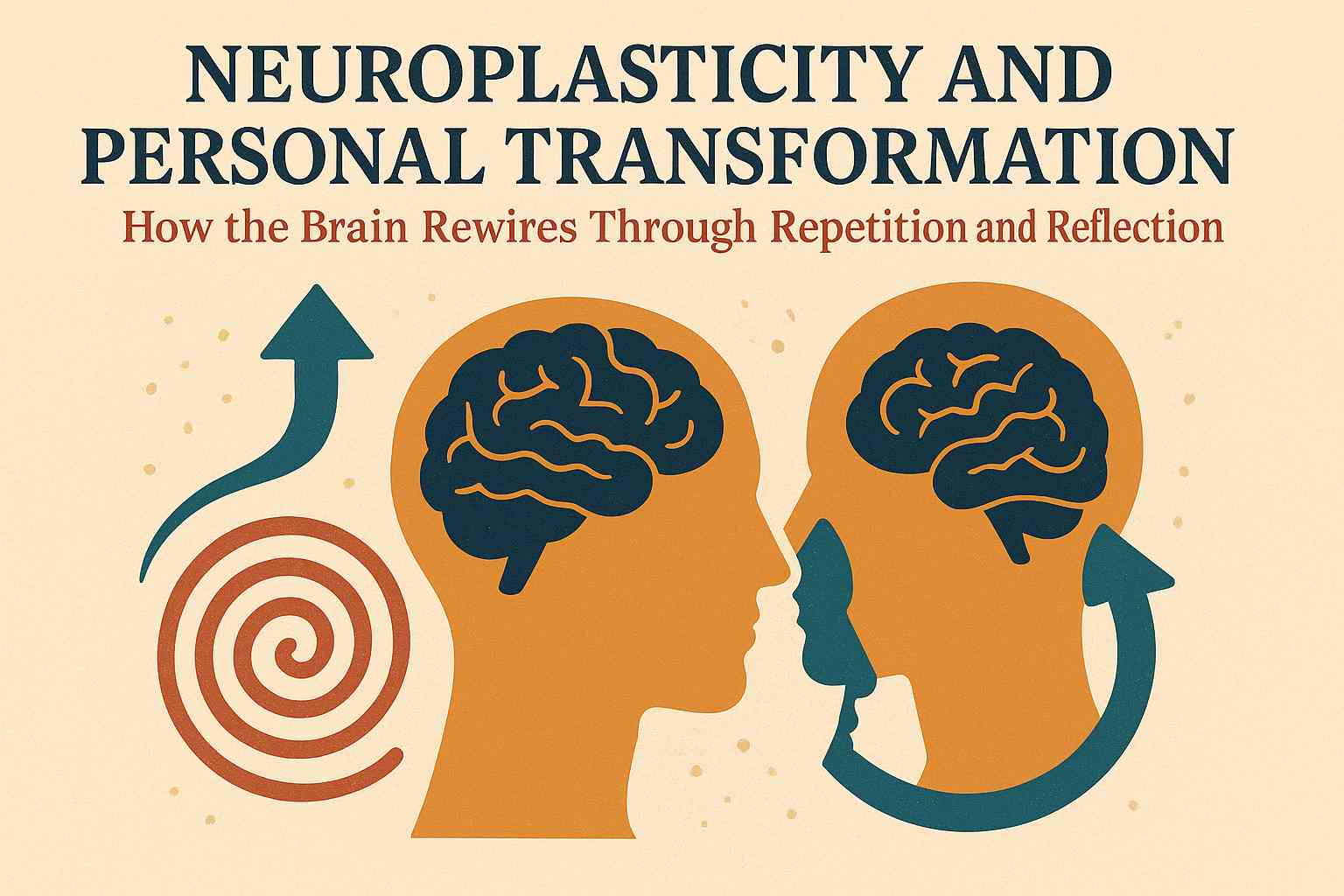
Every time you perform an action or think a thought, neurons communicate via synaptic firing. Repeated patterns of firing create stronger synapses — the basis of all learning and habit formation.
In simple terms: neurons that fire together, wire together.
The more you repeat a behavior, the deeper the neural groove becomes — until it becomes second nature.
Action Step:
Choose one small, positive behavior (like journaling or stretching) and perform it daily in the same context.
Each repetition deepens its neural pathway and weakens competing ones.
Step 2: The Habit Pathway — From Conscious Effort to Automatic Execution
All habits pass through three neurological phases:
- Initiation (Cognitive) — The prefrontal cortex is active; effort is high because you’re learning.
- Repetition (Associative) — The basal ganglia takes over; effort decreases as patterns strengthen.
- Automation (Procedural) — The habit becomes subconscious; the brain conserves energy.
Discipline feels hard at first because your brain resists inefficiency. But the more you repeat a pattern, the less energy it requires — this is cognitive economy in action.
Action Step:
Embrace the awkward early phase of change — it’s not failure, it’s your brain learning efficiency.
Repetition is the bridge between intention and instinct.
Step 3: The Role of Myelination — How Repetition Strengthens Behavior
Myelination is the process of wrapping neural pathways in myelin, a fatty sheath that increases signal speed and reliability.
The more you practice a skill or habit, the more myelin builds around those circuits — making behavior faster and more automatic.
Think of myelin as insulation for your habits: it locks in consistency.
Action Step:
Perform your positive habit with focus, not autopilot.
Quality repetitions strengthen myelination far more effectively than mindless routine.
Step 4: Breaking Old Circuits — The Process of Neural Pruning
To wire new habits, you must also unwire old ones.
The brain uses a process called synaptic pruning — it removes unused connections to optimize performance.
This is why stopping a bad habit feels like deprivation at first — your brain is literally dissolving old wiring.
But once those circuits weaken, craving and resistance fade.
Action Step:
When breaking a negative habit, don’t just remove it — replace it.
The new behavior must occupy the same cue and emotional need to overwrite the old neural pattern.
Step 5: Associative Learning — Linking Pleasure to Progress
Your brain doesn’t just learn through logic; it learns through association.
It links actions to emotional outcomes — this is the dopamine-driven process that reinforces habits.
To rewire effectively, attach positive emotion to progress, not just reward.
This ensures the brain perceives the new behavior as valuable and continues firing the associated neural circuits.
Action Step:
After completing a positive habit, consciously celebrate or reflect: “That felt good.”
Emotion is the glue that turns repetition into reinforcement.
Step 6: Emotional Encoding — Why Feelings Cement New Patterns
When a behavior is paired with strong emotion — pride, gratitude, excitement — it imprints faster because the amygdala and hippocampus work together to enhance memory consolidation.
This is why emotionally charged experiences are unforgettable — the brain prioritizes what feels meaningful.
Harness this by linking emotion to your desired identity.
Action Step:
Before doing a habit, visualize how it connects to your bigger purpose.
Emotion amplifies motivation; purpose makes it stick.
Step 7: Visualization and Mental Rehearsal — Training Without Action
Studies in neuroscience show that mental rehearsal activates nearly the same neural pathways as physical practice.
This means you can strengthen habits by imagining yourself performing them successfully.
Athletes, musicians, and peak performers use visualization to accelerate neural encoding — it’s the mental gym for your brain.
Action Step:
Spend 2 minutes each day visualizing yourself performing your habit effortlessly.
See it clearly, feel it emotionally, and your brain will pre-train the circuit before action.
Step 8: Sleep, Rest, and Recovery — Consolidating Habits Neurologically
Neural rewiring doesn’t just happen when you act — it continues while you sleep.
During deep and REM sleep, your brain consolidates new learning and prunes outdated information.
Without adequate rest, new circuits remain fragile, and habit formation stalls.
Action Step:
Protect 7–8 hours of quality sleep, and add micro-recovery breaks during the day.
Stillness allows the brain to encode progress — silence is part of the rewiring process.
Final Thoughts: Becoming the Engineer of Your Own Mind
Your brain is not a fixed organ — it’s a living network, constantly sculpted by what you think, feel, and do.
Every repetition, every reflection, every emotion you attach to action reshapes who you are becoming.
By understanding neuroplasticity, you stop seeing discipline as force — and start seeing it as design.
You’re not fighting your brain; you’re training it.
You are both the sculptor and the sculpture — continuously rewiring your mind toward the best version of yourself.
FAQs About Rewiring the Brain for Positive Habits
Q: How long does it take to rewire the brain for a new habit?
A: On average 6–8 weeks, but it depends on repetition, emotional intensity, and consistency of cues.
Q: Can I rewire my brain at any age?
A: Yes. Neuroplasticity continues throughout life — adults can form new neural pathways with deliberate practice.
Q: What’s the biggest mistake people make when trying to change habits?
A: Focusing on intensity instead of repetition. The brain learns through consistency, not effort spikes.
Q: Can negative thoughts be rewired too?
A: Absolutely. Cognitive-behavioral reframing and mindfulness retrain neural responses to triggers over time.
Q: How do I know if rewiring is working?
A: When positive behaviors feel natural and require less emotional resistance — your neural pathways are taking over.