“Future Pacing: How to Anchor Motivation in Who You’re Becoming”
Introduction: Motivation Isn’t Just About Now — It’s About Who You See in the Mirror Tomorrow
At the core of motivation is vision. Not just the goals you set, but the self you believe you’re becoming. Most people try to change behavior by focusing on discipline, rewards, or even punishment. But the most powerful long-term motivation doesn’t come from effort. It comes from future identity alignment — a clear, emotionally charged image of your next-level self.
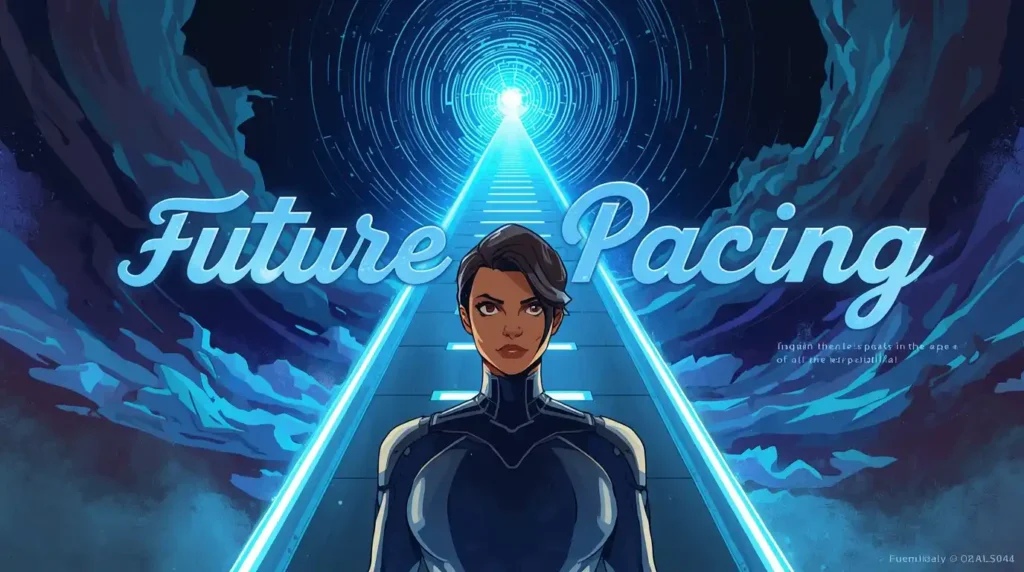
This is called future pacing — a psychological technique that anchors your present decisions in a vivid, believable, and emotionally resonant vision of your future self. It’s not “manifestation.” It’s identity engineering. In this final part of the series, we’ll explore how to use future pacing to fuel consistent action, override short-term temptation, and stay emotionally connected to long-term growth.
The Problem: You’re Too Attached to Who You’ve Been
One of the biggest hidden blocks to motivation is being over-identified with your past. Even when you say you want change, you may still feel emotionally loyal to the patterns, beliefs, and identities that shaped who you’ve been.
This creates an internal tug-of-war:
“I want to become X, but I still see myself as Y.”
When the future version of you feels abstract or unrealistic, your brain will default to the familiar — even if it’s painful. That’s why motivation fades when you only focus on present discomfort or willpower. Your nervous system isn’t designed to leap into the unknown. It needs emotional safety and clarity around what comes next.
What Is Future Pacing?
Future pacing is a method used in psychology, coaching, and NLP (neuro-linguistic programming) that helps you mentally and emotionally rehearse becoming your future self. It trains your mind to act as if that identity already exists — making your present behavior align with your next evolution.
It’s the difference between:
- “I want to be someone who exercises.”
vs. - “I see myself as the kind of person who trains daily because it reflects who I am becoming.”
By emotionally “living” in your future self before the results show up, you increase congruence — which makes motivation automatic.
Why Future-Based Identity Is More Motivating Than Goals
Goals are helpful — but they often feel external, conditional, or distant. Identity, on the other hand, is internal. It affects your decision-making in real-time.
When your motivation is tied to what you do, you’ll burn out when results are slow.
But when it’s tied to who you are becoming, you stay emotionally committed even during setbacks.
For example:
- A writer keeps writing — not for likes, but because they are a writer.
- A leader keeps showing up — not for validation, but because it’s part of who they’re growing into.
This shift turns motivation from a feeling into a function of alignment.
How to Use Future Pacing in Daily Life
Here’s how to integrate future pacing into your motivation system:
1. Define Your Future Identity
Get specific. Who are you becoming in 6–12 months?
- What are your habits like?
- How do you think and speak to yourself?
- How do you handle discomfort and fear?
Write a 1-page “future self” letter as if it’s already real.
2. Emotionally Rehearse That Identity
Each day, visualize yourself making decisions as that version of you:
- How do they respond to stress?
- What do they do after failure?
- What do they say no to?
This rehearsal wires your nervous system for congruence — especially in high-friction moments.
3. Use “From the Future” Language
Don’t just say “I hope to be…”
Say: “I’m building the version of me who already…”
This subtle shift makes your current actions feel like practice, not punishment.
4. Build Proof Through Behavior
Anchor your vision with real actions — no matter how small. Every time you show up aligned with that future self, mark it down. Over time, the identity solidifies, and motivation becomes a byproduct of who you are.
The Future Is the Strongest Behavioral Trigger You Have
Your brain is always asking: “Is this who we are?”
Future pacing answers that question — clearly and powerfully. It bypasses short-term doubt by grounding your behavior in long-term alignment.
You don’t have to force motivation when your actions reflect who you are becoming.
In fact, this is how all lasting transformation works:
- See it
- Feel it
- Act from it
- Repeat
Eventually, you stop needing to future-pace.
Because that version of you?
It’s no longer the future — it’s who you are now.
Final Thoughts: Become the Proof
Motivation that lasts isn’t about emotional highs or external rewards. It’s about identity integration. And that starts with a clear vision of who you want to become — paired with small, meaningful actions that reinforce it daily.
You don’t need to force your way into the next chapter of your life.
You need to see yourself in it — then take steps that confirm:
“This is who I am now.”
Every action you take today is a vote for the version of you you’re becoming.
Start casting votes on purpose.
FAQs About Future Pacing and Identity-Based Motivation
Q: Isn’t future pacing just daydreaming?
No. It’s a cognitive rehearsal technique backed by psychology and neuroscience. You’re creating neural pathways that make identity-driven behavior easier in real life.
Q: What if my future self feels unrealistic or too far away?
Shrink the gap. Define a future self just 30 days ahead — someone who’s 10% more focused, brave, or consistent. Small identity upgrades create real momentum.
Q: How often should I do future pacing?
Daily — even for 2–5 minutes. Do it during journaling, meditation, or as a morning mindset ritual. Repetition wires it into your nervous system.
Q: What if I slip into old patterns while trying to live from my future Embodied Leadership: Living in Alignment with Vision, Values, and Voiceself?
That’s expected. The goal isn’t perfection — it’s pattern interruption. Each time you return to your new identity, you weaken the old one.