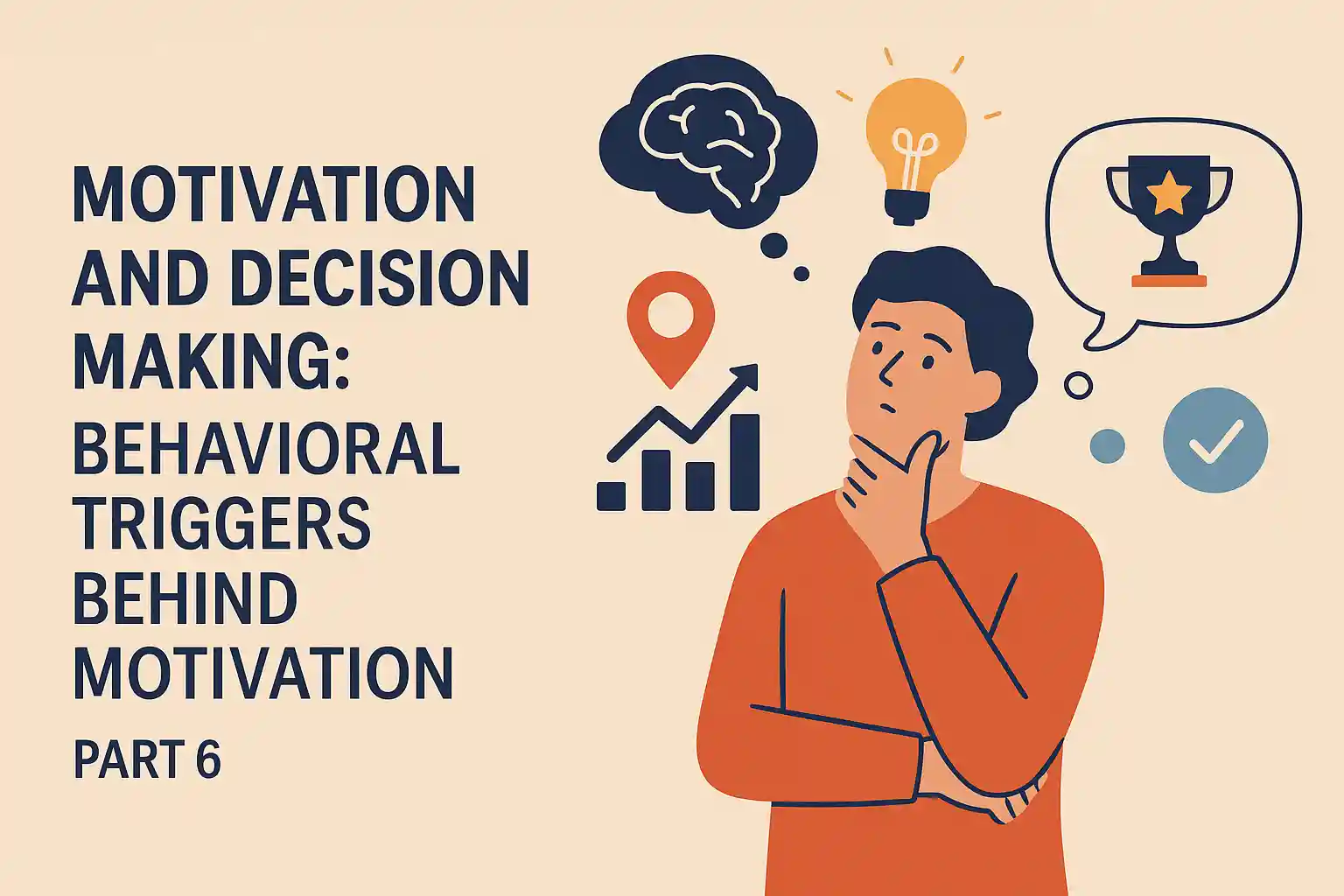
Unconscious Drivers, Environmental Cues & Why You Don’t Always Know Why You Do Things
Motivation is often misunderstood. Many believe it’s something we consciously control — a wave of energy or inspiration we ride to complete goals. But the truth is that much of what drives human behavior happens beneath the surface of awareness. Environmental design, cognitive patterns, and subtle cues all shape our decisions more than we realize. In this part of the series, we go deeper into the hidden behavioral triggers behind motivation and explore how to build systems that move you forward, even when your feelings don’t.

The Power of Context Over Willpower
We like to believe we act based on logic and discipline. In reality, we often act based on context. The environment you’re in holds silent power over your decisions. Your brain associates locations, objects, and situations with particular behaviors — a concept deeply studied in behavioral psychology. For example, your couch might signal “relax and scroll,” while your workspace signals “focus and produce.” That’s why doing the same task in different locations can feel completely different. By consciously assigning tasks to specific environments (e.g., no phone in bed, no work on the couch), you can train your brain to enter the right mode automatically — reducing reliance on willpower and increasing clarity in decision-making.
Priming: The Hidden Language of the Brain
Priming is one of the most subtle — and powerful — behavioral triggers. It refers to the process by which exposure to certain cues influences your thoughts, emotions, and actions without you realizing it. Your brain is constantly processing visual, auditory, and emotional stimuli. For instance, if you see success-related imagery before working, you may unconsciously try harder. If you listen to calming music before studying, your mind prepares for focus. Marketers use this all the time — but so can you. By surrounding yourself with intentional inputs like affirming quotes, meaningful playlists, or visual reminders of your goals, you can set your brain up for performance before the task even starts.
Default Settings and Decision Fatigue
Throughout the day, your decision-making energy gets depleted. This is called decision fatigue — and when it sets in, your brain defaults to the easiest or most familiar choice. That’s when you skip the gym, order fast food, or mindlessly scroll. These aren’t failures — they’re defaults. The key is to build pre-decided defaults that support your identity. Have a gym outfit always ready. Keep your meals planned in advance. Use browser blockers or a single-click workspace setup. When stress or fatigue hits, these frictionless systems keep you on track — not because you’re super-disciplined, but because you’ve built smarter defaults.
The Role of Emotional Contagion
Motivation is contagious. The emotional energy of those around you — both in person and online — can either elevate or drain your drive. This phenomenon, known as emotional contagion, affects you more than you might notice. Spend time around people who procrastinate, and you’ll feel less urgency. Surround yourself with disciplined creators, and your standards rise. Even the content you consume acts as a motivator or demotivator. Take control of your exposure. Audit your inner circle, your feed, your conversations. Ask yourself, “Who am I absorbing energy from?” Your motivation will reflect the dominant emotional climate you’re immersed in.
Internal Conflict: Competing Selves and Split Goals
One of the most common reasons for inconsistent motivation is internal conflict. It’s not that you don’t want the goal — it’s that part of you wants something else. Psychologically, we all have multiple “selves” or parts, each with different needs and fears. One part may crave growth, while another wants safety. One wants visibility, another fears judgment. When these parts compete without resolution, you feel stuck. The solution is not to silence them — but to listen. Ask: “What does this resisting part of me need?” Often, it just wants reassurance or a role in the journey. When you integrate your inner parts, you unlock full energy toward your goals.
How to Design Motivational Triggers That Actually Work
If motivation is unreliable, triggers are trainable. Behavioral science shows that you can condition your brain to take action through consistent, identity-based rituals. These triggers should be predictable (same time/place), emotionally resonant (they mean something to you), and tied to who you want to become. For example, playing the same energizing music before your workout or reviewing your mission statement before writing helps associate that ritual with the desired behavior. Over time, your brain no longer needs to feel “motivated” — it’s simply been trained. These small triggers act like switches for your nervous system — turning on focus, strength, or flow as needed.
Final Thoughts: Don’t Just Chase Motivation — Build Triggers
Motivation doesn’t have to be a mystery. You don’t need to wait for the perfect mood, moment, or mindset to act. You can engineer your motivation through intentional environmental cues, emotional rituals, and identity-aligned behavior patterns. The truth is, you’re already influenced every day — the question is whether you’re the one designing the influence. Don’t chase motivation. Build it. Then step into action — not because you feel like it, but because you’ve built a system that makes you feel like it.
FAQs About Behavioral Influence and Internal Drive
Q: Why does motivation drop in the evening?
Because decision fatigue, stress, and mental load accumulate — making defaults more attractive. That’s why pre-set routines and boundaries help.
Q: Can I actually train my brain to feel motivated?
Yes. Through consistent behavioral triggers and emotional priming, your brain begins to associate certain cues with specific types of action — making motivation a conditioned response.
Q: What’s the difference between identity and motivation?
Identity is who you believe you are. Motivation is a temporary feeling. If you identify as a disciplined person, action becomes natural — even when motivation is low.
Q: What should I do when I feel stuck between two opposing desires?
Recognize the internal conflict as two valid parts of you. Let each one speak. Integration leads to cooperation. Suppression leads to sabotage.