The Fast Answer
Stress accumulation is not a sign of weakness; it is a biological signal that your brain’s capacity to cope has been exceeded. When chronic stress builds up, your brain’s threat-detection system (the amygdala) becomes hyperactive, while the planning and regulation center (the prefrontal cortex) weakens. This leads to a state of “allostatic overload,” where the constant release of stress hormones like cortisol begins to cause physical and mental damage. Symptoms like brain fog, irritability, fatigue, and physical aches are your brain’s way of telling you that its resources are depleted and it needs immediate intervention to restore balance.
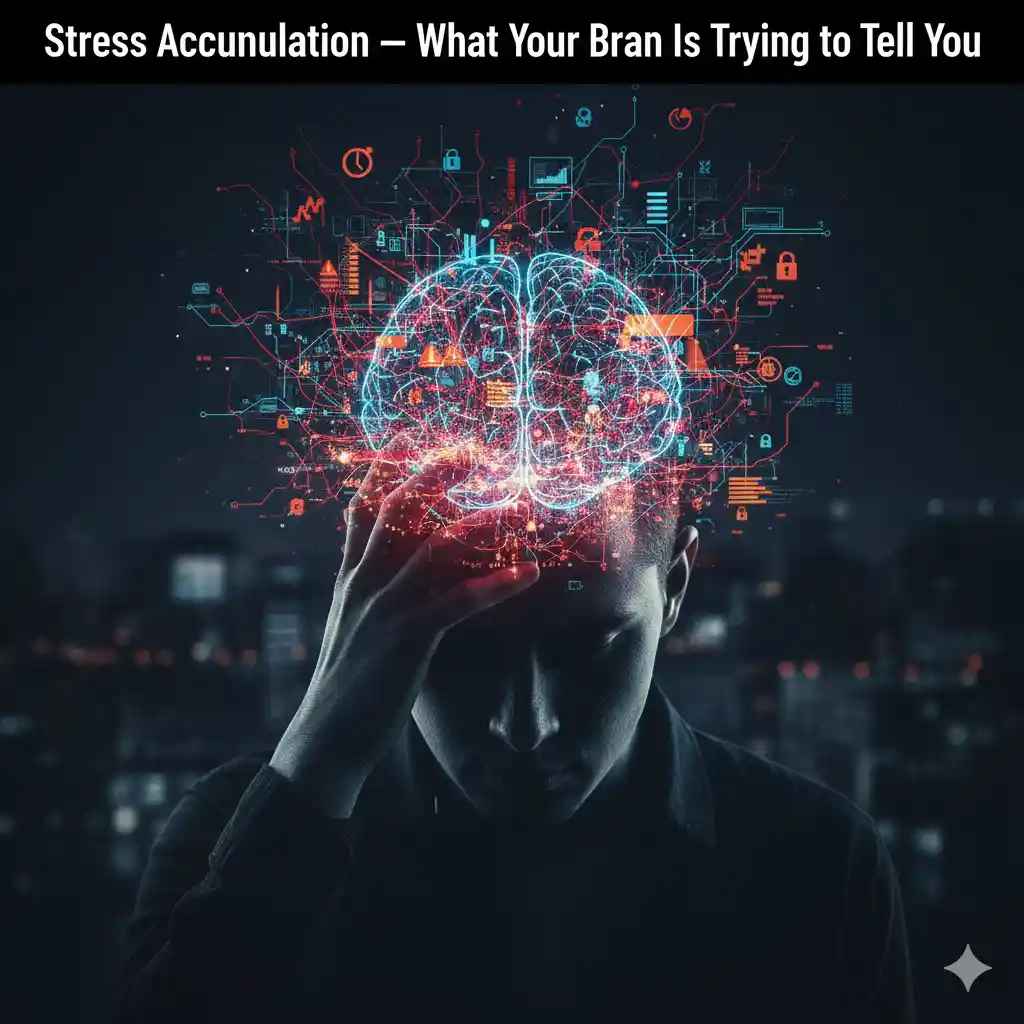
Do you ever feel like you’re a sponge that has absorbed one drop too many? You might be physically fine, but you’re inexplicably irritable, your focus is shot, and even the smallest inconvenience feels like a personal attack. This pervasive feeling of being overwhelmed is often the result of stress accumulation—a gradual build-up of small and large pressures that, over time, saturate your nervous system until it can no longer function effectively.
We tend to think of stress in terms of major life events, like a job loss or a death in the family. However, the daily grind of micro-stresses—traffic, work deadlines, financial worries, an overflowing inbox—can be even more insidious. As a behavioral expert, I’ve seen countless individuals who are baffled by their own exhaustion and anxiety, not realizing that their brains have been running a marathon without any rest. Stress accumulation is your brain’s check-engine light, a desperate signal that the system is overloaded and on the verge of a breakdown. Understanding what this signal means is the first step toward releasing the pressure and reclaiming your mental clarity.
Table of Contents
- The Biology of Stress: From Acute Threat to Chronic Overload
- Allostatic Load: The Invisible Weight of Wear and Tear
- The Amygdala on Overdrive: A Hyperactive Threat Detector
- Hijacking the Prefrontal Cortex: The Loss of Executive Function
- Physical Manifestations: When the Body Keeps the Score
- The Role of Micro-Stresses in Saturation
- Emotional Symptoms: Irritability, Numbness, and Anxiety
- Strategies for Discharging Accumulated Stress
- Building Resilience: Preventing Future Overload
- Frequently Asked Questions
- Conclusion
- Next Articles
The Biology of Stress: From Acute Threat to Chronic Overload
The human stress response is a brilliant evolutionary adaptation designed for short-term survival. When our ancestors encountered a predator, the brain triggered the “fight-or-flight” response, flooding the body with adrenaline and cortisol. This provided a burst of energy to either fight the threat or run away. Once the danger passed, the system returned to baseline. The problem is that our modern stressors are not saber-toothed tigers; they are 24/7 emails and financial anxieties.
The Cortisol Drip
In today’s world, the “threats” never fully go away. This means the stress response, designed for acute emergencies, remains perpetually activated. Instead of a short spike of cortisol, we live with a constant, low-level “drip” of it. Initially, this helps us stay alert and productive. However, cortisol is a powerful hormone that, over time, becomes corrosive. Chronic elevation of cortisol disrupts sleep, impairs immune function, and damages the very brain structures it is meant to protect. Stress accumulation is the process of your body marinating in its own emergency chemicals long after the emergency has passed.
The HPA Axis Malfunction
The Hypothalamic-Pituitary-Adrenal (HPA) axis is the command center for the stress response. When the brain perceives a threat, this axis orchestrates the release of cortisol. In a healthy system, cortisol eventually signals the hypothalamus to turn off the alarm. Under chronic stress, this feedback loop can break down. The brain becomes less sensitive to cortisol’s “off” signal, so the HPA axis remains active, pumping out more stress hormones. This is a runaway train of stress, where the system designed to regulate the response becomes the engine driving its dysfunction.
Allostatic Load: The Invisible Weight of Wear and Tear
Scientists use the term “allostasis” to describe the body’s ability to achieve stability through change. “Allostatic load” is the cumulative wear and tear on the body and brain from being forced to adapt to chronic stress. Think of it as the invisible weight that accumulates every time you have to suppress your frustration in a meeting, push through fatigue to meet a deadline, or worry about a loved one’s health.
The Cost of Adaptation
Every time you adapt to a stressor, your body pays a small biological price. Your heart rate increases, your blood pressure rises, and your immune system is temporarily suppressed. When these adaptations are required constantly, the price adds up. High allostatic load is directly linked to an increased risk for a wide range of health problems, including cardiovascular disease, diabetes, and autoimmune disorders. The physical exhaustion you feel from stress is not just in your head; it is the literal metabolic cost of your body constantly trying to find balance in a chaotic environment.
The Tipping Point
For a while, the body can handle a high allostatic load. We push through, relying on caffeine and sheer willpower. However, there is always a tipping point. This is the moment when the accumulated stress becomes “allostatic overload.” The system’s capacity to adapt is exhausted, leading to a cascade of failures. This is when symptoms like debilitating fatigue, brain fog, and emotional dysregulation become impossible to ignore. Your brain is telling you that its adaptive resources are bankrupt. This feeling of being unable to move forward is a very real biological state, which you can learn more about in The Science of Feeling Stuck.
The Amygdala on Overdrive: A Hyperactive Threat Detector
The amygdala, the brain’s emotional hub and threat detector, is central to the experience of stress accumulation. Under chronic stress, the amygdala undergoes neuroplastic changes. It can physically grow larger and become more densely packed with neural connections, effectively turning it into a hyper-sensitive alarm system.
Generalization of Fear
A hyperactive amygdala starts to see threats everywhere. It loses its ability to discriminate between real danger and minor inconvenience. A critical email from your boss, a traffic jam, or even a misplaced set of keys can trigger a full-blown fight-or-flight response. You start to live in a state of generalized anxiety because your brain’s alarm bell is stuck in the “on” position. This is why, after a long period of stress, you might find yourself overreacting to small things; your amygdala is no longer calibrated correctly.
Emotional Hijacking
When the amygdala is overactive, it can easily “hijack” the rational part of your brain. It operates much faster than the prefrontal cortex, meaning you react emotionally before you have a chance to think logically. This is the source of the irritability and anger that often accompany stress accumulation. You snap at your partner or rage at another driver not because you are a bad person, but because your primitive brain has taken control from your executive brain. This is a core concept in learning how to respond with power instead of reacting from pain.
Hijacking the Prefrontal Cortex: The Loss of Executive Function
The prefrontal cortex (PFC) is the CEO of your brain. It’s responsible for planning, decision-making, emotional regulation, and impulse control. Unfortunately, the PFC is exquisitely sensitive to the effects of chronic stress. The same cortisol that amps up the amygdala effectively tranquilizes the PFC.
Brain Fog and Indecision
When the PFC is impaired by stress, you experience what is commonly known as “brain fog.” Your thinking becomes slow and muddy. You struggle to concentrate, organize your thoughts, or make decisions. Even simple choices, like what to have for dinner, can feel overwhelming. This happens because the neural connections in the PFC are literally weakened by chronic cortisol exposure. Your brain is telling you that its executive resources are so depleted that it cannot handle complex cognitive tasks. This phenomenon is closely related to the psychology behind decision fatigue.
Weakened Impulse Control
The PFC is also responsible for inhibiting the impulsive demands of the limbic system. When the PFC is offline, impulse control plummets. This is why, when you are stressed, you are more likely to eat junk food, overspend, or get into arguments. You know logically that these behaviors are not helpful, but your brain’s “braking system” is offline. Your inability to resist temptation is not a failure of willpower; it is a symptom of a neurologically compromised prefrontal cortex. This is a critical insight for understanding why willpower fails and what works instead.
Physical Manifestations: When the Body Keeps the Score
Stress is not just a mental or emotional experience; it is profoundly physical. The brain and body are in constant communication. When the brain is under chronic stress, it sends a relentless stream of emergency signals to the body, leading to a host of physical symptoms that are often the first sign that stress has accumulated to a dangerous level.
Musculoskeletal Pain
When you are stressed, your muscles tense up, ready for fight or flight. If this state is chronic, you can develop persistent muscle aches, particularly in the neck, shoulders, and back. Tension headaches are also common. This pain is not “in your head”; it is a direct physiological consequence of your nervous system being stuck in a state of high alert.
Digestive and Immune System Issues
The gut-brain axis is a two-way street. Stress signals from the brain can wreak havoc on the digestive system, leading to issues like irritable bowel syndrome (IBS), acid reflux, and indigestion. Furthermore, chronic cortisol suppresses the immune system, making you more susceptible to colds, infections, and slowing down wound healing. If you find yourself getting sick all the time, it may be your body telling you that your brain is overwhelmed.
The Role of Micro-Stresses in Saturation
We often discount the impact of “micro-stresses”—the small, daily annoyances that seem trivial on their own. An overflowing inbox, a noisy neighbor, a slow internet connection—each one is a minor inconvenience. However, the brain’s stress response doesn’t always distinguish between big and small threats. Each micro-stress adds another drop of cortisol to your system.
The Accumulation Effect
Think of your stress capacity as a bucket. Major life events pour a lot of water in at once. Micro-stresses are like a steady drip. A single drip doesn’t seem like much, but over time, it can overflow the bucket just as effectively as a flood. When the bucket overflows, you reach the point of allostatic overload. This is why you can sometimes handle a major crisis with grace, but on another day, a spilled coffee sends you into a rage. It wasn’t the coffee; it was the final drop in an already full bucket.
The Erosion of Resilience
Each time you deal with a micro-stress, you use up a small amount of your cognitive and emotional resources. When these resources are not replenished through adequate rest and recovery, you begin to operate from a deficit. Your resilience—your ability to bounce back from challenges—erodes. This is the core of resilience psychology. The brain is telling you that its backup batteries are dead, leaving you vulnerable to even the smallest of stressors.
Emotional Symptoms: Irritability, Numbness, and Anxiety
Before the physical symptoms of stress accumulation become severe, the emotional signs are often already present. These are not personality changes; they are the direct result of a brain struggling to function under an overwhelming cognitive and chemical load.
Irritability and Low Frustration Tolerance
When your amygdala is hyperactive and your PFC is impaired, your ability to regulate emotions plummets. You have a very short fuse. Things that wouldn’t normally bother you become sources of intense frustration. This irritability is a sign that your brain has no margin for error or additional input. It is operating at maximum capacity and any new demand, no matter how small, pushes it into overload.
Emotional Numbness or Detachment
The opposite of irritability can also occur. As a protective mechanism, the brain can simply numb your emotional responses to prevent further overwhelm. This is known as emotional detachment or blunting. You might feel disconnected from your own life, as if you are watching it from a distance. It’s not that you don’t care; it’s that your brain has turned down the volume on your emotions to conserve its last remaining resources. This is a clear signal that the system is dangerously close to a complete shutdown.
Strategies for Discharging Accumulated Stress
You cannot simply will yourself to be less stressed. You must actively signal to your brain that the threat has passed and it is safe to stand down. This requires completing the stress response cycle.
Physical Activity as a Biological Reset
When your body is primed for fight or flight, the most effective way to complete the cycle is to move. Vigorous exercise—running, dancing, hitting a punching bag—burns off the excess cortisol and adrenaline. It tells your brain that you have successfully “fought” or “fled” the danger. Even a brisk 20-minute walk can help regulate the HPA axis and discharge the accumulated tension.
The Power of the Exhale
The quickest way to communicate with your autonomic nervous system is through your breath. Inhaling activates the sympathetic (fight-or-flight) system, while exhaling activates the parasympathetic (rest-and-digest) system. To discharge stress, focus on making your exhales longer than your inhales. A simple technique is “box breathing”: inhale for 4 counts, hold for 4, exhale for 4, and hold for 4. This rhythm sends a powerful signal of safety to your brain.
Building Resilience: Preventing Future Overload
Discharging stress is crucial, but building resilience is about preventing the bucket from overflowing in the first place. This involves proactive strategies that increase your brain’s capacity to handle stress.
Prioritizing Rest and Recovery
Sleep is non-negotiable for brain health. During sleep, the brain clears out metabolic waste products and consolidates memories. Chronic stress disrupts sleep, and lack of sleep makes you more vulnerable to stress—a vicious cycle. Protecting your sleep is the single most effective thing you can do to build resilience. This also includes scheduling “active rest” during the day—short breaks for mindfulness, nature walks, or hobbies that allow your PFC to recharge.
Cultivating Self-Compassion
The internal narrative we have about our stress is critical. Beating yourself up for feeling overwhelmed adds a second layer of stress (shame) on top of the first. Self-compassion involves treating yourself with the same kindness you would offer a friend. It’s acknowledging, “This is really hard right now,” without judgment. Research shows that self-compassion lowers cortisol and increases motivation. This is foundational to building the psychology of self-belief.
Frequently Asked Questions
Can stress accumulation cause memory problems?
Yes. Chronic high cortisol levels are toxic to the hippocampus, a brain region critical for memory formation and retrieval. This is why you might struggle to remember names or find your keys when you are highly stressed.
Is there a difference between stress and anxiety?
Stress is a response to an external trigger (a deadline, an argument). It tends to subside once the trigger is gone. Anxiety is a more persistent state of apprehension that can exist even without an obvious trigger. Chronic stress, however, can lead to the development of an anxiety disorder.
Why do I crave unhealthy food when I’m stressed?
Cortisol increases appetite and motivation, particularly for high-fat, high-sugar “comfort foods.” Your brain is seeking a quick source of energy and a dopamine hit to soothe the discomfort of stress.
Can I get used to a high-stress lifestyle?
You can adapt for a while, but you are paying a high biological price in the form of allostatic load. No one is immune to the long-term effects of chronic stress. Sooner or later, the system will reach its breaking point.
Why do I feel so tired but can’t sleep when I’m stressed?
This is the classic “tired and wired” phenomenon. Your body is exhausted from the allostatic load, but your brain is flooded with cortisol and adrenaline, keeping your nervous system on high alert and preventing you from entering a restful state.
Conclusion
Stress accumulation is the alarm bell of a brain that has been pushed past its biological limits. The brain fog, irritability, fatigue, and physical pain are not your imagination; they are tangible signals that your internal resources are depleted. By learning to recognize these signs for what they are—a message, not a failing—you can shift from being a victim of your stress to an active participant in your own recovery.
The solution is not to “power through” but to listen. Your brain is telling you it needs you to complete the stress cycle through movement, to signal safety through breath, and to replenish its resources through deep rest. It is asking you to treat yourself with the compassion you would a friend who is struggling. By heeding these signals, you can discharge the accumulated weight and build a more resilient system capable of navigating the inevitable pressures of life with strength and grace.
Next Articles
If you want to continue building a more resilient and self-aware mind, explore these related topics:
- Understanding Burnout: The Science of Feeling Stuck
- Emotional Regulation: How to Respond with Power Instead of Reacting From Pain
- Building Resilience: Resilience Psychology: How to Bounce Back Stronger
- Managing Your Mind: The Real Meaning Behind Overthinking
- Handling Daily Demands: The Psychology Behind Decision Fatigue
- The Power of Rest: Why We Feel Guilty for Doing Nothing
- Procrastination as a Stress Response: The Psychology of Procrastination
- Social Stress: Why We Feel Drained After Social Events
- The Mind-Body Connection: How Our Environment Controls Our Mood
- Confidence Under Pressure: The Psychology of Self-Belief